Secular Christmas

Christmas Nativity

Christmas is celebrated all round the world.  Christmas is not a religious holiday for most people.  This secular version of Christmas promotes values of love, compassion, generosity, giving, family, hope, peace, and joy.  These good values originated with the Christian celebrations of Christmas, but the main point of Christmas, from which these values derive their meaning, is Jesus Christ coming to Earth and being born so that we might have life in him.

I find it interesting that people of other faiths have their version of Christmas.  Many Buddhists, Jewish people, Muslims and even atheists celebrate Christmas in some form.  They have some of their own traditions but for many of these celebrations what binds them to the secular Christmas is Santa Claus, because many of these celebrations have Santa Claus.

Santa Claus is the icon of the secular Christmas.  Folklore of his story has been developed over the last 200 years to what it is today.  First, there was a historical person called Saint Nicholas who really did exist and was born about 280 A.D.  He was a generous Christian Bishop.  Today’s Santa Claus story is very different from the historical story of Saint Nicholas but Saint Nicholas provided the origins from which Santa Claus developed.  The Dutch with their Sinterklaas tradition and the English with their Father Christmas tradition were blended together to create the Santa Claus tradition.  In 1823, an anonymous author (likely Clement Clarke Moore) penned a poem called “A Visit from St. Nicholas”, which is also known as “Twas the Night before Christmas”.   I believe that poem created the foundation for the Santa Claus tradition.  From that poem, the story of Santa Claus developed into what it is today.

Secular Christmas is fun and promotes some good values, however it is missing the historical importance of the birth of Jesus Christ.  Christmas is meant to be a celebration of the birth of Jesus.  God, the Father, gave his only begotten Son, Jesus, to us to restore us back to himself and to give us life in him (John 3:16).  God in Jesus humbled himself and was born human (Philippians 2:5-8) so that he could live the perfect life we could not (Hebrews 4:15) and to pay the price for our sins by dying on a cross (Colossians 2:13-14) and then rising again 3 days later.  Jesus gave himself so that we might have life in him.  By the power of the Holy Spirit we have real life.  That is the real story of why we celebrate Christmas.

The Christmas story can be found in Luke 2:1-20 and in Matthew 1:18-2:12.  This Christmas let us remember the birth of Jesus who is our Lord and Savior.

PS This year I discovered the ancient “O Antiphons” which are short chants that cover 7 days (December 17-23) of Advent, right before Christmas.  The hymn “O Come, O Come, Emmanuel” incorporates the 7 antiphons into its verses.  I am using a devotional based on the antiphons this year from 1517.org.

Is Forgiveness Counter-Cultural?

Rays of light in a forest

Recently, Charlie Kirk was assassinated by a shooter, and at the Charlie Kirk Memorial Service, Charlie’s wife Erika Kirk said,

I forgive him because it was what Christ did and is what Charlie would do.” And she said, “The answer to hate is not hate. The answer we know from the Gospel is love and always love.

After Erika, President Trump spoke and said,

[Charlie Kirk] did not hate his opponents. He wanted the best for them. That’s where I disagreed with Charlie. I hate my opponent and I don’t want the best for them, I’m sorry,” 

Now I think President Trump’s attitude is not that uncommon today.  Forgiveness is an unnatural act.  We want vengeance.  We may want to call it justice, but many times what we really want is vengeance. We want to hate those who hate us or even those who just oppose us.  Jesus has a better way of love and forgiveness.

Hatred and vengeance divides people.  Love and forgiveness brings people together.  People are reconciled when forgiveness is given and accepted.  It is not easy to love and forgive but with the help of the Holy Spirit we are able.  Jesus says, “Love your enemies and pray for those who persecute you” (Matthew 5:43-48), and he also says “Love your enemies, do good to those who hate you, bless those who curse you, pray for those who abuse you” (Luke 6:27-28). He does not say to hate them.  Rather we are to “overcome evil with good” (Romans 12:21), and “Do not repay evil for evil or reviling for reviling, but on the contrary, bless” (1 Peter 6:9).  It is not easy, but Christians are called to be different, to be counter-cultural.

The culture today sees the world in terms of power.  Many times it is expressed in terms of oppression.  This view is also divisive. It divides the world into us versus them.  They have and we want.  They are in control and we are not.  This view feeds the hatred and vengeance that was expressed by President Trump.  Christians see the world differently.  We view the world through the lens of God’s amazing love.  Christians are counter-cultural and one way we show our difference and our love is by forgiving people.  

So why do we forgive?  Because God has forgiven us so very much, and so out of gratitude we forgive others (Matthew 18:21-35).  God did not wait until we got our act together. No, he loved us while we were still broken ungodly sinners (Romans 5:6-8).  We all are broken sinners (Romans 3:23) from the worst of us to the best.  There is no difference.  There is no us versus them.  We are all in need of the Savior.  In response to God’s saving love, we love and forgive others as we imitate God (Ephesians 5:1-2).  That is why we forgive and in doing so we are counter-cultural.

So instead of being divisive, we Christians need work to reconcile and unite.  Let us love those we disagree with.  Let us be kind to those who hate us.  And let us forgive those who attack us.  Let us work to reconcile people to God and to each other.  This is what we have been called to do.  We have been given the ministry of reconciliation (2 Corinthians 5:16-21).  And from the little I know about Charlie Kirk, this appears to have been his goal too.  Let us reach out in love and forgiveness and share that Gospel message of love.

Transhumanism to Posthuman

Wier Gear Photo by Nic Kilby

Some people today envision a future where human beings will have evolved beyond our bodies to a super artificially intelligent posthuman that may or may not inhabit a body (biological or robotic).  They see the latest breakthroughs in artificial intelligence (AI) as a dream come true and they want to encourage and support AI so that AI can free us from our biological constraints and usher in a utopia. Others, transhumanists, see AI as a tool for us to enhance our human limitations and incorporate AI into a cyborg-like utopian future. These transhumanists also want to encourage and support AI with a utopian future in mind.  And many others see AI as only an important tool for business and other uses.  How should we see and deal with AI in our lives today?

Transhumans or cyborgs are here today.  People today with pacemakers, advanced prosthetics, cochlear implants, or other technological implants can be considered real-live cyborgs.  They may not be like the Six Million Dollar Man from that old TV show who had superhuman capabilities, but they do have technological enhancements. And I also would argue that it is not much different than the basic tools we use today.  Smart phones seem to almost be body parts for some people, but even a simple lever enhances our capabilities. So in some ways, we have been enhancing our abilities since Adam and Eve, and God started the technology enhancements with the technology of clothing (Genesis 3:21).

Today’s hype is all about enhancing our brain power with AI.  Will that make us all cyborgs?  Will that lead us to “evolve” beyond our biological selves to this posthuman future?  Technology has always changed society.  Unfortunately we do not always see the downsides of new technology.  Social media is here to stay and it can be a good way to stay in contact with people.  However, social media is also addictive and can create echo chambers of like thinking.  AI has already been shown to be addictive when it becomes a companion.  We need to evaluate the new technology, like AI, to make certain it is a good tool for us.  You need to figure out what the cost of this new technology is.

  • Technology has a tendency to isolate, so does this technology help or hinder social relationships?
  • In making life easier in one part of your life, does this technology make another part of your life more difficult?
  • Does this technology make life easier for one segment of society at a cost to another segment of society?
  • Does this technology satisfy a felt need while costing you some real needs?

You need to evaluate any new technology.  One may need to not use this technology if the cost is too high, or to limit its use to prevent addictions and harm to others.  What is the cost of AI today?  What will be the cost tomorrow when AI is much more powerful?  How will it change society? How for the better and how for the worse?  These are questions to ask and to decide what we can do and whether this is a technology that is good to use or not.

Note I only explored the posthuman future from an AI superintelligence viewpoint.  Others see the posthuman future with biologically modified humans to be like elves, dwarves, dog-people, cat-people, vampires, and the like.  This view also aims to free us from our biological constraints by modifying them. 

As Christians, we know who we are and whose we are (Galatians 2:20).  We have a God who loves us (1John 4:19), became human for us (John 1:1,14), and died for us (Romans 5:6-8).  We are sons and daughters of the Heavenly King (2 Corinthians 6:18).  We are made in the image of God (Genesis 1:27), so we are not constrained by our biology, because it is God who formed us (Psalm 139:13-16).  We are who we are in order to serve him by serving others (Ephesians 2:10).  Transhumanism and Posthumanism is all about using technology to become like God (Genesis 11:4).  We are not God.

Let me leave you with this quote from Meta CEO Mark Zuckerberg from a podcast (found in this AP article).  “When people in the tech industry talk about building this one true AI, it’s almost as if they think they’re creating God or something.”

This post was inspired in part by the article “Resisting a Posthuman Future” by C. Ben Mitchell, found in the Summer 2025 edition of the Concordia Journal on page 21.

The Lord’s Prayer

Prayer Photo by Jesper Noer

The “Lord’s Prayer” or “Our Father” (Pater Noster) is a model prayer or a prototype that Jesus taught his disciples (Matthew 6:9-13; Luke 11:2-4) when they asked him to teach them how to pray.  It is not meant to be words that are recited to receive a blessing.  It is good to intentionally pray it with sincerity and meaning, or to use it to fashion your own prayer.

In my praying of the Lord’s Prayer, I am going to use the version of the Lord’s Prayer that is commonly used in LCMS churches.  It is based on the Matthew passage.  This prayer was taken from the Book of Common Prayer (either the 1892 version or the 1928 version) when the LCMS was producing the 1941 hymnal which was in English and not German.  I believe this English version of this Lord’s Prayer actually dates back to before the King James Bible, perhaps all the way back to Tyndale.  

Our Father, who art in heaven.  Heavenly Father, we thank you that because of Jesus, our high priest, you allow us to approach you and come before you (Hebrews 4:14-16).  You are not a distant God but one who wants to be in relationship with us.  Thank you!

Hallowed be thy name. Lord, you are holy and we are not.  We sin.  We ask that by our thoughts, actions and words we may live holy and pure lives for you (1 Thessalonians 4:3-8). Make your name be holy in our lives and throughout the world. Strengthen us, because you alone are worthy of praise.  May our lives exhibit that praise.

Thy kingdom come.  Father, we ask that by your Spirit your kingdom would come to us and among us.  You are reigning now (Psalm 103:19).  Help us to see your reign.  We wait for Jesus’ return when the fullness of the kingdom will be ushered in (1 Timothy 6:14-16).

Thy will be done on earth as it is in heaven.  Lord, your good and gracious will is being done, but we ask that it would be done among us also.  Hinder the devil, the influences of the world, and our own sinful nature so that we may live our lives for you.  Help us to know your will (Romans 12:1-2).

Give us this day our daily bread.  Father God, we thank you for your provision.  We thank you for allowing us to come to you with our needs and with our wants.  In your gracious provision, you do supply everything we need (Psalm 145:15-16).    We thank you!  We ask that you continue to supply our needs, the food, the shelter, the peaceful environment, our faith, family, and so much more.

And forgive us our trespasses, as we forgive those who trespass against us.  Lord God, we sin daily.  We are broken and corrupt and do not realize how thoroughly broken we are (Psalm 130:3-4). In your mercy, forgive us, renew us, and restore us, so that we may delight in you and walk in your ways.  Remind us how so very much we have been forgiven so to help us to forgive others.  We thank you, Jesus, for your death and resurrection so that by the Spirit we may have this new life.

And lead us not into temptation.  Lord, we are asking that you would hinder the devil, the influences of the world, and our own sinful nature from leading us into sin, harmful behavior, false beliefs, and the like (1 Corinthians 10:12-13).  Lord, you have freed us and so out of gratitude we desire to live life for you.

But deliver us from evil.  Save  us, Lord, from the evil in this world, especially protect us “against the rulers, against the authorities, against the cosmic powers over this present darkness, against the spiritual forces of evil in the heavenly places” (Ephesians 6:12).

For thine is the kingdom and the power and the glory forever and ever.  Amen.  Praise to you, Triune God, for your great love!  You reign!  You are above all.  No one can even closely compare to you.  So all honor and glory and blessing are yours (Psalm 145:1-3; Revelation 5:12). It is all yours! (This last phrase of the Lord’s Prayer is not found in many manuscripts.)

Jesus’ Resurrection

Why is Jesus’ resurrection so important?  It is a major foundation of the Christian Faith.  Early Christians believed in the resurrection, and a large number of them saw Jesus alive after the resurrection (1 Corinthians 15:3-8).  It is a critical piece of the story of God’s redemption of the world through the work of Jesus. It gives us hope, an expectation of an assured future (Romans 15:13).

We are connected to Jesus’ resurrection through our baptism.  In our baptism we were united to Jesus’ death and resurrection (Romans 6:3-4).  If Jesus did not rise from the dead, then we are still in our sins and our faith is worthless  (1 Corinthians 15:17). If Jesus did not rise, then we have nothing to hope for.  If there is no eternal life then we just live a meaningless life, recognizing that our brokenness and evil will always be around until we destroy ourselves.  With no resurrection, any hope we have then is a false hope.  The reality would be then our death would send us into nihilistic oblivion.  Fortunately, Jesus did rise from the dead (Matthew 28:1-10).  The resurrection validated who Jesus was and what he is able to do.  It gives us the assurance that he was victorious over sin, death, and the Devil (Hebrews 2:14; Romans 6:23).

Because of Jesus’ resurrection, we have a new life (2 Corinthians 5:17-18; Romans 6:4).  We have been reconciled to God (2 Corinthians 5:18-19).  Because Jesus rose, we too will rise to eternal life (Romans 6:23).  We will have new immortal bodies (1 Corinthians 15:42-54).  Everything will be made right and we will live forever in the presence of our loving God (Revelation 21:1-4).  

Therefore, because of Jesus’ resurrection, we have the hope that everything now that is broken will be made new (Revelation 21:5).  There will be a perfect life for us with a new Earth and Heaven.

PS For more on Jesus’ resurrection check out “Praise God for Jesus’ Resurrection”.

Love

Heartshaped Hands by johan van den berg

Love is a major theme in the Bible.  God loves us unconditionally and he went to the extreme to bring us back into relationship with him.

For God so loved the world, that he gave his only Son, that whoever believes in him should not perish but have eternal life. (John 3:16)

God showed how much he loved us by sending his one and only Son into the world so that we might have eternal life through him. This is real love—not that we loved God, but that he loved us and sent his Son as a sacrifice to take away our sins. (1 John 4:9-10 NLT)

But God showed his great love for us by sending Christ to die for us while we were still sinners. (Romans 5:8 NLT)

Love can be defined with this passage.

Love is patient and kind; love does not envy or boast; it is not arrogant or rude. It does not insist on its own way; it is not irritable or resentful; it does not rejoice at wrongdoing, but rejoices with the truth.  Love bears all things, believes all things, hopes all things, endures all things.  Love never ends. (1 Corinthians 13:4-8a)

Love also fulfills the law, that is the commandments.

And one of the scribes came up and heard them disputing with one another, and seeing that he answered them well, asked him, “Which commandment is the most important of all?”  Jesus answered, “The most important is, ‘Hear, O Israel: The Lord our God, the Lord is one.   And you shall love the Lord your God with all your heart and with all your soul and with all your mind and with all your strength.’  The second is this: ‘You shall love your neighbor as yourself.’ There is no other commandment greater than these.” (Mark 12:28-31)

Owe no one anything, except to love each other, for the one who loves another has fulfilled the law.  (Romans 13:8)

We are secure in God’s love.

Who shall separate us from the love of Christ? Shall tribulation, or distress, or persecution, or famine, or nakedness, or danger, or sword? …  No, in all these things we are more than conquerors through him who loved us. For I am sure that neither death nor life, nor angels nor rulers, nor things present nor things to come, nor powers, nor height nor depth, nor anything else in all creation, will be able to separate us from the love of God in Christ Jesus our Lord. (Romans 8:35-39)

We respond to God’s love by loving.

We love because he first loved us. (1 John 4:19)

Beloved, if God so loved us, we also ought to love one another.  No one has ever seen God; if we love one another, God abides in us and his love is perfected in us. (1 John 4:11-12)

I therefore, a prisoner for the Lord, urge you to walk in a manner worthy of the calling to which you have been called, with all humility and gentleness, with patience, bearing with one another in love, eager to maintain the unity of the Spirit in the bond of peace. (Ephesians 4:1-3)

Little children, let us not love in word or talk but in deed and in truth. (1 John 3:18)

But I say to you, Love your enemies and pray for those who persecute you (Matthew 5:44)

Let us love others because of God’s great love for us.

PS This blog is now 5 years old. My first real (non-administrative) blog post was also on love.

Inductive/Deductive Bible Study

Bible with heart shadow

How do we read the Bible?  We can read it with an inductive reasoning mindset or a deductive reasoning mindset.  When you read inductively, you read a passage and from the details you derive some general life principles.  It is a bottom up approach.  When you read deductively, you start with a premise or a theory and you look at a passage to verify (or not) the premise.  It is a top down approach.  There are valid reasons to use both approaches, and there are potential problems with each approach.

When you read the Bible, context is everything.  You can avoid a lot of problems if you put the passage in context.  The Bible is a library of 66 books, written about 2000 to 3500 years ago by about 40 human authors.  Though the Bible was written for us to read, it was written to the people of that time and place.  How did the original hearers understand it?  So there are several questions to ask.  What is the historical context of the passage?  What is the cultural context?  Is it a historical document, a letter, poetry or something else?  What is the context in regard to the surrounding passages?  What is the context to other passages (and books) of the same time period?  And what is the context in relation to the overarching story of Jesus and his work here?  Context is very important!

To understand how those who originally understood it, we also need to know how life was different between then and modern day.  What things are important today that were not important back then, and what are the things important back then that are not important today?  This applies to the cultural context.  One example is today we are very individualistic and back then they were much more family and community oriented.

This sounds overwhelming.   Do not worry.  There are resources available to help you read and study the Bible.  Study Bibles, study guides, and many Christian books are good resources to help you interpret the Bible.  I do make use of them.  They are helpful.  That is why it is good to also learn how Christians in the past have interpreted the Bible for the Holy Spirit has enlightened Christians in the past as he continues to do so today.  The Christian faith, though personal, is a faith that is found in community.  Therefore the biblical understanding  of Christians in the past and the present, under careful scrutiny of Holy Scripture, can be a guide to help you interpret the Bible.  Let us get back to inductive and deductive reasoning.

If you are using the inductive reasoning approach then you need to decide what general theological principles are found in the passage.  Once you have determined the potential theological principles then you need to find other passages to prove that it is a valid theological principle.  (There should also be one passage in the New Testament validating your principle.)   Once validated then you need to put it into practice.  One needs to be careful not to a priori determine the principle or principles.

If you are using the deductive reasoning approach then you need to determine whether the passage fits the premise or topic that you had a priori determined.  Again, are there other passages that fit your topic? (And again there should be one in the New Testament.)  Many times with a deductive Bible study, the topic has been determined by others and you are in a topical Bible study where you are reading a list of passages that should support the topic.  All the passages in context should support the topic.  You need to be careful of the context and your own biases.  

If you want to find something in the Bible to prove your point, there is a good chance that you can find it, but it will most likely not be in context of the surrounding verses or of the Bible in general.  For an extreme example. Charles Manson used the book of Revelation, in particular chapter 9, to promote his violent vision of the future and his use of the Beatles songs.  (The locusts were the Beatles.)  Charles Manson looked at the Bible to authenticate his violent vision.  He found what he was looking for, and by his reasoning deduced his proof.  The problem was that he set out to use the Bible to authenticate his beliefs, and not to discover what the Bible had to say.  His proof passages were out of context and his vision did not fit with the rest of the Bible.  We need to be careful to keep things in context and to be careful to let our reasoning, desires, and feelings not bias how we read the Bible.  There are many other examples of people using the Bible to authenticate their beliefs or viewpoints.  Avoid doing it.

Sometimes people allow tradition, a person’s writings, cultural beliefs, certain moral values, science, or even reason to have the same or higher authority than the Bible.  I believe the Bible is the true and only real authority. Do not discount or water down what the Bible says.  Again, so when studying the Bible, context is important and be aware of your biases.  And have other Christians confirm your interpretation. 

For more information on studying the Bible, check out “Read, Mark, Learn, and Inwardly Digest” and “Is the Bible Wicked?”.

Law and Gospel

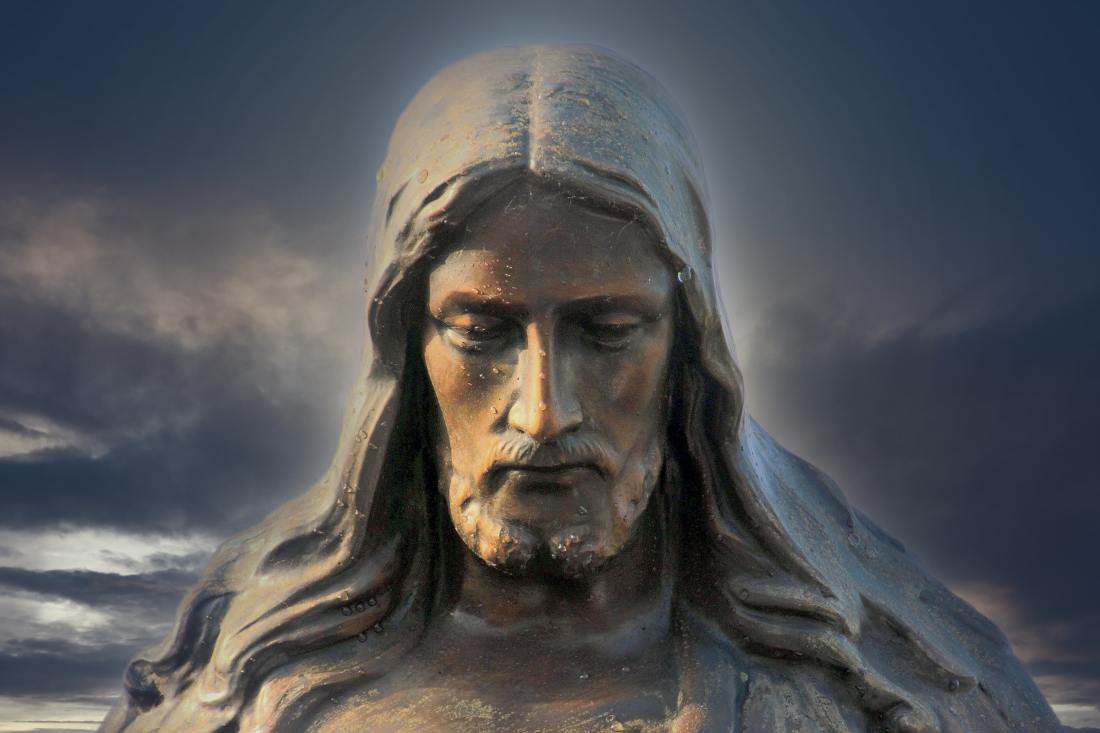
Jesus Christ Statue Photo - Myriam Zilles

Out of the Protestant Reformation, from Martin Luther, came the concept of Law and Gospel.  It is used to read and interpret  Bible passages. Confessional Lutherans especially make a big deal out of using it.  I find it to be a very helpful concept.  The Law tells us what to do.  The Gospel tells us what God has done and what he is doing in Christ Jesus.  Primarily, the Law shows us our sin, and the Gospel shows us our Savior.

There are three functions or uses of the Law.  The Curb function of the Law restrains people from doing wrong. You do not steal because it is wrong and there are consequences to stealing.  The Law as a Mirror shows us who we are, sinners.  It shows us our sin and how we have failed to keep the law.  The third use of the Law is the Guide function.  The Law shows us how to live, and how to respond to God’s saving love (the Gospel).

The Gospel shows us what God has done for us.  It is Good News.  It is usually focused on what Jesus has done, but any saving action by the Triune God can be considered Gospel.  The main focus is on Jesus since that is the entire Bible story points to him.  He came to Earth to save us and restore that broken relationship with us.

If we look at Exodus 20:1-17, we can easily find Law and Gospel.  The Ten Commandments are found there but in verse two before any commandment is given we find the Gospel.  God reminds them that he had saved them from Egyptian slavery. So the Gospel appears right before the giving of the Ten Commandments, the Law.  Therefore these commandments told them how to respond to God who had saved them (the third use of the Law).  The commandments were to restore a covenant relationship with God. The commandments unfortunately also show us how we fail to keep those commandments (the second use of the Law) and our need to be freed from the bondage of sin. And in the Ten Commandments you can also find the first use of the Law (civil laws), for example “You shall not steal”. So the uses of the Law are not mutually exclusive. These commandments are applied today telling us how to respond in gratitude to God’s saving love.

Law and Gospel can be applied to ourselves and our conversations.  When a person is suffering and feeling worthless, that is when we need to share the Gospel message of God’s love for them.  When a person is feeling that what they are doing is not that bad of a wrong or just not wrong, then we need to share the Law and remind them that sinning is serious and it causes harm.  For unbelievers, I would first let them know that we all are not perfect and are broken sinners (Law), and then share the good news that God still loves them, broken as they may be, and desires to be in relationship with them (Gospel).

New Life

You have been set apart and chosen. Photo by Gift Habeshaw.

Our church had a mini-retreat on new life in Christ, and it was led by Jim Found, a former missionary.  The content was so good I want to summarize it for you.  Jesus came that we might have this abundant full life (John 10:10). As Christians, we are given a new full life.  Our old life is still hanging around but we have this new life in Christ. What does it mean to have this new life?

The new life is also called the new self or new nature. We get to “walk in newness of life” (Romans 6:4).  We walk in love (Ephesians 5:1-2) as we “put on the new self, created after the likeness of God in true righteousness and holiness” (Ephesians 4:17-24). This is not our doing for God is at work in us to do his will (Philippians 2:13).  Unfortunately, the old self is still around and we do not fully realize the new self (Romans 7:7-25).  There is conflict between the old self and the new self.  We still sin.  The Holy Spirit will enable us to recognize our sin, reject it, and then ask for forgiveness (repentance).  This is an ongoing lifelong process (sanctification) to conform us to the image of Jesus (Romans 8:29).   Note though we sin, we still are saved.  Our salvation or justification is not based on anything we do.  It is a gift (Ephesians 2:8-10).  The good works come from us after being saved.  The new life with its good works is a result of being saved.  You strengthen your new life by trusting Christ and his promises, and the good works are the result. Walking in newness of life means living a Christ-like life (Colossians 2:6-7; Philippians 2:1-11).

Our old self is selfish. It will by nature disobey God’s will.  The mind set on the flesh (the old self) is hostile to God (Romans 8:7-8).  The new life is guided by the Holy Spirit and it desires to obey God’s will.  We need to daily put off the old self.  We put off our old self when we repent, and ask the Holy Spirit to strengthen our new life. The Holy Spirit aids us in our struggle against temptation and sin. The Holy Spirit awakens in us new thoughts and affections so we can begin to love God and refrain from evil actions.  Oh, Holy Spirit, control our thoughts and give us the power to reject sin.

By walking in newness of life, we have victory over temptation.  We need not be burdened by things like fear, anxiety, loneliness, hopelessness, lack of purpose, peer pressure, sinful addictions, guilt, low self worth, and the many other things that burden us.  In our new life we have a new identity in Christ as children of God (1 John 3:1), and with that comes many promises, that is scripture passages that tell of God’s love and support for us and how to respond to that love.

Walking in newness of life means we submit ourselves to God, and we resist the devil so he will then flee from us (James 4:7).  A great way to resist the devil and temptations is to follow the example of Jesus (Matthew 4:1-11) and quote scripture when facing temptation. Quote scripture and tell Satan to leave. Do not let Satan bother you, because you are God’s and he saved you.

God is at work in you even if you do not feel it and wonder if you are saved.  God is at work in you if you admit you are a sinner. If you repent of your sins and want to change your life, God is at work in you.  If you acknowledge that Jesus is God who became man, God is at work in you.  God is at work in you, if you recognize that Jesus came to die for you and then rose from the dead. If you trust in Jesus as Lord and Savior God is at work in you. That desire and power to live for Jesus comes from God working in you. You are saved.  You are his.

With the help of the Holy Spirit, we can show that Jesus is Lord in concrete ways.  You have been given a purpose of sharing God’s love through caring and serving others.  One big way to do that is to share the good news of how God has saved you and how he is at work in you.  Share the new life he has given you. 

Heavenly Father, You have given us everything we need for a full and abundant life. You have set us free from the sinful cravings of the world.  Your promises are sure and certain. You are there to deliver us when we call out to you, and yet we fail to live the good life you would want us to live.  Let your Holy Spirit strengthen our faith to help us to reject our sinful ways and live that full abundant life for you.  We ask this because of all Jesus has done. Amen! (2 Peter 1:3-4; Psalm 50:15; John 10:10)

But the fruit of the Spirit is love, joy, peace, patience, kindness, goodness, faithfulness, gentleness, self-control; against such things there is no law. And those who belong to Christ Jesus have crucified the flesh with its passions and desires.  If we live by the Spirit, let us also keep in step with the Spirit. Let us not become conceited, provoking one another, envying one another.  (Galatians 5:22-26)

PS This was just a taste of the mini-retreat.  For the complete text of the retreat,  go to Jim Found’s website https://foundbytes.com/new-life/

Liar! Liar!

Living Network 2 (Peter Farkas Photo)

“Liar! Liar! Pants of fire!”  People have always lied, but it seems to me today, lying is reaching epidemic proportions.  Lying is not good for the liar, for their friends, and for society.  Lying deceives.  Lying is destructive.   Lying hides the truth.  Lying hides reality.  Lying is not good for anyone, and yet today lying is commonplace.  This is due in part to our Postmodern culture where everything is relative and you need to critically tear apart or deconstruct the truth to point out the perceived bias (while ignoring your own personal bias). Thus the truth gets twisted or discarded and outright falsehoods are promoted as fact.  Why do we so easily discard the truth and believe the lies?

In the past five years, I have learned of two new words, misinformation and disinformation.  Misinformation is the unintentional sharing of falsehoods, or it also can be sharing a truth that has been taken out of context in order to make it fit a certain narrative.  Political opponents will point out statements that their opponents did say, but by taking the statements out of context they make the statements sound bad.  With our social media accounts, we will pass on these falsehoods because we want those statements to be true when they are really lies.  We need to be aware of the spin that is sometimes put on the facts and also be willing to verify the lies that we come across.  Remember every effective lie has a kernel of truth.  Now disinformation is an outright lie. The purpose of disinformation is to promote division, mistrust, and hate.  Much of the disinformation are stories and pictures that come from foreign sources, like Russia, China, and Iran.  Their purpose is to weaken America by sowing division, mistrust, and hatred.  We need to be aware of disinformation so we are not misinformed and pass on these lies.  We need to promote truth and avoid these lies, even if we do not like what the truth says.

Lying deceives.  One can deceive oneself.  You may come to believe the falsehood.  You use the lie to boost your own self esteem or to boost your own power and fortunes, but reality is lying undermines your own self-worth and your personal integrity.   Lying deceives others and lying can put relationships in jeopardy.  Can you trust a liar?  And lies can deceive entire societies to promote bad behaviors and wrongful actions.  We need to be careful and promote only the truth.

God considers lying to be an abomination (Proverbs 12:22).  God speaks against lying in the Ten Commandments: “You shall not bear false witness against your neighbor” (Exodus 20:16).  There are many more scriptures warning about lying.  Here are a few more: Psalm 101:7, Proverbs 12:19, Proverbs 19:9, and Colossians 3:9-10.

How do we handle lying?  First we need to look at ourselves. Am I a liar?  Do I deceive myself?  We need to first recognise who we are.  We are broken.  We are sinners.  The Bible says, “If we say we have no sin, we deceive ourselves, and the truth is not in us(1 John 1:8).  We are not perfect (Matthew 5:48).  We are not good enough, but there is good news.  “If we confess our sins, he [God] is faithful and just to forgive us our sins and to cleanse us from all unrighteousness” (1 John 1:9).  God will forgive.  We need not deceive ourselves.  God knows and still loves us (John 3:16). Do not lie to yourself.  Live life with integrity.  You need to face reality and truth head on.

God calls us to put away falsehoods and lies and speak the truth in love (Ephesians 4:15,25). It is good for our relationships to speak truthfully to one another.  It builds trust in your relationships, and it gives you integrity.  It is good for the community too.  If we can count on one another, our communities can thrive.  Let us speak truth in love, and avoid promoting any lies.

In this political season, lies, falsehoods, and ridicule are everywhere.  The purpose of the ridicule, lies, and falsehoods is to destroy their political opponents, but it also undermines our society.  There is less trust in our society today because of these lies.  Let us rise above the fray, and be kind, gracious, and truthful in all we say and do.  Do not promote lies!  Stand for the truth!  By doing so I believe we can strengthen society.

This was inspired in part by Don Overcash’s editorial “The Power and Value of Truth” (Subscription is needed) and in part by “How to Avoid  Misinformation and Disinformation Online”.