
Censorship in Finland

Living Network 2 (Peter Farkas Photo)

I believe clashing worldviews, between the old traditional Biblical Christian worldview and the new worldview which I call “Critical Expressive Individualism” (CEI), has led to a 24 page 22 year old booklet  being censored with all copies to be destroyed.  The booklet, “Male and Female He Created Them” (English translation), promotes the Biblical worldview of heterosexual marriage and argues against some of the common reasons to support same-sex unions.  The booklet was written in 2004 after Finnish legislation that allowed same-sex partnerships to register.  I think it might be a little like the idea of civil unions that was kicked around in America.  This booklet was written many years before same-sex marriage became legal in Finland.  Although the Finnish Supreme Court did not find the booklet to incite hatred or violence, it did find that having the booklet “made available, to the public and kept available to the public, opinions that insult homosexuals as a group on the basis of their sexual orientation.”  Therefore in a 3-2 vote the Finnish Supreme Court found the two accused guilty and ordered all copies of the booklet to be destroyed.

This was a 7 year battle in the courts.  It started with a tweet in 2019, and the tweet and the booklet (and the two authors) went through the courts in Finland.  All the lower courts (and the police) found the accused innocent and no laws were broken but the prosecutors kept appealing the rulings.  The Finnish Supreme Court found the tweet did not break any laws, but they found that the booklet did insult homosexuals on the basis of their sexual orientation therefore the two accused and the foundation that published the booklet were fined, and the court ordered all copies of the booklet to be destroyed.

Reading the English translation of the booklet, I did not find any inciteful or insulting language. No one or any group was degraded or threatened.  It did state we all are sinners, and the Bible declares homosexual behavior to be a sin and homosexuality was not best for society. Interestingly, I did find the booklet felt dated, because the arguments were about homosexual unions and homosexual families.  That surprised me and it makes me wonder if American Christians have accepted the premise of homosexual marriage and moved the battle on to Transgenderism.  If so, we all need to read this booklet and realize homosexual marriage is not neutral but it changes society and not for the better.  I did not find any “hate speech” in my reading of the booklet.

This ruling brings up the question of hate speech and what is it?  Unfortunately hate speech is hard to define.  Hate speech is offensive and it targets a specific group or individual based on certain intrinsic characteristics.  It can be used to intimidate, vilify, demean, and/or humiliate.  Its purpose is to incite violence or hostility, to promote discrimination, and/or to create divisions in society.

I believe the CEI worldview is how Western Culture views the world today.  CEI is very individualistic.  It says that every individual gets to decide what is true and what is false.  You look inside yourself at your feelings and desires and you then decide who you are and what you believe.  And CEI also wants to remove any oppressive social structures so that all people can express themselves freely.  CEI sees people as naturally good, and with proper training and the removal of oppressive social structures a better world can be created.  I feel that it was from this perspective that the court made its decision to censor the booklet.

I believe the traditional Biblical Christian worldview is the best description of reality, not CEI.   The Christian worldview recognizes that we all are broken self-centered people.  It is God, the Creator of everything, who sets the standards of right and wrong, and true and false.  We find our identity in him.  He created us male and female, and he gave the two sexes characteristics that complement each other.  He loves us and wants to have a relationship with each one of us.  Following God’s example, as Christians we are called to love and not hate.  We love even our enemies and we want the best for everyone.  We want to unite people in Christ and not divide.  We do not want to oppress anyone and we are against “hate speech”, but in love we want to share with others the better way of life that better matches reality.  That is what I think this booklet was trying to do.  The booklet was not about insulting the homosexual community, rather it was trying to point out a better way of life.  I believe the booklet should not have been censored and copies destroyed.

More information on this ruling can be found with these two articles, “Finnish Lutherans Convicted of ‘Hate Speech’ by Finland Supreme Court” and “Finnish Supreme Court Convicts Päivi Räsänen of ‘Hate Speech’”.

Reconcile

To reconcile means to restore a friendly relationship between two persons.  Because of our brokenness, we are at odds with each other and with God.  Broken relationships are common. In fact, all our relationships contain elements of brokenness, because we are broken.  Reconciliation requires love and forgiveness.  People are reconciled when in love forgiveness is given and accepted.  It is not easy to love and forgive but with the help of the Holy Spirit we are able.

Reconciliation starts with God.  Out of his great love for us, while we were still enemies and ungodly sinners, Jesus died for us to reconcile us to God (Romans 5:6-11), not counting our sins against us (2 Corinthians 5:18–19).  On the cross, Jesus made peace with God by reconciling us with God (Colossians 1:19-20).  We are forgiven because of Jesus (Ephesians 1:7).  It is all God’s doing.  He wants to restore that broken relationship he has with us.

With that restored relationship, we are blessed, and since we are blessed we are called to be a blessing (Genesis 12:2-3).  Being a new creation, a blessing, means we are part of the ministry of reconciliation (2 Corinthians 5:16-21), where we share that message of reconciliation to the world.  We called to imitate God (Ephesians 5:1-2).  That means showing love and forgiveness to those around us .  Just as we have been forgiven so very much, so we forgive others (Matthew 18:21-35).  In imitating God, we get to love our enemies, do good to those who hate and abuse us, and bless those who curse us (Luke 6:27-28).  We do not repay evil for evil, instead we bless (1 Peter 6:9) because we are called to overcome evil with good (Romans 12:21).

We are different from those of the world.  We are truly countercultural. Today’s culture sees the world in terms of power.  Many times it is expressed in terms of oppression. It divides the world into us versus them by pointing out that they have and we want, or they are in control and we are not. This view is very divisive. Christians on the other hand are in the business of reconciliation. We see the world through the lens of God’s love.  We want to unite all people under Jesus Christ, because God desires for all people to come to know him (1 Timothy 2:3-6).   So let us reach out in love and forgiveness and share that Gospel message of love and reconciliation.

Christian Collapse

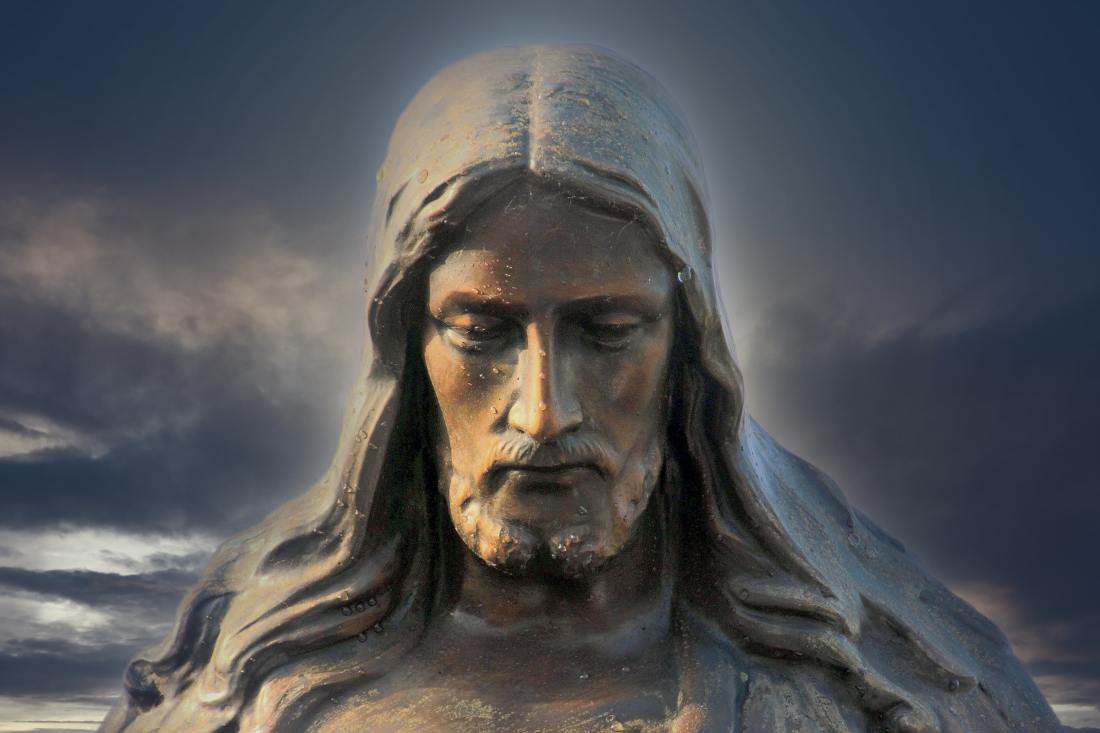
Jesus Christ Statue Photo - Myriam Zilles

There is a video going around called “The Lutheran Collapse”.  I believe the concerns expressed in this video are about 20 years late and what is happening today is a Christian collapse.  Yes, Lutheran denominations have lost a lot of members.  The video focuses on the two largest Lutheran denominations, the much larger theologically liberal Evangelical Lutheran Church of America (ELCA) and the smaller theologically conservative Lutheran Church – Missouri Synod (LCMS).  I am a member of the LCMS, so this video is of interest to me, and for a long time now, I have been interested in the reasons behind why there are fewer people from the younger generations attending church. 

The mainline churches, like the ELCA, embraced the current cultural values and went theologically liberal.  Many people left those churches and many of them went to more theologically conservative churches.  Unfortunately, that only slowed the decline in the theologically conservative churches.   The problem is the Christian faith is not being passed on to the younger generations.  And this is not a new concern.

In 2003, Reggie McNeal wrote a provocative book, “The Present Future: Six Tough Questions for the Church”.  In the book he tried to wake up the American church to the decline that was happening.  That was 23 years ago and since then I have also read other books addressing the decline in American Christianity.  It is not just Lutheranism in decline, and it is not just liberal mainline churches in decline.  American Christianity is in decline.  American Christians are facing this crisis because the culture is no longer supportive of the Christian faith and its values, and in general the American churches have not successfully transitioned to operate in the new culture.

1517, a theologically conservative Lutheran nonprofit, wrote an article addressing the video (and other similar videos).  The article, “The Future of Lutheranism Belongs to Builders”, was well written and I liked most of it.  Pastors and lay leaders need to be architects and builders, and not curators or deconstructionists. Discipling and mentoring needs to happen, and we need to keep our Lutheran doctrine.  What I disagreed with was the “traditioned innovation”, which I interpreted as we keep our Lutheran traditions and innovate only within the bounds of these traditions.  That sounds like curation and not innovation to me.  Yes, there is a lot of good theological richness in those Lutheran traditions (e.g. our hymnody) and many are worth keeping in some form, but the question we need to ask is “Do they speak to our young people today?”

I do not know what the best answer to this crisis is, but here are some ideas that I would suggest. We need to make our Christian faith, especially our worship services, accessible to those who have never been in a church.  We need to reach out with the good news of Jesus to those who know nothing of our faith.  We need to disciple and mentor our church members to inspire them to share the hope we have in Jesus.  For the LCMS and other church bodies, we need to put more emphasis on encouraging and training their laity in actively living their faith, and less emphasis on the pastoral office and the institution. 

And above all, we need to remember what is most important.  It is all about Jesus.  He is the one that is important – not our church buildings, not our institutions, not our traditions, and not anything else.  The Good News is all about Jesus and what he did on that cross and his rising from the dead, so that we might have life in him. That needs to be our focus.

Secular Christmas

Christmas Nativity

Christmas is celebrated all round the world.  Christmas is not a religious holiday for most people.  This secular version of Christmas promotes values of love, compassion, generosity, giving, family, hope, peace, and joy.  These good values originated with the Christian celebrations of Christmas, but the main point of Christmas, from which these values derive their meaning, is Jesus Christ coming to Earth and being born so that we might have life in him.

I find it interesting that people of other faiths have their version of Christmas.  Many Buddhists, Jewish people, Muslims and even atheists celebrate Christmas in some form.  They have some of their own traditions but for many of these celebrations what binds them to the secular Christmas is Santa Claus, because many of these celebrations have Santa Claus.

Santa Claus is the icon of the secular Christmas.  Folklore of his story has been developed over the last 200 years to what it is today.  First, there was a historical person called Saint Nicholas who really did exist and was born about 280 A.D.  He was a generous Christian Bishop.  Today’s Santa Claus story is very different from the historical story of Saint Nicholas but Saint Nicholas provided the origins from which Santa Claus developed.  The Dutch with their Sinterklaas tradition and the English with their Father Christmas tradition were blended together to create the Santa Claus tradition.  In 1823, an anonymous author (likely Clement Clarke Moore) penned a poem called “A Visit from St. Nicholas”, which is also known as “Twas the Night before Christmas”.   I believe that poem created the foundation for the Santa Claus tradition.  From that poem, the story of Santa Claus developed into what it is today.

Secular Christmas is fun and promotes some good values, however it is missing the historical importance of the birth of Jesus Christ.  Christmas is meant to be a celebration of the birth of Jesus.  God, the Father, gave his only begotten Son, Jesus, to us to restore us back to himself and to give us life in him (John 3:16).  God in Jesus humbled himself and was born human (Philippians 2:5-8) so that he could live the perfect life we could not (Hebrews 4:15) and to pay the price for our sins by dying on a cross (Colossians 2:13-14) and then rising again 3 days later.  Jesus gave himself so that we might have life in him.  By the power of the Holy Spirit we have real life.  That is the real story of why we celebrate Christmas.

The Christmas story can be found in Luke 2:1-20 and in Matthew 1:18-2:12.  This Christmas let us remember the birth of Jesus who is our Lord and Savior.

PS This year I discovered the ancient “O Antiphons” which are short chants that cover 7 days (December 17-23) of Advent, right before Christmas.  The hymn “O Come, O Come, Emmanuel” incorporates the 7 antiphons into its verses.  I am using a devotional based on the antiphons this year from 1517.org.

Saints Past

Photo of crepuscular rays by Peter Hostermann

There are several definitions of the word “saint”, however the biblical definition is simply one who trusts in Jesus as Lord and Savior, so we who believe in Jesus Christ are saints.  November 1st is  known as All Saints Day, among other names.  On this day we remember those saints who have gone before us.  I think of the many Christians that have influenced me over the years.  Many of them have passed on, though many are still here today providing encouragement and support.  I am thankful for all they have taught me.

I think especially of my parents, Erwin and Irene.  Their Christian example made a huge difference in my life.  I owe so much to them.  They were not perfect, so there are a couple things that I am having to unlearn, but  they ended up shaping my life for the good.  I am very appreciative of their influence in my life.  I see a lot of their influence in how I act and behave.   I thank God for their good influence.

It is not just those who over the years I have had some contact with but it is also those saints from days long gone who influenced others who then influenced a later generation who then influenced the next generation.  There is a chain of saints from centuries past that have had an influence on me.  I am thankful for them also.

It is somewhat mysterious the way saints from the past, saints today, and saints in the future are all interconnected to form the Body of Christ, the Church.  We are not all the same and yet we each bring something needed to the Body.  And saints from the past encourage us to live lives of faith.  The writer of Hebrews in chapter 11 encourages us with a list of saints of faith that had looked forward to the coming Messiah and a future where everything would be made right.  He ends the list with this encouragement.

Therefore, since we are surrounded by so great a cloud of witnesses, let us also lay aside every weight, and sin which clings so closely, and let us run with endurance the race that is set before us, looking to Jesus, the founder and perfecter of our faith, who for the joy that was set before him endured the cross, despising the shame, and is seated at the right hand of the throne of God. (Hebrews 12:1-2)

So let us be encouraged to live that good life of faith for Jesus because we are surrounded by a great cloud of saints who have lived a life of faith before us.  And let us encourage others in the Faith to also stand firm for Jesus.  I am thankful for all the saints past, present and in the future who make up the Body of Christ. 

As we remember those who had gone on before us, I am reminded of the hymn “For All the Saints”.  Here is a version you can sing along with.

Meaning of Words

Today, we live in a pluralistic society. People view the world in different ways and they may interpret words differently than you do. Many people today want you to believe that if you say one word it also means that you must believe or do another word. One example is the word love. They say you cannot love a person unless you also affirm that person. That is not true!

Love does not equal affirmation. People want you to believe that you cannot love a person unless you also affirm the person and their actions. Affirmation means you validate and approve the person, their lifestyle, and their actions. People say that as Christians if we love unconditionally we must approve everything about the person. That is not true. Look at our parents. You can say that almost all parents love their children wholeheartedly, and yet they disciplined us and did not approve of everything we did. They did so for our own good. We too can love people, and yet not affirm them if their lifestyles are harmful. To love means to seek the good of the other person. We can not approve or validate harmful behavior because that would not be the loving thing to do. One way we can sort of affirm them is to say “God loves you”.

Disagreement does not equal hate. People will say that you must hate them because you disagree with them and/or their lifestyle. People assume if you are their opponent then you must hate them and you must be out to get them. And yet we may only disagree on a topic. That does not mean that there is hatred. As Christians we try to live life peacefully with all people as much as it is possible (Romans 12:18). We do need to speak the truth but we speak the truth in love and not out of hatred.

People do not equal their ideas, opinions, or beliefs. People today are tribal. Their identities are reduced to a label, but reality is people are complex. We cannot label a person who has this opinion and assume they must also have this belief. God treats everyone with equity. There is no partiality with God. He loves everyone. We too need to treat everyone with equity and love, and avoid labeling them. We can build relationships by listening to others.

Association does not equal advocacy. “Guilt by association” is a common phrase, and unfortunately it describes a common judgment. Jesus was found guilty of associating with “sinners”. He was not advocating their lifestyle, rather he was reaching out to them to try to bring them back to a better life found in him. Many times we Christians refuse to associate with those whose life makes us uncomfortable, yet God calls us to reach out to them with the life giving message of the Gospel. We should not be afraid to reach out.

Engagement does not equal endorsement. It is okay to engage with people of different ideas. It is okay to work long aside others with different beliefs for the common good. In doing so we are not endorsing their beliefs, but we are building relationships that may allow us to share the message of Jesus to them. We need to listen to them to find out what they believe and how to respond to them.

Words and their meanings do matter.  We need to listen and learn what people mean when they speak to us, and not assume they view the world the same way we do.  In America, today’s emerging culture wants to define words differently than in the past.  We need to be aware of this change and understand what is behind the new definitions.

This blog post was inspired by Chapter 9 of “How the Light Shines Through” by Chad Lakies.

Is Forgiveness Counter-Cultural?

Rays of light in a forest

Recently, Charlie Kirk was assassinated by a shooter, and at the Charlie Kirk Memorial Service, Charlie’s wife Erika Kirk said,

I forgive him because it was what Christ did and is what Charlie would do.” And she said, “The answer to hate is not hate. The answer we know from the Gospel is love and always love.

After Erika, President Trump spoke and said,

[Charlie Kirk] did not hate his opponents. He wanted the best for them. That’s where I disagreed with Charlie. I hate my opponent and I don’t want the best for them, I’m sorry,” 

Now I think President Trump’s attitude is not that uncommon today.  Forgiveness is an unnatural act.  We want vengeance.  We may want to call it justice, but many times what we really want is vengeance. We want to hate those who hate us or even those who just oppose us.  Jesus has a better way of love and forgiveness.

Hatred and vengeance divides people.  Love and forgiveness brings people together.  People are reconciled when forgiveness is given and accepted.  It is not easy to love and forgive but with the help of the Holy Spirit we are able.  Jesus says, “Love your enemies and pray for those who persecute you” (Matthew 5:43-48), and he also says “Love your enemies, do good to those who hate you, bless those who curse you, pray for those who abuse you” (Luke 6:27-28). He does not say to hate them.  Rather we are to “overcome evil with good” (Romans 12:21), and “Do not repay evil for evil or reviling for reviling, but on the contrary, bless” (1 Peter 6:9).  It is not easy, but Christians are called to be different, to be counter-cultural.

The culture today sees the world in terms of power.  Many times it is expressed in terms of oppression.  This view is also divisive. It divides the world into us versus them.  They have and we want.  They are in control and we are not.  This view feeds the hatred and vengeance that was expressed by President Trump.  Christians see the world differently.  We view the world through the lens of God’s amazing love.  Christians are counter-cultural and one way we show our difference and our love is by forgiving people.  

So why do we forgive?  Because God has forgiven us so very much, and so out of gratitude we forgive others (Matthew 18:21-35).  God did not wait until we got our act together. No, he loved us while we were still broken ungodly sinners (Romans 5:6-8).  We all are broken sinners (Romans 3:23) from the worst of us to the best.  There is no difference.  There is no us versus them.  We are all in need of the Savior.  In response to God’s saving love, we love and forgive others as we imitate God (Ephesians 5:1-2).  That is why we forgive and in doing so we are counter-cultural.

So instead of being divisive, we Christians need work to reconcile and unite.  Let us love those we disagree with.  Let us be kind to those who hate us.  And let us forgive those who attack us.  Let us work to reconcile people to God and to each other.  This is what we have been called to do.  We have been given the ministry of reconciliation (2 Corinthians 5:16-21).  And from the little I know about Charlie Kirk, this appears to have been his goal too.  Let us reach out in love and forgiveness and share that Gospel message of love.

SPECIAL ME

American Flag Photo by Lisa Setrini-Espinosa

There are nine signs of  narcissistic personality disorder (NPD).  If a mental health professional finds 5 of the 9 signs in a person then that person is diagnosed as having NPD.   The nine signs spell out SPECIAL ME.

  1. Sense of self-importance
  2. Preoccupation with power, beauty, or success 
  3. Entitled
  4. Can only be around people who are important or special
  5. Interpersonally exploitative for their own gain
  6. Arrogant
  7. Lack empathy
  8. Must be admired
  9. Envious of others or believe that others are envious of them

After reading these 9 signs, I immediately thought of President Donald Trump.  Now I am not a mental health professional and I am not certain that with a professional evaluation we can find 5 signs of NPD (or more), but I think President Trump has some of the signs, at least from what I have seen from his public persona.

What concerns me more than whether he has NPD or not is that he is authoritarian with his actions.  Now I appreciate several things that President Trump has done but not always in the way he does it.  I am a social conservative and a fiscal conservative.  However, I believe he has issued several executive orders that are unconstitutional. They are still winding their way through the courts, so it is not certain which ones (if any) are unconstitutional.  He is trying to expand the powers of the executive branch and that is upsetting the checks and balances in doing so.  I understand that he wants to get stuff done and he can not guarantee Congress will do what he wants and the Judicial Branch is slow and methodical.  But I believe the checks and balances of the three branches of government are what has made America great.  It prevents one branch from grabbing too much power.  The three branches have to work together.  President Trump’s authoritarian actions threaten that.  He also demands loyalty to him and his policies.  This is not good for the country.

I believe that he feels that he personally must succeed and be a success, so his authoritarian tendencies and his loyalty requirements flow out of that need.  I also believe that his continued focus on the 2020 presidential election is because he cannot believe he lost.  He still claims there was widespread fraud in the 2020 election and I have yet to see any conclusive proof.  His own Attorney General William Barr said there was no widespread fraud in the election.  One of the biggest accusations of voting fraud was with the Dominion Voting machines.  Right before the defamation trial was to start, Fox News settled the defamation lawsuit with Dominion for $787.5 million.  No evidence appeared in the pre-trial discovery supporting the claim of fraud.  Instead after the settlement, Fox News gave a statement that “certain claims about Dominion to be false”.  And Mike Lindell who had made big claims about having proof of election fraud did not in his defamation trial offer any proof of election fraud.  And yet today President Trump continues to claim fraud in the 2020 election.  

He recently said in regard to Space Command moving from Colorado to Alabama, “The problem I have with Colorado, one of the big problems, they do mail-in voting. They went to all mail-in voting, so they have automatically crooked elections.”  There is no proof that Colorado has crooked elections. They are very careful with their mail-in ballots.  I think the elected Colorado Republicans would say that their elections were not crooked.  It seems he still claims there is still widespread election fraud in the country.  Without proof of widespread election fraud, I do not think these claims are good for the country.

And President Trump’s administration has gone after many of those who in the past have criticized or investigated Donald Trump. It looks like he is taking action against those who have opposed him.  It seems to be personal for him.  I am concerned about the precedents being set.  These actions are not good for the country.

This post has been more opinionated and subjective than I would have liked, but I am concerned that President Trump has been too authoritarian and too focused on himself.  I am concerned that President Trump is not presidential material, because of his narcissistic tendency.

I will end with one story to illustrate my point.  The Trump administration has been working to bring peace to the conflict between Armenia and Azerbaijan.  That is a good thing.  They have produced a framework for peace and one key part of the deal is the creation of the “TRIPP corridor” or the “Trump Route for International Peace and Prosperity”. It will be “a transport and trade route designed to connect Armenia and Azerbaijan more directly while integrating the South Caucasus into broader international shipping and energy networks.”  The peace treaty is not a done deal yet and I hope that peace happens, but this does illustrate the narcissistic tendency of President Trump.  There really is no need to name the corridor after President Trump, except for his ego.

And some advice for you, Mr. President, look to Jesus and not to yourself.  Jesus has been very good to me.  I am a broken sinful person, who is loved and forgiven by God because of all Jesus has done.  Receive that love of God!  Do not reject it!

Transhumanism to Posthuman

Wier Gear Photo by Nic Kilby

Some people today envision a future where human beings will have evolved beyond our bodies to a super artificially intelligent posthuman that may or may not inhabit a body (biological or robotic).  They see the latest breakthroughs in artificial intelligence (AI) as a dream come true and they want to encourage and support AI so that AI can free us from our biological constraints and usher in a utopia. Others, transhumanists, see AI as a tool for us to enhance our human limitations and incorporate AI into a cyborg-like utopian future. These transhumanists also want to encourage and support AI with a utopian future in mind.  And many others see AI as only an important tool for business and other uses.  How should we see and deal with AI in our lives today?

Transhumans or cyborgs are here today.  People today with pacemakers, advanced prosthetics, cochlear implants, or other technological implants can be considered real-live cyborgs.  They may not be like the Six Million Dollar Man from that old TV show who had superhuman capabilities, but they do have technological enhancements. And I also would argue that it is not much different than the basic tools we use today.  Smart phones seem to almost be body parts for some people, but even a simple lever enhances our capabilities. So in some ways, we have been enhancing our abilities since Adam and Eve, and God started the technology enhancements with the technology of clothing (Genesis 3:21).

Today’s hype is all about enhancing our brain power with AI.  Will that make us all cyborgs?  Will that lead us to “evolve” beyond our biological selves to this posthuman future?  Technology has always changed society.  Unfortunately we do not always see the downsides of new technology.  Social media is here to stay and it can be a good way to stay in contact with people.  However, social media is also addictive and can create echo chambers of like thinking.  AI has already been shown to be addictive when it becomes a companion.  We need to evaluate the new technology, like AI, to make certain it is a good tool for us.  You need to figure out what the cost of this new technology is.

  • Technology has a tendency to isolate, so does this technology help or hinder social relationships?
  • In making life easier in one part of your life, does this technology make another part of your life more difficult?
  • Does this technology make life easier for one segment of society at a cost to another segment of society?
  • Does this technology satisfy a felt need while costing you some real needs?

You need to evaluate any new technology.  One may need to not use this technology if the cost is too high, or to limit its use to prevent addictions and harm to others.  What is the cost of AI today?  What will be the cost tomorrow when AI is much more powerful?  How will it change society? How for the better and how for the worse?  These are questions to ask and to decide what we can do and whether this is a technology that is good to use or not.

Note I only explored the posthuman future from an AI superintelligence viewpoint.  Others see the posthuman future with biologically modified humans to be like elves, dwarves, dog-people, cat-people, vampires, and the like.  This view also aims to free us from our biological constraints by modifying them. 

As Christians, we know who we are and whose we are (Galatians 2:20).  We have a God who loves us (1John 4:19), became human for us (John 1:1,14), and died for us (Romans 5:6-8).  We are sons and daughters of the Heavenly King (2 Corinthians 6:18).  We are made in the image of God (Genesis 1:27), so we are not constrained by our biology, because it is God who formed us (Psalm 139:13-16).  We are who we are in order to serve him by serving others (Ephesians 2:10).  Transhumanism and Posthumanism is all about using technology to become like God (Genesis 11:4).  We are not God.

Let me leave you with this quote from Meta CEO Mark Zuckerberg from a podcast (found in this AP article).  “When people in the tech industry talk about building this one true AI, it’s almost as if they think they’re creating God or something.”

This post was inspired in part by the article “Resisting a Posthuman Future” by C. Ben Mitchell, found in the Summer 2025 edition of the Concordia Journal on page 21.

The Lord’s Prayer

Prayer Photo by Jesper Noer

The “Lord’s Prayer” or “Our Father” (Pater Noster) is a model prayer or a prototype that Jesus taught his disciples (Matthew 6:9-13; Luke 11:2-4) when they asked him to teach them how to pray.  It is not meant to be words that are recited to receive a blessing.  It is good to intentionally pray it with sincerity and meaning, or to use it to fashion your own prayer.

In my praying of the Lord’s Prayer, I am going to use the version of the Lord’s Prayer that is commonly used in LCMS churches.  It is based on the Matthew passage.  This prayer was taken from the Book of Common Prayer (either the 1892 version or the 1928 version) when the LCMS was producing the 1941 hymnal which was in English and not German.  I believe this English version of this Lord’s Prayer actually dates back to before the King James Bible, perhaps all the way back to Tyndale.  

Our Father, who art in heaven.  Heavenly Father, we thank you that because of Jesus, our high priest, you allow us to approach you and come before you (Hebrews 4:14-16).  You are not a distant God but one who wants to be in relationship with us.  Thank you!

Hallowed be thy name. Lord, you are holy and we are not.  We sin.  We ask that by our thoughts, actions and words we may live holy and pure lives for you (1 Thessalonians 4:3-8). Make your name be holy in our lives and throughout the world. Strengthen us, because you alone are worthy of praise.  May our lives exhibit that praise.

Thy kingdom come.  Father, we ask that by your Spirit your kingdom would come to us and among us.  You are reigning now (Psalm 103:19).  Help us to see your reign.  We wait for Jesus’ return when the fullness of the kingdom will be ushered in (1 Timothy 6:14-16).

Thy will be done on earth as it is in heaven.  Lord, your good and gracious will is being done, but we ask that it would be done among us also.  Hinder the devil, the influences of the world, and our own sinful nature so that we may live our lives for you.  Help us to know your will (Romans 12:1-2).

Give us this day our daily bread.  Father God, we thank you for your provision.  We thank you for allowing us to come to you with our needs and with our wants.  In your gracious provision, you do supply everything we need (Psalm 145:15-16).    We thank you!  We ask that you continue to supply our needs, the food, the shelter, the peaceful environment, our faith, family, and so much more.

And forgive us our trespasses, as we forgive those who trespass against us.  Lord God, we sin daily.  We are broken and corrupt and do not realize how thoroughly broken we are (Psalm 130:3-4). In your mercy, forgive us, renew us, and restore us, so that we may delight in you and walk in your ways.  Remind us how so very much we have been forgiven so to help us to forgive others.  We thank you, Jesus, for your death and resurrection so that by the Spirit we may have this new life.

And lead us not into temptation.  Lord, we are asking that you would hinder the devil, the influences of the world, and our own sinful nature from leading us into sin, harmful behavior, false beliefs, and the like (1 Corinthians 10:12-13).  Lord, you have freed us and so out of gratitude we desire to live life for you.

But deliver us from evil.  Save  us, Lord, from the evil in this world, especially protect us “against the rulers, against the authorities, against the cosmic powers over this present darkness, against the spiritual forces of evil in the heavenly places” (Ephesians 6:12).

For thine is the kingdom and the power and the glory forever and ever.  Amen.  Praise to you, Triune God, for your great love!  You reign!  You are above all.  No one can even closely compare to you.  So all honor and glory and blessing are yours (Psalm 145:1-3; Revelation 5:12). It is all yours! (This last phrase of the Lord’s Prayer is not found in many manuscripts.)