The Trinity (Part 1)

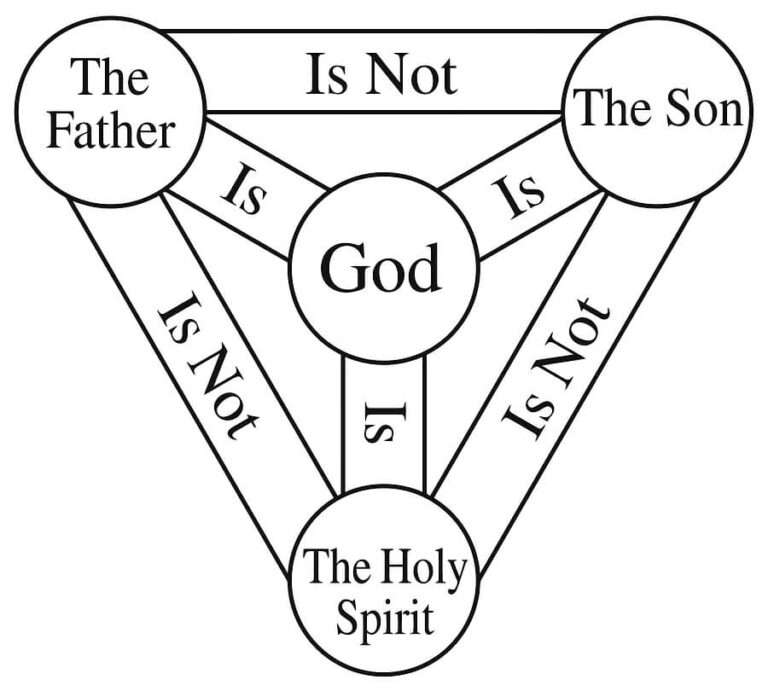
Trinity Shield from symbolsage.com

Today, it seems many Christians do not understand the Trinity, that is the Triune God.  It is something that the Christian Church has believed and taught for centuries, and I believe from the beginning.  The Trinity is not directly mentioned in the Bible, but it is something that is strongly implied in the Bible.  When you put together all the Bible passages on God the Father, Jesus, and the Holy Spirit, you find that everything makes sense with the concept of the Trinity.  The Athanasian Creed lays out the doctrine of the Trinity with an emphasis on Jesus Christ in the latter half.

The Christian faith teaches that there is only one God with three persons (Father, Son, and Holy Spirit) to that one God. There are not three Gods under a Godhead council but only one God with one undivided essence/substance. Jesus is not a third of God but he is fully God, just as the Father and the Spirit are fully God.  Each person of the Trinity is equal to one another. There are many analogies for the Trinity, but they all fall short in some way or another.  It is a mystery that does not completely make sense to our limited minds, but the doctrine is derived from the Bible. 

An example from nature of something that does not make sense is the facts about light.  Light is a particle (a photon), and light is an electromagnetic wave.  It should be one or the other.  We have instruments that measure light as a particle and other instruments that measure light as a wave.  The Trinity is like that. We know it to be true but it does not make complete sense.

There are a couple of interesting passages that suggest the Trinity.  The Great Commision says

 Go therefore and make disciples of all nations, baptizing them in the name of the Father and of the Son and of the Holy Spirit (Matthew 28:19)

Note that “name” is singular, but it points to three names, Father, Son, and Holy Spirit.  And from the Old Testament the Great Shema which starts with

 Hear, O Israel: The Lord our God, the Lord is one. (Deuteronomy 6:4)

The word “God” in Hebrew is Elohim and it is actually plural, not singular as the passage or the corresponding verb would indicate.  These two passages suggest that there may be something to this Trinity idea. (Note I may be stretching the context too much for Elohim to be a reference to the Trinity. The word, Elohim, occurs more than 2500 times in the Old Testament, mostly in reference to the one true God.  The plural is also there to emphasize the awesome majesty of God, and maybe that is the only purpose of the plural.)

There are many passages (e.g. Isaiah 46:9, Romans 3:30a) that state that there is only one God.  This meant the many New Testament passages that claim that Jesus is also God (e.g. John 1:1,14, Titus 2:13) had to be resolved with the doctrine of the Trinity. Similarly for the Holy Spirit there are passages that equate the Holy Spirit with God (e.g. Acts 5:3-4, 2 Corinthians 3:17-18) that need to be resolved.  Scripture also records that Jesus and the Holy Spirit have the same attributes as God the Father. This makes the doctrine of the Trinity necessary and true.

Another concept that makes the Trinity necessary is the fact that one of the major defining attributes of God is love.  God needs someone to love.   Because our one God consists of 3 persons he can have that attribute of love.  He did not wait to create us to learn about love, rather love was known because each person of the Trinity is fully loved by the other persons of the Trinity. 

Part 2 will take a look at each person of the Trinity, and will take a look at some alternative views and proofs against those views.

Casual Christian?

Bible with heart shadow

Who are you?  Are you a Christian in name only?  Or are you a casual Christian?  Or are you a disciple of Jesus Christ? What determines your Christian identity?

A Christian in name only tends to know very little of the Christian faith.  They most likely will say they are a ‘good person’ and that makes them Christian.  Unfortunately for them, they are wrong.  Heaven is not for ‘good’ people.  Heaven is for those who recognize they are bad, sinners in need of a savior.  Christians have received forgiveness and salvation because of what Jesus Christ did on the cross.  He died for each one of us and rose again that we might have life in him.  A Christian has this relationship with the Triune God that was given to them.

A casual Christian is one who does ‘Christian things’ now and then or even weekly.  They most likely have that relationship with God, but they are casual about their faith.  They are Christian infants that still need milk instead of advancing to solid food (1 Corinthians 3:1-3).  They have not grown in their faith because they are casual about it. They seem to be missing the desire or the discipline to grow in their faith.

In response to one’s salvation, a disciple or follower of Jesus Christ should have that desire to follow Jesus, to love him, and to learn of him.  A disciple wants to become like Jesus, to imitate him (Ephesians 5:1-2). There are many Bible passages that can help us.  I will bring up only the one that has been recently on my mind.  In the Gospel of John Jesus says four times,  “If you love me, you will keep my commandments” (John 14:15,21,23,24).  That is a hard saying and he says it four times in just a few verses.  The commandments can be summed up with ‘love God and love people’ (Matthew 22:36-40). And that love is defined as acting out of the commitment to put the other person’s best interests ahead of your own.  Many times, I have trouble loving.  Many times, judgemental thoughts pop into my head, or I do not want to deal with these strange and different people.  Those times I am being self-centered.  And yet Jesus calls us to reach out to them and to love them, not just some of them but all of them.  Jesus has given us the Great Commission to go and make disciples (Matthew 28:19-20). That means we get to walk with them in life, love them, and share the good news of God’s love for them.

Fortunately, God does not leave us alone to become a disciple and to love.  The Holy Spirit comes to be our Helper, Comforter, Advocate, and Councillor. In that very same passage, where Jesus tells his disciples four times to “keep my commandments”, he also promises the Holy Spirit (John 14:15-27).  The Holy Spirit is there to assist and empower our Christian life.  We are not alone in our journey.  Moreover, Jesus helps us understand our dependence on him.  Jesus describes himself as the vine and we are the branches.  That power to love flows from him to us, and by abiding in him we bear that fruit of love (John 15:1-17). Without Jesus, we wither and die.  With God’s help, we are able to succeed. But God provides even more help for us.

We also have the help of local Christians who walk alongside us to help enable us to love God and love people more.  God did not plan for any ‘Lone Ranger Christians’, rather throughout the Bible you find God’s people always gather together in community.  It is through Christian community that spiritual growth happens (Ephesians 4:11-16). It is in the body of Christ that discipleship happens, and I have found that happens more in small group settings than not, so connect up with a small group at your local church and learn of Jesus. Our local congregations should be where we teach, learn and put into action the love of Jesus.

This post was inspired by a short book by Mike Falkenstine called “Being and Making Disciples in the Western Church”.  Here are his five focus areas for local church leaders on making disciples.

  1. A High View of Scripture
  2. A Steely-Eyed Commitment to Making Disciples that Make Disciples
  3. A Determination to Equip All Your People
  4. A Confident Expectation in the Power of the Gospel
  5. An Awareness that Spiritual Growth Happens Primarily through Community

So are we being too casual, individually and/or corporately, with our Christian Faith?

Is the Bible Wicked?

Bible with heart shadow

I have become aware that many people consider the Bible to be an evil or wicked book.  There are more than just a few with that opinion.  I like to believe that is because there is a lot of ignorance of the Bible behind many of those opinions, and maybe it is also in part due to our Postmodern culture where you choose what you want to believe.  Part of the issue is there are some Bible passages that can sound horrible if we do not put those passages in proper context.  The Bible is not a wicked book.

My awareness peaked this last January when a commenter said this on Joe Biden’s inauguration:

“Out of all the books your choose, the bible must be one of the worst examples of a text on which you swear an oauth. Can anyone think of another collection of stories that demonstrates worse morals, ethics and which lacks any basis for system of right and wrong that could be used by a just society?” (slashdot)

Because there is so much wrong with that comment, I am not going to discuss it since it would require me to spend the entire blog post on that comment. (Okay, the most obvious rebuttal is “the Ten Commandments are from the Bible”.)  But that comment started quite the discussion between a variety of people, and I learned that a lot of people believe that the Bible promotes horrible morals..  I also learned that there is a website called www.evilbible.com,  which uses Bible passages to show how evil God is. The website takes some misunderstood or hard to understand passages as well as some completely misinterpreted passages and puts the worst possible spin on God. This website expresses the horrible morals of God. Fortunately for us, the website has it all wrong. 

Note you can put the same spin on the movie “Mary Poppins”.  You think “Mary Poppins” is a sweet family friendly movie. Well with the right clips from the movie you end up with “Scary Mary”. So instead of the family friendly movie, you have a horror short.  I think that is what the evil Bible website is doing.

Providentially, also in January, my adult Sunday school class started going through the book “How (Not) to Read the Bible’‘ by Dan Kimball, in which the book addresses many of these misunderstood passages and gives four helpful facts for reading the Bible. You have to admit there are some passages in the Bible that from today’s viewpoint suggest that the Bible is anti-women, anti-science, pro-violence, and pro-slavery, as well as being intolerant.  These are the hard to understand passages.  I will focus on the four helpful facts that will allow you to navigate these tough Scripture passages.

The Bible is a library not a book. The Bible was written over about 1500 years by many authors in three languages.  There are 66 books in two volumes, the Old Testament and the New Testament.  These  books have several different literary styles.  The Bible consists of letters, history, poetry, law, apocalyptic literature, and prophecy.  So you must take those differences into account.  You do not read a chapter in 1 Kings the same way you would read a Psalm.

The Bible was written for us, but not to us.  Each book of the Bible was written to a particular people in a particular situation. This truth can be clearly seen in Paul’s letters.  Most of the time he dealt with real problems the local Christians were having at that time, in that culture, and at that location.  Things today have changed.  The culture is different, and yet God’s truths are still found in those letters.  We need to take into account those cultural differences to understand what is being conveyed.  Many times the meaning is clear, but with some of those harder to understand passages you need to look at what the passage meant to those in that time and place and culture.  Ask yourself what is the purpose of the passage? Is it dealing with a problem?  Is there a cultural issue?  What is the principle that the passage is trying to convey? Does your interpretation agree with the rest of Scripture? It is important to note that God works within the culture, so for an example the Old Testament laws concerning slavery does not mean God approved of slavery, rather the laws were there to lessen the bad effects of slavery and to provide some protection to those enslaved.

Never read only a Bible verse.  Read the verse in context.  Look at the Bible verse in context with the surrounding verses.  Zoom out some more and ask yourself what is the verse in context to the Bible book.  And then look at the verse in context of the overarching story of the entire Bible. Your interpretation of the verse should fit in each one of those contexts.  If it does not then you are missing something.  To help you with getting the context, the Bible Project has great overviews of each book of the Bible.

All the Bible points to Jesus.  When we read the Bible we should always keep Jesus in mind, because Jesus is at the center of that overarching story of the Bible. His story is what is really important. There are six acts to the big story.

  1. God created the universe and was in relationship with Adam and Eve. (Genesis 1-2)
  2. Adam and Eve rebelled and due to disobedience the relationship was broken. (Genesis 3-11)
  3. Redemption was initiated. (Genesis 12 – Malachi)
    1. God chose Abraham/Israel to bless the nations.
    2. Israel failed.
    3. Israel was exiled and then restored. Hope remains.
  4. Redemption has been provided through Jesus. (Matthew – John)
  5. We are sent to all nations. (Acts – Revelation 21)
  6. Restoration will be completed. (Revelation 22)

Jesus also believed that his teaching of love and forgiveness was consistent with the stories and teaching of the Old Testament.  If he believed that, then one should be able to reconcile those hard to understand passages. The God of the Old Testament is the same God of the New Testament.  He is not a mean evil god, rather he is loving and good as Jesus shows us. That should be our starting point when encountering these hard to understand passages.

To summarize, context is very important.  For a Bible passage one needs to consider the literary context, the historical context, the cultural context, and the Biblical context with a focus on Jesus.  Doing so will help you gain some understanding of these tough passages.  

There are many resources available to counter the evil Bible meme and the misrepresentation of the hard to understand Bible passages.  I will suggest a few resources. The book I read, “How (Not) to Read the Bible’‘ by Dan Kimball, is one good resource. The book “Is God a Moral Monster?” by Paul Copan is a more complete resource that is widely recommended.  On the web, you need to be careful of the resources you use.  They can and do vary a lot in quality.  However, www.gotquestions.org seems to be a good resource.  Another good resource is the  “What Would You Say?” video series from the Colson Center.  (An example from that series is  “Is the Bible Sexist?”.  Note the importance of context in the video.)   Unfortunately you may find on the web several different answers for these hard to understand passages. So you will have to evaluate the answers, but remember it is ultimately about Jesus and what he did for us.

Connection Makers

Bible with heart shadow

One of my favorite passages in the Bible is 1 Peter 2:9-10.  It says

But you are a chosen race, a royal priesthood, a holy nation, a people for his own possession, that you may proclaim the excellencies of him who called you out of darkness into his marvelous light.  Once you were not a people, but now you are God’s people; once you had not received mercy, but now you have received mercy.  (1 Peter 2:9-10)

This passage tells me my identity.  I am chosen.  God has made me holy..  He has made me royalty.  I am his.  And my favorite description is that I am his priest.

What is a priest?  In the Old Testament, they represented the people before God and they represented God before the people.  They were the connection between God and us.  They assisted Israel in the worship of God and they were messengers of God, teaching the people (Malachi 2:7).  They were connection makers.  They were from the tribe of Levi, specifically descended from the family of Aaron, but God did not consider them to be the only priests.  In fact, God called all of Israel to be priests right before he gave the Ten Commandments.

Now therefore, if you will indeed obey my voice and keep my covenant, you shall be my treasured possession among all peoples, for all the earth is mine; and you shall be to me a kingdom of priests and a holy nation.’ These are the words that you shall speak to the people of Israel.” (Exodus 19:5-6)

Here we see another example of how our Christian calling is not different from Israel’s calling. The 1 Peter 2:9-10 passage echoes the Exodus 19:5-6 passage.  The people of Israel were called to be  “a kingdom of priests”. I believe, to be “a kingdom of priests” means as Israel was to be a witness to the surrounding nations.  They were to connect the surrounding peoples to God, just as we, Christians, are to do so today by proclaiming “the excellencies of him who called you out of darkness into his marvelous light”. 

Note that every descriptive term in 1 Peter 2:9-10 describes a group of people.  If we step back a few verses, we see in 1 Peter 2:4-5 that we, individually, are part of a bigger structure, a spiritual house.

As you come to him, a living stone rejected by men but in the sight of God chosen and precious, you yourselves like living stones are being built up as a spiritual house, to be a holy priesthood, to offer spiritual sacrifices acceptable to God through Jesus Christ. (1 Peter 2:4-5)

So Christians are to act together to be a holy priesthood.  That is why we meet together.  Each congregation works together to connect people with God.  It is not a purely individual effort.  One may individually share the faith, but eventually that person needs to be connected to other Christians as well as to God, to fully participate and grow.

So because of our identity as Christians, we have been given a special task.  We are connection makers.  In sharing God’s love and the Good News about Jesus, we assist in connecting people to God.  Or in other words, we connect people to God because that is what priests do.

Be Kind!

Bible with heart shadow

Social media amplifies mean spirited posts. They propagate in the matter of minutes across the social media sphere.  They grab people’s attention and thus make more money for Facebook, Twitter, Instagram, and the like. The sad result is these mean spirited posts hurt and divide people.  It is not the Christian thing to do.  Scripture is clear.

22 So flee youthful passions and pursue righteousness, faith, love, and peace, along with those who call on the Lord from a pure heart. 23 Have nothing to do with foolish, ignorant controversies; you know that they breed quarrels. 24 And the Lord’s servant[a] must not be quarrelsome but kind to everyone, able to teach, patiently enduring evil, 25 correcting his opponents with gentleness. God may perhaps grant them repentance leading to a knowledge of the truth, 26 and they may come to their senses and escape from the snare of the devil, after being captured by him to do his will.  (2 Timothy 2:22-26; ESV)

What does the Apostle Paul tell Timothy:

  • Pursue righteousness, faith, love, and peace.
  • Have nothing to do with foolish, ignorant controversies.
  • Must not be quarrelsome.
  • Kind to everyone.
  • Able to teach.
  • Patiently enduring evil.
  • Correcting his opponents with gentleness. 

Why do this so that “God may perhaps grant them repentance leading to a knowledge of the truth”.  Too many Christians post or repost half truths, lies,  and mean spirited content.  That is not being a good witness, and it does not promote the Christian Faith.  It does the exact opposite.  Don’t let the Christian name be dragged through the mud of falsehoods.

Another passage that strongly suggests that we are to be a force for good.

14 Bless those who persecute you; bless and do not curse them. 15 Rejoice with those who rejoice, weep with those who weep. 16 Live in harmony with one another. Do not be haughty, but associate with the lowly.[a] Never be wise in your own sight. 17 Repay no one evil for evil, but give thought to do what is honorable in the sight of all. 18 If possible, so far as it depends on you, live peaceably with all. 19 Beloved, never avenge yourselves, but leave it[b] to the wrath of God, for it is written, “Vengeance is mine, I will repay, says the Lord.” 20 To the contrary, “if your enemy is hungry, feed him; if he is thirsty, give him something to drink; for by so doing you will heap burning coals on his head.” 21 Do not be overcome by evil, but overcome evil with good. (Romans 12:14-21; ESV)

Here we see that we are to

  • Bless and do not curse them.
  • Be empathetic.
  •  Live in harmony.
  • Associate with the lowly.
  •  Repay no one evil for evil.
  • Do what is honorable in the sight of all.
  • Live peaceably with all.
  • Never avenge yourselves.
  • Do not be overcome by evil, but overcome evil with good.

I think a good summary of this passage is “overcome evil with good”.  There are plenty more passages that speak to how we should act.  Here are a few more passages with the key idea phrases and context links.

So as Christians, be kind to everyone online and off. Please do not post or repost mean spirited messages.  That includes even those posts you consider funny but others will find that post offensive.  Check and make certain what you are posting comes from reliable sources.  That means that you should also make certain other reliable sources carry the same information.  Realize what you post will be seen by many different types of people who may not understand the context of your post.  Again, be kind and show love to everyone.

To sum up from Luther’s Small Catechism:

You shall not give false testimony against your neighbor.

What does this mean?

We should fear and love God, so that we do not tell lies about our neighbor, betray him, slander him, or hurt his reputation, but defend him, speak well of him, and explain everything in the kindest way.

Note there are some instances when speaking the truth in love to a person eventually requires you speak harshly to them to wake them up out of their sin (e.g. self-righteous hypocrisy) but those instances should not be social media posts for all to see.

The Communion Divide

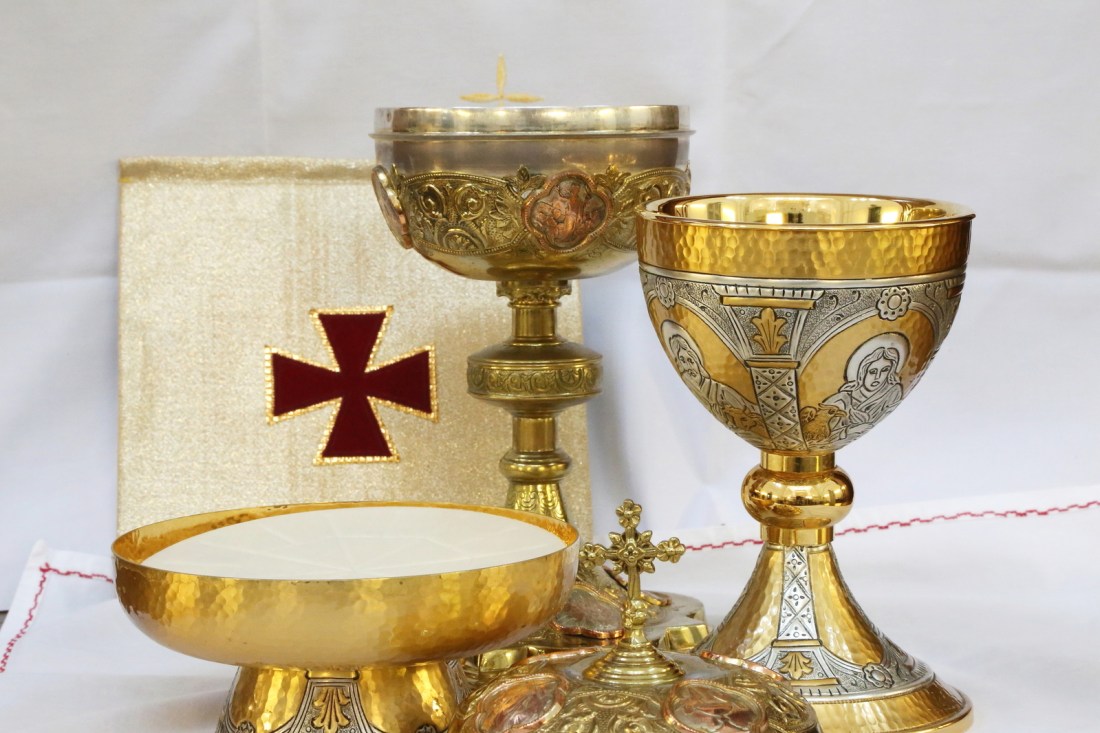
Photo of Chalice by James Chan

Christians are divided over a variety of doctrines.  Some people will argue and demand agreement over the most minor of points (doctrinal sectarianism).  Others will allow any belief to exist in order to promote unity (doctrinal minimalism).  And then there is the spectrum of people in between those two extremes.  What is needed is some “theological triage”, where it is determined which doctrines are critical, which are important, which are less important, and which are unimportant.  However, even then, different people will treat different doctrines differently, so what might be considered a critical doctrine by one would be considered less important by another.  

Today, I believe, there are two big doctrines that divide people into many denominations.  They are Baptism and Holy Communion (Lord’s Supper or Eucharist).  500 years ago during the Reformation, it was Holy Communion that prevented Protestants from uniting.  (The anabaptists were few in number so baptism was not an issue like it is today.)  We are going to take a look at the 5 major ways Christians view Holy Communion.  Note I believe Holy Communion is an important doctrine, but a right understanding of Holy Communion is not critical for salvation.

I am Lutheran and because of that I am going to explain what theologically conservative (confessional) Lutherans believe and why.  (At least how I understand it.)  And we will compare that with the other 4 ways of looking at Holy Communion.  You should expect some Lutheran taint since that is where I am coming from.

Let us look at what the Bible says, because it is the authority (the only authority for conservative Lutherans).   Here is what Matthew 26:26-29 says:

26 Now as they were eating, Jesus took bread, and after blessing it broke it and gave it to the disciples, and said, “Take, eat; this is my body.” 27 And he took a cup, and when he had given thanks he gave it to them, saying, “Drink of it, all of you, 28 for this is my blood of the[c] covenant, which is poured out for many for the forgiveness of sins. 29 I tell you I will not drink again of this fruit of the vine until that day when I drink it new with you in my Father’s kingdom.”

For context see Matthew 26.  There are also accounts in Mark and Luke and in 1 Corinthians.  All four accounts are pretty much the same.  The one important phrase missing from the Matthew account is “Do this in remembrance of me”  (Luke 22:19b).  That phrase is found in the Luke and 1 Corinthians accounts.

Conservative Lutherans take the phrases “this is my body” and “this is my blood” literally.  There is no scripture to suggest that the phrases only represent the body and blood.  Lutherans believe that Jesus’ body and blood are physically present.  Roman Catholic and Eastern Orthodox Churches also believe in the real physical presence of Jesus in Holy Communion.  The Reformed Church (and Presbyterian Church) believe that Jesus is present in the bread and wine, but the body and blood are passed to the communicant in a spiritual manner.  And the other belief of churches (hereafter referred to as Baptist) is that bread and wine only represent the body and blood.

Lutherans believe that the body and blood of Christ physically exists in, with, and under the bread and wine.  So both, bread and wine and body and blood, are present as described in 1 Corinthians 10:16, which says “The cup of blessing that we bless, is it not a participation in the blood of Christ? The bread that we break, is it not a participation in the body of Christ?”  Roman Catholics believe that the bread and wine are changed into Christ’s body and blood while retaining the form of bread and wine.  It is called Transubstantiation and uses some Aristotelian philosophy to define Transubstantiation. Eastern Orthodox has not doctrinally defined Holy Communion.  It just calls it a mystery that bread and wine are turned into the body and blood.

Lutherans also believe that the forgiveness of sins won by Jesus’ death on the cross is given to us in Holy Communion (Matthew 26:28).  The Roman Catholic and the Eastern Orthodox 

Churches also believe that the forgiveness of sins is found in Holy Communion. The Reformed Church sees Holy Communion as providing spiritual nourishment. The Baptist belief sees Holy Communion as only a remembrance of Christ’s death.

Conservative Lutherans also practice close or closed communion.  This means that not all are welcome at the communion table.   The scripture from 1 Corinthians 11:27-29 says

27 Whoever, therefore, eats the bread or drinks the cup of the Lord in an unworthy manner will be guilty concerning the body and blood of the Lord. 28 Let a person examine himself, then, and so eat of the bread and drink of the cup. 29 For anyone who eats and drinks without discerning the body eats and drinks judgment on himself. 

Holy Communion is serious stuff.  One can eat and drink to their harm (v. 27, 29).  One should also examine themselves (v. 28) before partaking of Holy Communion. That is why for Lutherans practice close/closed communion.  Holy Communion is only for Christians who recognize that they are sinners in need of the sacrament and are willing with the help of the Holy Spirit to change their lives.  They also need to recognize that the body and blood of Christ is present in the bread and wine (v. 27).  Conservative Lutherans also believe there is a need for doctrinal unity/fellowship (Because there is one bread, we who are many are one body, for we all partake of the one bread. 1 Corinthians 10:17).

It is out of pastoral concern that close/closed communion is practiced, so that no harm is caused.  Some Lutheran pastors will only commune those they know.  Many will commune only those in the same denomination that they are in.  And others allow for more leeway, asking only those who believe what the Lutherans believe to commune.

All of the five different beliefs, whether open or closed communion beliefs, believe that Holy Communion is meant for Christians.  Roman Catholics and Eastern Orthodox also practice closed communion.  Other denominations may or may not practice closed communion, even some Baptists practice close communion.  However, most Protestant churches practice open communion, where they allow anyone to participate in Holy Communion.

In my very limited experience, these differences of closed communion has been the most offensive to other Christians. As Christians they are offended to not be able to share communion with their Lutheran brother as part of a united body of Christ.  So where does this fall on the spectrum of doctrinal minimalism to doctrinal sectarianism.  I do not know.  It appears that the more theologically conservative you are the more likely you lean toward doctrinal sectarianism.  I personally believe in the idea of closed communion, but I don’t want to end up as a sectarian.  I want to allow for a broad view of Christianity with differing beliefs within the Christian boundaries, while holding strongly to my beliefs.  That is why I am interested in “theological triage”.

Note there is a lot more that can be said about Holy Communion and the differences in belief, but I believe this is a decent summary.