Law and Gospel

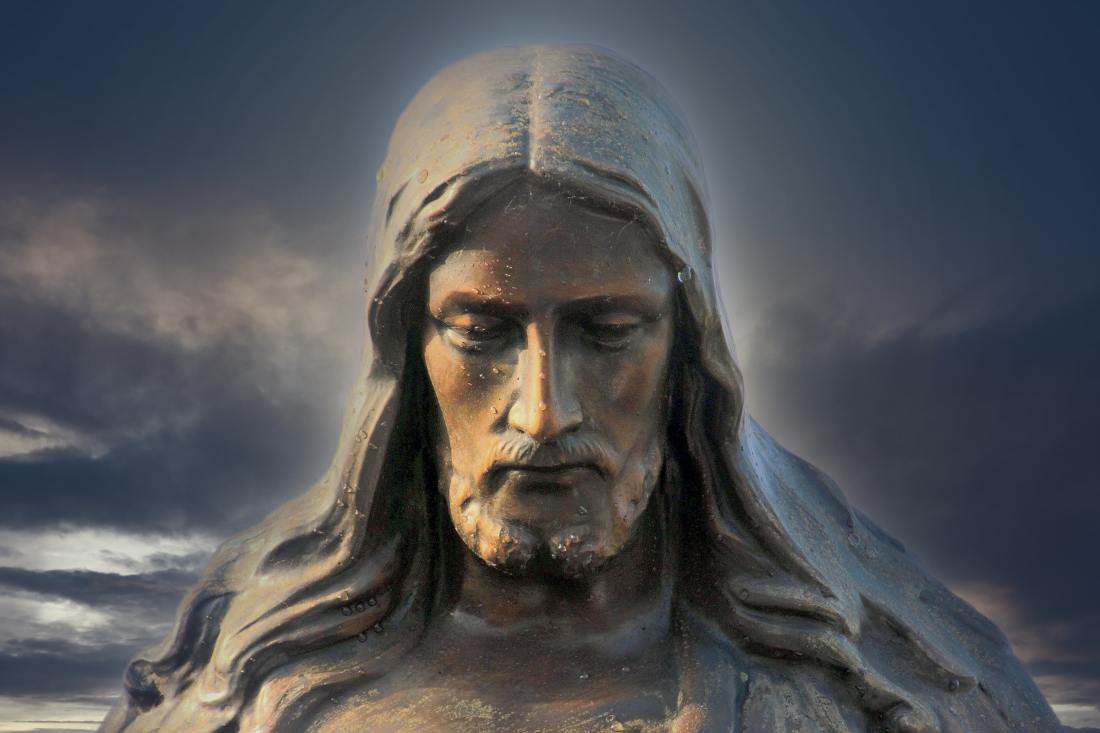
Jesus Christ Statue Photo - Myriam Zilles

Out of the Protestant Reformation, from Martin Luther, came the concept of Law and Gospel.  It is used to read and interpret  Bible passages. Confessional Lutherans especially make a big deal out of using it.  I find it to be a very helpful concept.  The Law tells us what to do.  The Gospel tells us what God has done and what he is doing in Christ Jesus.  Primarily, the Law shows us our sin, and the Gospel shows us our Savior.

There are three functions or uses of the Law.  The Curb function of the Law restrains people from doing wrong. You do not steal because it is wrong and there are consequences to stealing.  The Law as a Mirror shows us who we are, sinners.  It shows us our sin and how we have failed to keep the law.  The third use of the Law is the Guide function.  The Law shows us how to live, and how to respond to God’s saving love (the Gospel).

The Gospel shows us what God has done for us.  It is Good News.  It is usually focused on what Jesus has done, but any saving action by the Triune God can be considered Gospel.  The main focus is on Jesus since that is the entire Bible story points to him.  He came to Earth to save us and restore that broken relationship with us.

If we look at Exodus 20:1-17, we can easily find Law and Gospel.  The Ten Commandments are found there but in verse two before any commandment is given we find the Gospel.  God reminds them that he had saved them from Egyptian slavery. So the Gospel appears right before the giving of the Ten Commandments, the Law.  Therefore these commandments told them how to respond to God who had saved them (the third use of the Law).  The commandments were to restore a covenant relationship with God. The commandments unfortunately also show us how we fail to keep those commandments (the second use of the Law) and our need to be freed from the bondage of sin. And in the Ten Commandments you can also find the first use of the Law (civil laws), for example “You shall not steal”. So the uses of the Law are not mutually exclusive. These commandments are applied today telling us how to respond in gratitude to God’s saving love.

Law and Gospel can be applied to ourselves and our conversations.  When a person is suffering and feeling worthless, that is when we need to share the Gospel message of God’s love for them.  When a person is feeling that what they are doing is not that bad of a wrong or just not wrong, then we need to share the Law and remind them that sinning is serious and it causes harm.  For unbelievers, I would first let them know that we all are not perfect and are broken sinners (Law), and then share the good news that God still loves them, broken as they may be, and desires to be in relationship with them (Gospel).

New Life

You have been set apart and chosen. Photo by Gift Habeshaw.

Our church had a mini-retreat on new life in Christ, and it was led by Jim Found, a former missionary.  The content was so good I want to summarize it for you.  Jesus came that we might have this abundant full life (John 10:10). As Christians, we are given a new full life.  Our old life is still hanging around but we have this new life in Christ. What does it mean to have this new life?

The new life is also called the new self or new nature. We get to “walk in newness of life” (Romans 6:4).  We walk in love (Ephesians 5:1-2) as we “put on the new self, created after the likeness of God in true righteousness and holiness” (Ephesians 4:17-24). This is not our doing for God is at work in us to do his will (Philippians 2:13).  Unfortunately, the old self is still around and we do not fully realize the new self (Romans 7:7-25).  There is conflict between the old self and the new self.  We still sin.  The Holy Spirit will enable us to recognize our sin, reject it, and then ask for forgiveness (repentance).  This is an ongoing lifelong process (sanctification) to conform us to the image of Jesus (Romans 8:29).   Note though we sin, we still are saved.  Our salvation or justification is not based on anything we do.  It is a gift (Ephesians 2:8-10).  The good works come from us after being saved.  The new life with its good works is a result of being saved.  You strengthen your new life by trusting Christ and his promises, and the good works are the result. Walking in newness of life means living a Christ-like life (Colossians 2:6-7; Philippians 2:1-11).

Our old self is selfish. It will by nature disobey God’s will.  The mind set on the flesh (the old self) is hostile to God (Romans 8:7-8).  The new life is guided by the Holy Spirit and it desires to obey God’s will.  We need to daily put off the old self.  We put off our old self when we repent, and ask the Holy Spirit to strengthen our new life. The Holy Spirit aids us in our struggle against temptation and sin. The Holy Spirit awakens in us new thoughts and affections so we can begin to love God and refrain from evil actions.  Oh, Holy Spirit, control our thoughts and give us the power to reject sin.

By walking in newness of life, we have victory over temptation.  We need not be burdened by things like fear, anxiety, loneliness, hopelessness, lack of purpose, peer pressure, sinful addictions, guilt, low self worth, and the many other things that burden us.  In our new life we have a new identity in Christ as children of God (1 John 3:1), and with that comes many promises, that is scripture passages that tell of God’s love and support for us and how to respond to that love.

Walking in newness of life means we submit ourselves to God, and we resist the devil so he will then flee from us (James 4:7).  A great way to resist the devil and temptations is to follow the example of Jesus (Matthew 4:1-11) and quote scripture when facing temptation. Quote scripture and tell Satan to leave. Do not let Satan bother you, because you are God’s and he saved you.

God is at work in you even if you do not feel it and wonder if you are saved.  God is at work in you if you admit you are a sinner. If you repent of your sins and want to change your life, God is at work in you.  If you acknowledge that Jesus is God who became man, God is at work in you.  God is at work in you, if you recognize that Jesus came to die for you and then rose from the dead. If you trust in Jesus as Lord and Savior God is at work in you. That desire and power to live for Jesus comes from God working in you. You are saved.  You are his.

With the help of the Holy Spirit, we can show that Jesus is Lord in concrete ways.  You have been given a purpose of sharing God’s love through caring and serving others.  One big way to do that is to share the good news of how God has saved you and how he is at work in you.  Share the new life he has given you. 

Heavenly Father, You have given us everything we need for a full and abundant life. You have set us free from the sinful cravings of the world.  Your promises are sure and certain. You are there to deliver us when we call out to you, and yet we fail to live the good life you would want us to live.  Let your Holy Spirit strengthen our faith to help us to reject our sinful ways and live that full abundant life for you.  We ask this because of all Jesus has done. Amen! (2 Peter 1:3-4; Psalm 50:15; John 10:10)

But the fruit of the Spirit is love, joy, peace, patience, kindness, goodness, faithfulness, gentleness, self-control; against such things there is no law. And those who belong to Christ Jesus have crucified the flesh with its passions and desires.  If we live by the Spirit, let us also keep in step with the Spirit. Let us not become conceited, provoking one another, envying one another.  (Galatians 5:22-26)

PS This was just a taste of the mini-retreat.  For the complete text of the retreat,  go to Jim Found’s website https://foundbytes.com/new-life/

300 Months

Marriage Rings Photo by Mike Goodwin

Gail and I have been married for 25 years (300 months).  For 25 years I have been able to delight in Gail and enjoy her company.  Time has flown by.  I thank God that I did email Gail 26 years ago.  I almost did not.  Life would have been very different.  I have been blessed by having Gail in my life.

For our 25th wedding anniversary we went on an Alaska Cruise.  We enjoyed the time together in Alaska and on the boat.  The weather was on the cloudy and rainy side, and in fact, it was stormy for the first day on board, but we had sunny weather for Glacier Bay and for Ketchikan.  We did see a bunch of wildlife, bears, caribou, moose, deer, otters, bald eagles, and other animals.  We learned some Alaska history and saw some beautiful scenery.  Aboard the ship, we were overwhelmed with the abundance of food and alcohol.  The service was over the top.  There was some nice entertainment onboard too.  It was a nice way to celebrate.

Back 25 years ago, I was worried that I did not know Gail very well.  Today, I can say the same thing, even though I know her much better than any other person. And yet though I do not know her as well as I would like, we are connected.  Marriage binds a man and a woman together. There is a mystery involved that binds us and connects us.  I am attracted to Gail. I delight in her and I enjoy being with her.  We are bound together for life, and it is a good thing.  Also being connected means we can help each other grow to be more Christ-like.

Today, marriage is discounted as just a social construct that can get in the way of one’s own identity and plans. That is a very selfish way of looking at marriage.  The individual is not the basic unit of society like many think today.  Rather, the family is society’s basic unit with marriage being the centerpiece of the family.  God gave us marriage, so that families can be raised and society can be well formed.

We mess things up by our selfish self-centered way of thinking.  Marriage requires commitment and unconditional selfless sacrificial love.  We give ourselves to each other in marriage. We serve each other, looking to the needs of the other out of love. Marriage is both romantic love and commitment.  It is one way we can break out of our selfish self-centered way of thinking. 

Marriage can be a way to demonstrate God’s love, grace, and mercy.  A good marriage is a picture of Christ and the Church (Ephesians 5:29-33). We, Christians, are bound to Jesus like a husband and wife are bound to each other.  So let us, married people, work at having a good marriage and so reflect the love God has for us.  (I recommend “Marriage in Christ” as a great marriage seminar to take to improve your marriage.)

Liar! Liar!

Living Network 2 (Peter Farkas Photo)

“Liar! Liar! Pants of fire!”  People have always lied, but it seems to me today, lying is reaching epidemic proportions.  Lying is not good for the liar, for their friends, and for society.  Lying deceives.  Lying is destructive.   Lying hides the truth.  Lying hides reality.  Lying is not good for anyone, and yet today lying is commonplace.  This is due in part to our Postmodern culture where everything is relative and you need to critically tear apart or deconstruct the truth to point out the perceived bias (while ignoring your own personal bias). Thus the truth gets twisted or discarded and outright falsehoods are promoted as fact.  Why do we so easily discard the truth and believe the lies?

In the past five years, I have learned of two new words, misinformation and disinformation.  Misinformation is the unintentional sharing of falsehoods, or it also can be sharing a truth that has been taken out of context in order to make it fit a certain narrative.  Political opponents will point out statements that their opponents did say, but by taking the statements out of context they make the statements sound bad.  With our social media accounts, we will pass on these falsehoods because we want those statements to be true when they are really lies.  We need to be aware of the spin that is sometimes put on the facts and also be willing to verify the lies that we come across.  Remember every effective lie has a kernel of truth.  Now disinformation is an outright lie. The purpose of disinformation is to promote division, mistrust, and hate.  Much of the disinformation are stories and pictures that come from foreign sources, like Russia, China, and Iran.  Their purpose is to weaken America by sowing division, mistrust, and hatred.  We need to be aware of disinformation so we are not misinformed and pass on these lies.  We need to promote truth and avoid these lies, even if we do not like what the truth says.

Lying deceives.  One can deceive oneself.  You may come to believe the falsehood.  You use the lie to boost your own self esteem or to boost your own power and fortunes, but reality is lying undermines your own self-worth and your personal integrity.   Lying deceives others and lying can put relationships in jeopardy.  Can you trust a liar?  And lies can deceive entire societies to promote bad behaviors and wrongful actions.  We need to be careful and promote only the truth.

God considers lying to be an abomination (Proverbs 12:22).  God speaks against lying in the Ten Commandments: “You shall not bear false witness against your neighbor” (Exodus 20:16).  There are many more scriptures warning about lying.  Here are a few more: Psalm 101:7, Proverbs 12:19, Proverbs 19:9, and Colossians 3:9-10.

How do we handle lying?  First we need to look at ourselves. Am I a liar?  Do I deceive myself?  We need to first recognise who we are.  We are broken.  We are sinners.  The Bible says, “If we say we have no sin, we deceive ourselves, and the truth is not in us(1 John 1:8).  We are not perfect (Matthew 5:48).  We are not good enough, but there is good news.  “If we confess our sins, he [God] is faithful and just to forgive us our sins and to cleanse us from all unrighteousness” (1 John 1:9).  God will forgive.  We need not deceive ourselves.  God knows and still loves us (John 3:16). Do not lie to yourself.  Live life with integrity.  You need to face reality and truth head on.

God calls us to put away falsehoods and lies and speak the truth in love (Ephesians 4:15,25). It is good for our relationships to speak truthfully to one another.  It builds trust in your relationships, and it gives you integrity.  It is good for the community too.  If we can count on one another, our communities can thrive.  Let us speak truth in love, and avoid promoting any lies.

In this political season, lies, falsehoods, and ridicule are everywhere.  The purpose of the ridicule, lies, and falsehoods is to destroy their political opponents, but it also undermines our society.  There is less trust in our society today because of these lies.  Let us rise above the fray, and be kind, gracious, and truthful in all we say and do.  Do not promote lies!  Stand for the truth!  By doing so I believe we can strengthen society.

This was inspired in part by Don Overcash’s editorial “The Power and Value of Truth” (Subscription is needed) and in part by “How to Avoid  Misinformation and Disinformation Online”.

Critical Expressive Individualism

Das Bean Photo by Mark Publava

Culture has changed. In America, we think very differently as a society than we did 50+ years ago.  The popular way of thinking today combines Critical Theory and Expressive Individualism.  I am going to call it, “Critical Expressive Individualism” or CEI.  Critical Theory views the world in terms of oppressive social structures that support the reigning oppressors and allow for continued oppression of various people groups.  Expressive Individualism allows individuals to identify themselves in ways that express their inner “authentic self”.  We will take a look at Critical Expressive Individualism and compare it to Christianity by asking a few basic but big questions. (Note there is a spectrum of beliefs so this will be a broad overview of CEI and Christianity, and may not match individual beliefs.)

Where did we come from?

The Christian Faith believes that God created the world.  He created human beings in his own image.  We are valuable to God.  We were made to be in a relationship with him.  CEI believes that humankind evolved by random chance.  There was no intentional design. Humans just exist.

Who has the authority?

In the Christian Faith, God, the Creator, has the authority.  Out of love, he has set up good and healthy moral laws for us to live by.  We are to trust in him and live the good life by obeying his commands.  The CEI worldview has each and every one acting as their own authority.  They look inside themselves at their feelings and desires and decide who they are (usually sexually) and how they will behave.  They are then free to express their individual authentic selves.

What is our problem?

Just about everyone agrees that there is a problem with life.  Things are not as we expect them to be.  We seek a utopia where the problem is fixed.  The Christian Faith sees the problem existing in each one of us.  We are broken, selfish and self-centered.  We disobey the good and healthy standards that God has for us and in doing so we hurt ourselves and others.  CEI sees humankind as naturally good and the problem is that there are these societal structures that allow oppression to occur and restrict the expressive freedom of each individual.

What is the solution?

CEI believes that each person has total authority and the right to express themselves as they see fit.  Even though there is technically no right or wrong, CEI attempts to influence society in order to dismantle oppressive societal structures and bring about positive change. This is a reason for the Diversity, Equity, and Inclusion (DEI) officers in companies and organizations.  They are there to move people to help dismantle oppressive structures and to promote those considered to be oppressed.  They believe that the people of this world will solve the problem once they have been trained to think correctly.

Christians realize there is no human solution because everyone is corrupt and broken.  We are self-centered and selfish.  Because of our broken nature, everything we try will be corrupted.  Fortunately, God sent Jesus into the world to provide the solution.  He went to the cross to pay for the price we could not pay. By trusting in Jesus we are changed.  With the Holy Spirit, we can be enabled to overcome our broken nature.  The Holy Spirit transforms the inner self and works to change us from the inside out.  Christians, out of gratitude for what Jesus did, also work for the good of society and oppose oppression and wrong behaviors.

How will things end for us?

With CEI they believe they can create utopia on earth by training and guiding people. So through proper laws, training, destroying of oppressive structures, and the lifting up of the oppressed peoples, they believe utopia can come.  Christians believe that God will at the right time end this world and make everything right for all those who believe in him. Then our brokenness will be fixed, and we will be restored to a harmonious loving relationship with God and each other. 

These different ways to view the world have caused conflict in America.  Because of the different worldviews, very different solutions end up being promoted, causing conflict and misunderstanding.

Nazis

Dachau Gas Chamber and Creamatorium

Gail and I along with another couple recently visited Germany.  There were two main themes of the trip.  We went to see where the Reformation started with Luther.  We saw a lot of Luther sites and learned a lot of medieval history.  The other main theme was the history of the Nazis and World War II (WW2).  I will focus on the Nazis.  (See Gail’s blog post for more information on the Reformation and Luther.)

The Nazi Party (National Socialist German Workers’ Party) was not founded by Adolf Hitler, but Hitler quickly rose to power in the party because he was a good speaker.  In February 1920, a 25 point program was adopted by the Nazi Party.  Though the 25 points were never fully implemented and some points were ignored, it provided a foundation for Nazism along with Mein Kampf (1925), an autobiographical manifesto by Hitler.  The 25 points included the anti-capitalist, nationalist-imperialist, and anti-Semitic sentiments of the time.

In the throes of the Great Depression and in the midst of tremendous hyperinflation along with required reparations payments to the World War I allies, the German government was in disarray and was not functional.  After the 1932 elections, in January 1933 Hitler was appointed Chancellor because no party was able to form a majority coalition and the Nazi Party had the most seats in the German parliament.  In February 1933 the parliament building burned down  and emergency powers were given to Hitler, and Hitler quickly seized power and became a dictator.

Also in March 1933, the Dachau Concentration Camp was opened and it was first filled with Hitler’s political opponents.  I found it interesting how much planning, lies, and deception the Nazis did.  There was not enough jail space for all of Hitler’s political opponents so it was fortunate that there were these new concentration camps for them.  The camps were promoted as a place where these people could work and be reeducated.  The truth is in the Dachau camp the inmates were abused, tortured, and worked to death.  And just outside the camp proper was a gas chamber and crematorium to kill the lesser inmates.  Brutal treatment and terror tactics were the norm.  The SS commanders of the camp did not want to deal with the inmates.  The inmates were in their opinion a lower form of human life in varying degrees, so within given boundaries the inmates ran the camp. It surprised me how well that worked.  There were no uprisings.  I think the inmates were in survival mode and thinking only of themselves.  I think it was the self-centered selfish nature of humankind that allowed this evil to continue.

There were several WW2 points I took away from this trip.

  1. The Germans today do not want this to happen again and have these documentation centers set up not only for us tourists but to teach the next generation about the dark side of their history.  That is very commendable.
  2. The Nazis were planners.  This evil was not something that just happened.  It was planned.  
  3. The false philosophical beliefs (e.g. Aryan superiority) were taught to children and believed by many.
  4. Lies and deception were common tools of the Nazis.  
  5. And human nature is not good.  Evil exists in the human heart.  You can see instances of similar evils since WW2. This was not a one time thing.

This sounds quite depressing, but the other big theme from the trip was the Reformation and Martin Luther.  God’s mercy and grace is there for us.  We may not be good, but God showed his love for us in sending Jesus to pay the price we could not pay.  We can be empowered by the Holy Spirit to do good.  There is hope for this life and hope for eternal life with our loving God.

I have one last WW2 fact from the trip.  When you see the old buildings in the center of these German cities you need to realize that almost all of these buildings are reconstructions of the original buildings. This is because the allies heavily bombed the German cities. It took decades to rebuild these buildings.  There were only a few of the old buildings that were left mostly untouched.  Those untouched buildings were used as landmarks (e.g. the Cologne Cathedral) to guide the allied bombers on their bombing raids.

Why a Luther Tour?

Luther Altar Piece

My wife, Gail, wrote this blog post.

We recently traveled in Germany, seeing many historical Luther sights.   As I posted yet another picture of a Luther Statue on my Facebook page, I wondered if our trip was looking somewhat cult-like for friends not particularly interested in Luther and Lutheran Christianity.  I’ve come to the conclusion that while our trip was filled with Luther specific sights, our trip was more about the history and the amazing times in which Luther lived.  While we visited key sights in Luther’s life and work, very little of the content we saw was explicitly evangelistic or spiritually moving.  Rather, in seeing the locations, I was moved by what an amazing time in history those years were and what amazing company of fellow scholars and great minds were concentrated in one time and place.  

When we visited Wittenberg, within a thirty minute walk, we could observe Luther’s Black Cloister, the home of Philipp Melanchthon, a fellow theologian and reformer, the home and workshop of Lucas Cranach, a prolific artist, businessman and craftsman, and the Wittenberg Castle Church where Luther first posted his 95 theses.    When I think about the intersection of all these people and the timing of their lifespans in the wake of the innovations in movable type printing by Johannes Gutenberg,  I am in awe of God’s orchestration of events, propelling history and theology forward by new technology. 

Additionally, the social impacts of the Reformation, including the dissolving of many convents and monasteries, the bloody Peasants’ War, and eventually the Thirty Years War were enormous and largely unconsidered by Luther in his 95 theses invitation to discuss issues.  

Having local guides tell their own local history was one of the best parts of the trip.  Their history, so much longer than any American can imagine, shaped their culture.  When touring various sights, guides told that to most Germans, Luther’s greatest accomplishment was the establishment of the common language of High German.  And while most guides could articulate the reformation truth of salvation by Grace through Faith in Jesus, there seemed to be very little appreciation of the life changing impact of that truth for daily life and hope.  

Was our trip a Luther pilgrimage?  Maybe.  It wasn’t a worship of Luther and it wasn’t just historical learning. We saw the places, but more importantly we gained insights about how God worked in that unique time and place.  

Relativism

Das Bean Photo by Mark Publava

If I place my water glass on the table, and say “my water glass is on the table”. Is that statement true?  Everyone in the room would agree that it is true,  because you can see the glass there on the table.  But if you are not in the room and you can not see it, is the statement still true?  You may believe that the statement is true or you may believe that the statement is false, but the truth is, the water glass is on the table.  That is the fact and it is external and separate from what you think.  That is reality.  This is called objective truth.  Unfortunately, today we tend to look inside of ourselves to find the truth.  We decide what is true. It is a subjective truth and it is also known as relativism.  This is a big lie and it has been around since the Fall.

Adam and Eve listened to Satan and decided themselves to eat the forbidden fruit (Genesis 3:1-6).  They were deceived and ignored the external truth of God’s love and command and decided to follow their own desires.  They became focused on themselves instead of God.  Ever since then we have been dealing with this internal self-centered god complex in each one of us.

What does the Devil do?  He lies (John 8:44). He deceives (Revelation 12:9). He blinds people (2 Corinthians 4:4) and takes them captive (2 Timothy 2:26).  And thus, the world is in his power (1 John 5:19).

This is spiritual warfare, and not just a battle of opinions.  “We do not wrestle against flesh and blood but … against spiritual forces of evil” (Ephesians 6:12).  We need to put on the full armor of God (Ephesians 6:10-18). With the first piece is “the belt of truth” (Ephesians 6:14) along with the last piece “the word of God” (Ephesians 6:17) we can take on the lies of the Devil (2 Corinthians 10:3-5).  We do this with patience and gentleness, while praying for their salvation (2 Timothy 2:24-26).

When we are learning about what a person believes, look for a big spiritual lie that is obvious to you, but they are blind to.  We respond by countering the lies with the truth. And I believe a very good way to do that is by asking questions.  You first ask questions to discover what they believe. Then ask questions to learn why they believe what they believe.  And lastly ask questions that guide them to expose some areas where they have been blinded from the truth.

In this age of relativism, we find people have their own internal individual truth, their own subjective truth, and yet they tend to live with some external objective truth.  They may consider all moral truth to be relative, however they have their moral standard that they expect others to follow, especially when it affects them.  They tend to be blind to the inconsistencies of their beliefs.

I believe Satan is in the shadows deceiving the world.  Because of relativism, many historical stories are being rewritten (e.g. The 1619 Project), and many words are being redefined to fit the narrative of their beliefs.  This is being done to control the culture and individuals.  This does not lead to the freedom of expressive individualism that their narrative is supposed to create, but instead the truth is lost.  It reminds me of the newspaper Pravda of the Soviet Union.  In Russian, Pravda means truth, but the newspaper was full of lies.  I find that words of virtue like tolerance, diversity, equity, inclusion, justice, and love are being used to cover vices, and words describing evil (intolerance, bigotry, inequity, exclusion, injustice, and hate) are being used to subvert the good.  It bothers me to have these words and stories redefined.  “Woe to those who call evil good and good evil” (Isaiah 5:20).

Satan has blinded and deceived this world and has taken it captive.  Christians have the truth, the true story of reality.  We need to share the truth of God’s love and gently point out the spots of blindness that prevent them from having that good full life in Jesus Christ.

This post was inspired by chapter 6 of “Street Smarts” and lesson 3 of the video series “Street Smarts”. Both are by Gregory Koukl.

Dealing with DEI

Living Network 2 (Peter Farkas Photo)

Companies and government agencies have embraced the Diversity, Equity, and Inclusion (DEI) worldview.  In order to advance in the organization you need to show you are supporting DEI.  (The State Department recently said that you need to document that you are actively involved in DEI practices to be considered for a promotion.)  Coming from a Christian worldview, how do you deal with DEI?  How can you find some common ground when there is much you feel is wrong and harmful about DEI?

First, Christians are in favor of diversity.  The body of Christ is made up of a diverse group of people with different gifts (1 Corinthians 12:4-27).  Heaven will be filled with people from everywhere (Revelation 7:9-10).  God loves everyone (Psalm 117:1-2) and calls us to do the same (Matthew 5:43-48).  Note God loves us so very much that he is unwilling to leave us as we are but will change us for the better through the work of the Holy Spirit (Ephesians 3:16-17).  So Christians are in favor of diversity, but out of love we stand against broken and harmful lifestyles and beliefs. Unfortunately the secular DEI worldview demands acceptance of the harmful lifestyles of LGBTQ+ community.  As Christians we can not accept their wrong and harmful lifestyles, but we can accept and affirm the LGBTQ+ people as people loved by God.

Also, Christians are in favor of equity.  God is fair, just, and impartial. He will judge with righteousness and equity (Psalm 98:9; Isaiah 11:3-4).  All people have sinned and fall short of God’s standard (Romans 3:23). We stand equal before God, regardless of race, gender, or social status (Galatians 3:28).  Unfortunately the secular DEI worldview distorts equity when it requires equal outcomes or the redistribution of resources without considering individual talents, individual effort, personal responsibility, and the stewardship of resources. Christians show equal dignity and respect for all people regardless of one’s status (James 2:1-4).  It is only in Christ where we find true equity.

And Christians are in favor of inclusion.  Inclusion is the intentional welcoming and acceptance of people.  God loves all people and he desires that all would come to know him and be restored in relationship with him (1 Timothy 2:3-4).  As Christians, we welcome all who follow Jesus as brothers and sisters (Romans 15:5-7) and we desire all people to come to faith in Jesus.  Unfortunately the secular DEI worldview sees inclusion as the acceptance of all beliefs and of all practices, even beliefs and practices that are harmful.  (However many times they will exclude people whose beliefs they consider to be intolerant.)  God loved the world so very much that he gave Jesus as our substitute so that we could have life and a restored relationship with God (John 3:16; 1 Peter 2:24). God wants to include you. Do not reject him, but instead turn to him and follow him.

And yes, Christians also stand against inequality and oppression.  We too are against societal structures that oppress people and cause inequality.  We work for a better society through promoting love (1 Corinthians 16:14), forgiveness (Ephesians 4:32), and reconciliation (Matthew 5:24), first with God (2 Corinthians 5:18-21), but also with the people around us.  Unfortunately the secular DEI worldview broadly divides the people into groups of people that oppress and groups of people that are oppressed without considering the individual circumstances of each person. The secular DEI divides.  Christians seek to reconcile and unite.

So as Christians, we believe in the real biblical version of DEI, and not the distorted secular version. There is common ground with secular DEI in which we can start conversations, but it will not be easy in a secular DEI workplace. You can gently point out the problems with their version of DEI.  I would do it by asking questions about their beliefs to get them thinking about what they do believe and what are the problems that the secular DEI creates. You need to realize that you may be labeled as a person who hates or an oppressor for opposing certain aspects of their DEI standard, but you need to stand firm on the truth. It is good to do so for you, for them, and for society.

This post was inspired by “Understanding DEI (From a Biblical Perspective)” by Cam Arminio. 

Broken

Everybody today realizes that there is something broken or not right with the world. Utopia, where everyone can live in harmony, is a dream that we all seem to share. Many have tried to create utopia-like communities, and all have failed.  There are a few attempts to deal with the brokenness.

One idea is to focus on getting your mind in the right state. You look inside yourself and you determine what you consider reality to be. You decide what is right and what is wrong.  You fix yourself internally. You attempt to block out the wrong and promote the right (whatever that right is that you determine to be).

Another idea is that the environment is wrong. People tend to do what society tells them to do. The idea is you can fix society or the culture by training people to think correctly and do the right things. Only then would utopia be possible. The idea is we can do this if we have enough rules or laws to guide people to utopian thinking.  Correcting the environment, if you can get people to do what has been considered to be right, is an attempt to solve the problem.

Both these concepts assume that you or society knows what is right and what is wrong. In the first case the person determines what is right or wrong, and what is reality. In the second case, society determines that. Unfortunately, in either case, their definition of reality and what is good or evil can easily change.

There is a third way to look at the reality of our brokenness. We start by recognizing there is a Creator that made us (1 Corinthians 8:6). He is the one that has defined reality and has set standards of right and wrong, good and evil.  We do not get to. As the Creator, who loves us, he set these standards for our good. However, our first parents failed to follow God’s standards and went off on their own (Genesis 3:1-6). Because of this we are broken through and through (Romans 3:23).  We live self-centered selfish lives. We are unable to fix ourselves.  Our disobedience broke us and the world and ever since then we have had this longing for a restoration of that utopia.

God, our Creator, did not give up on us. He set out to rescue us from our brokenness and to restore the world to its unbroken state.  In Jesus, he became one of us, and lived a perfect life that we could not (1 Peter 2:22).  Out of love for us, he died on the cross as payment for our wrongdoings and our brokenness (1 Peter 2:24; 1 John 2:2).  He rose from the dead (1 Corinthians 15:3-4) to start the process of restoration.

To illustrate this, consider this story.  You are walking across university grounds and you come across a standoff with the police and a shooter. You are peeved when told you can not go that way because you have important business to attend to.  You slip to the side and think this does not look really dangerous and I can slip under the barrier and take this other route.  So you do that and about a minute later, you see a glint of a rifle barrel,  hear a shot, and end up on the ground. You are okay but lying on top of you is the policeman that told you not to go past the barriers.  He is bleeding and is dead. He sacrificed himself because of your disobedience and selfish stupidity.  He saved you.  That is what Jesus did for us.  Jesus sacrificed himself in order to save us from our broken selves.  He did it to bring us back to himself, to restore that broken relationship with God that our first parents had in the beginning.

The Bible says you are saved by God’s undeserved love through faith (Ephesians 2:8-9).  It is a gift.  Faith has been defined in a variety of ways.  Faith is not a blind faith.  There are few things needed to have faith.  First, you must know what or who you have faith in.  You have faith in Jesus, who died for you.  Second, you need to agree or give your assent that Jesus is Lord and Savior (Romans 10:9). And lastly, you need to place your trust in Jesus, that is you need to recognize your brokenness, turn from your selfish ways, and strive to follow Jesus and his ways (Acts 3:19).  That is faith. It is an active faith.

Jesus’ resurrection points to the day we will rise back to life and live forever with God in that utopian environment (Revelation 21:1-5) (or without him in Hell if you reject him).  Today we live in the new life that he has given us (John 10:10). We have been rescued and are in the process of being restored.

This post was inspired in part by Gregory Koukl’s book, “The Story of Reality”.