Secular Christmas

Christmas Nativity

Christmas is celebrated all round the world.  Christmas is not a religious holiday for most people.  This secular version of Christmas promotes values of love, compassion, generosity, giving, family, hope, peace, and joy.  These good values originated with the Christian celebrations of Christmas, but the main point of Christmas, from which these values derive their meaning, is Jesus Christ coming to Earth and being born so that we might have life in him.

I find it interesting that people of other faiths have their version of Christmas.  Many Buddhists, Jewish people, Muslims and even atheists celebrate Christmas in some form.  They have some of their own traditions but for many of these celebrations what binds them to the secular Christmas is Santa Claus, because many of these celebrations have Santa Claus.

Santa Claus is the icon of the secular Christmas.  Folklore of his story has been developed over the last 200 years to what it is today.  First, there was a historical person called Saint Nicholas who really did exist and was born about 280 A.D.  He was a generous Christian Bishop.  Today’s Santa Claus story is very different from the historical story of Saint Nicholas but Saint Nicholas provided the origins from which Santa Claus developed.  The Dutch with their Sinterklaas tradition and the English with their Father Christmas tradition were blended together to create the Santa Claus tradition.  In 1823, an anonymous author (likely Clement Clarke Moore) penned a poem called “A Visit from St. Nicholas”, which is also known as “Twas the Night before Christmas”.   I believe that poem created the foundation for the Santa Claus tradition.  From that poem, the story of Santa Claus developed into what it is today.

Secular Christmas is fun and promotes some good values, however it is missing the historical importance of the birth of Jesus Christ.  Christmas is meant to be a celebration of the birth of Jesus.  God, the Father, gave his only begotten Son, Jesus, to us to restore us back to himself and to give us life in him (John 3:16).  God in Jesus humbled himself and was born human (Philippians 2:5-8) so that he could live the perfect life we could not (Hebrews 4:15) and to pay the price for our sins by dying on a cross (Colossians 2:13-14) and then rising again 3 days later.  Jesus gave himself so that we might have life in him.  By the power of the Holy Spirit we have real life.  That is the real story of why we celebrate Christmas.

The Christmas story can be found in Luke 2:1-20 and in Matthew 1:18-2:12.  This Christmas let us remember the birth of Jesus who is our Lord and Savior.

PS This year I discovered the ancient “O Antiphons” which are short chants that cover 7 days (December 17-23) of Advent, right before Christmas.  The hymn “O Come, O Come, Emmanuel” incorporates the 7 antiphons into its verses.  I am using a devotional based on the antiphons this year from 1517.org.

Saints Past

Photo of crepuscular rays by Peter Hostermann

There are several definitions of the word “saint”, however the biblical definition is simply one who trusts in Jesus as Lord and Savior, so we who believe in Jesus Christ are saints.  November 1st is  known as All Saints Day, among other names.  On this day we remember those saints who have gone before us.  I think of the many Christians that have influenced me over the years.  Many of them have passed on, though many are still here today providing encouragement and support.  I am thankful for all they have taught me.

I think especially of my parents, Erwin and Irene.  Their Christian example made a huge difference in my life.  I owe so much to them.  They were not perfect, so there are a couple things that I am having to unlearn, but  they ended up shaping my life for the good.  I am very appreciative of their influence in my life.  I see a lot of their influence in how I act and behave.   I thank God for their good influence.

It is not just those who over the years I have had some contact with but it is also those saints from days long gone who influenced others who then influenced a later generation who then influenced the next generation.  There is a chain of saints from centuries past that have had an influence on me.  I am thankful for them also.

It is somewhat mysterious the way saints from the past, saints today, and saints in the future are all interconnected to form the Body of Christ, the Church.  We are not all the same and yet we each bring something needed to the Body.  And saints from the past encourage us to live lives of faith.  The writer of Hebrews in chapter 11 encourages us with a list of saints of faith that had looked forward to the coming Messiah and a future where everything would be made right.  He ends the list with this encouragement.

Therefore, since we are surrounded by so great a cloud of witnesses, let us also lay aside every weight, and sin which clings so closely, and let us run with endurance the race that is set before us, looking to Jesus, the founder and perfecter of our faith, who for the joy that was set before him endured the cross, despising the shame, and is seated at the right hand of the throne of God. (Hebrews 12:1-2)

So let us be encouraged to live that good life of faith for Jesus because we are surrounded by a great cloud of saints who have lived a life of faith before us.  And let us encourage others in the Faith to also stand firm for Jesus.  I am thankful for all the saints past, present and in the future who make up the Body of Christ. 

As we remember those who had gone on before us, I am reminded of the hymn “For All the Saints”.  Here is a version you can sing along with.

Is Forgiveness Counter-Cultural?

Rays of light in a forest

Recently, Charlie Kirk was assassinated by a shooter, and at the Charlie Kirk Memorial Service, Charlie’s wife Erika Kirk said,

I forgive him because it was what Christ did and is what Charlie would do.” And she said, “The answer to hate is not hate. The answer we know from the Gospel is love and always love.

After Erika, President Trump spoke and said,

[Charlie Kirk] did not hate his opponents. He wanted the best for them. That’s where I disagreed with Charlie. I hate my opponent and I don’t want the best for them, I’m sorry,” 

Now I think President Trump’s attitude is not that uncommon today.  Forgiveness is an unnatural act.  We want vengeance.  We may want to call it justice, but many times what we really want is vengeance. We want to hate those who hate us or even those who just oppose us.  Jesus has a better way of love and forgiveness.

Hatred and vengeance divides people.  Love and forgiveness brings people together.  People are reconciled when forgiveness is given and accepted.  It is not easy to love and forgive but with the help of the Holy Spirit we are able.  Jesus says, “Love your enemies and pray for those who persecute you” (Matthew 5:43-48), and he also says “Love your enemies, do good to those who hate you, bless those who curse you, pray for those who abuse you” (Luke 6:27-28). He does not say to hate them.  Rather we are to “overcome evil with good” (Romans 12:21), and “Do not repay evil for evil or reviling for reviling, but on the contrary, bless” (1 Peter 6:9).  It is not easy, but Christians are called to be different, to be counter-cultural.

The culture today sees the world in terms of power.  Many times it is expressed in terms of oppression.  This view is also divisive. It divides the world into us versus them.  They have and we want.  They are in control and we are not.  This view feeds the hatred and vengeance that was expressed by President Trump.  Christians see the world differently.  We view the world through the lens of God’s amazing love.  Christians are counter-cultural and one way we show our difference and our love is by forgiving people.  

So why do we forgive?  Because God has forgiven us so very much, and so out of gratitude we forgive others (Matthew 18:21-35).  God did not wait until we got our act together. No, he loved us while we were still broken ungodly sinners (Romans 5:6-8).  We all are broken sinners (Romans 3:23) from the worst of us to the best.  There is no difference.  There is no us versus them.  We are all in need of the Savior.  In response to God’s saving love, we love and forgive others as we imitate God (Ephesians 5:1-2).  That is why we forgive and in doing so we are counter-cultural.

So instead of being divisive, we Christians need work to reconcile and unite.  Let us love those we disagree with.  Let us be kind to those who hate us.  And let us forgive those who attack us.  Let us work to reconcile people to God and to each other.  This is what we have been called to do.  We have been given the ministry of reconciliation (2 Corinthians 5:16-21).  And from the little I know about Charlie Kirk, this appears to have been his goal too.  Let us reach out in love and forgiveness and share that Gospel message of love.

The Lord’s Prayer

Prayer Photo by Jesper Noer

The “Lord’s Prayer” or “Our Father” (Pater Noster) is a model prayer or a prototype that Jesus taught his disciples (Matthew 6:9-13; Luke 11:2-4) when they asked him to teach them how to pray.  It is not meant to be words that are recited to receive a blessing.  It is good to intentionally pray it with sincerity and meaning, or to use it to fashion your own prayer.

In my praying of the Lord’s Prayer, I am going to use the version of the Lord’s Prayer that is commonly used in LCMS churches.  It is based on the Matthew passage.  This prayer was taken from the Book of Common Prayer (either the 1892 version or the 1928 version) when the LCMS was producing the 1941 hymnal which was in English and not German.  I believe this English version of this Lord’s Prayer actually dates back to before the King James Bible, perhaps all the way back to Tyndale.  

Our Father, who art in heaven.  Heavenly Father, we thank you that because of Jesus, our high priest, you allow us to approach you and come before you (Hebrews 4:14-16).  You are not a distant God but one who wants to be in relationship with us.  Thank you!

Hallowed be thy name. Lord, you are holy and we are not.  We sin.  We ask that by our thoughts, actions and words we may live holy and pure lives for you (1 Thessalonians 4:3-8). Make your name be holy in our lives and throughout the world. Strengthen us, because you alone are worthy of praise.  May our lives exhibit that praise.

Thy kingdom come.  Father, we ask that by your Spirit your kingdom would come to us and among us.  You are reigning now (Psalm 103:19).  Help us to see your reign.  We wait for Jesus’ return when the fullness of the kingdom will be ushered in (1 Timothy 6:14-16).

Thy will be done on earth as it is in heaven.  Lord, your good and gracious will is being done, but we ask that it would be done among us also.  Hinder the devil, the influences of the world, and our own sinful nature so that we may live our lives for you.  Help us to know your will (Romans 12:1-2).

Give us this day our daily bread.  Father God, we thank you for your provision.  We thank you for allowing us to come to you with our needs and with our wants.  In your gracious provision, you do supply everything we need (Psalm 145:15-16).    We thank you!  We ask that you continue to supply our needs, the food, the shelter, the peaceful environment, our faith, family, and so much more.

And forgive us our trespasses, as we forgive those who trespass against us.  Lord God, we sin daily.  We are broken and corrupt and do not realize how thoroughly broken we are (Psalm 130:3-4). In your mercy, forgive us, renew us, and restore us, so that we may delight in you and walk in your ways.  Remind us how so very much we have been forgiven so to help us to forgive others.  We thank you, Jesus, for your death and resurrection so that by the Spirit we may have this new life.

And lead us not into temptation.  Lord, we are asking that you would hinder the devil, the influences of the world, and our own sinful nature from leading us into sin, harmful behavior, false beliefs, and the like (1 Corinthians 10:12-13).  Lord, you have freed us and so out of gratitude we desire to live life for you.

But deliver us from evil.  Save  us, Lord, from the evil in this world, especially protect us “against the rulers, against the authorities, against the cosmic powers over this present darkness, against the spiritual forces of evil in the heavenly places” (Ephesians 6:12).

For thine is the kingdom and the power and the glory forever and ever.  Amen.  Praise to you, Triune God, for your great love!  You reign!  You are above all.  No one can even closely compare to you.  So all honor and glory and blessing are yours (Psalm 145:1-3; Revelation 5:12). It is all yours! (This last phrase of the Lord’s Prayer is not found in many manuscripts.)

First Date

Marriage Rings Photo by Mike Goodwin

August 3, 1998 was Gail and Paul’s first date.  In many ways, it was not anything special,  but in other ways it pointed to our compatibility.  We had started emailing each other near the end of June.  A mutual friend had suggested to me that Gail needed a pen pal.   I knew that she was matchmaking and I almost did not email Gail.  The only reason I did, was that I was in Colorado and Gail was in Oregon.  The matchmaking was not going to work because of the long distance. So this first date was just to see who I had been emailing.  I was out visiting my folks, and Gail and I had planned a hike in the Columbia River Gorge and have lunch together.  That was it.

We met at The Grotto parking lot in Portland.  It was easy to find each other because there were a couple of bus loads of Asian tourists there, and it appeared that we were the only two Caucasians.  We drove to Multnomah Falls hoping to hike to the top but the trail was closed.  We did get a picture taken on the bridge there.  The guy who took the picture told us to get closer together and act like we liked each other.  We had just met less than an hour ago.  

We ended up hiking up behind Wahkeema Falls.  As we hiked up the Gorge wall, we talked and learned more about each other.  We came down and had a lunch Gail prepared, and then the date was supposed to end.  But we decided to drive over to Portland’s Rose Garden and there continued our conversation.  We talked until it was getting late.  We stopped because we had to make sure to pick up Gail’s car at The Grotto before it closed.  Since it was dinner time, we stopped at a nearby restaurant, “Elmer’s”, and that was our first date.

It ended up being a lot longer than I had planned, and yet there was no spark for either of us.  I did not think anything of it even though we talked much longer than planned.  Gail was a nice lady and I enjoyed my time with her.  I was still a confirmed bachelor.  Gail learned that I was a “Lord of the Rings” fan so she read “The Fellowship of the Ring”.  She struggled to read the book and was surprised to find out that it was just the first of three books.  (She still ended up marrying me, and did enjoy the BBC Lord of the Rings radio drama and the movies.)

We continued emailing each other.  By the time December came around, I knew I wanted to spend more time with Gail, so I took an extra long Christmas vacation to visit my folks.  I did not see much of my folks, but I saw a whole lot of Gail, and at the end of the vacation I realized that I was in love.

We got engaged in February, and on August 15, 1999, I married Gail.  That is now 26 years ago and it all started 27 years ago with email and that first date.  I am so thankful that God has blessed me with Gail.  She has been a wonderful partner in life.

*****

Gail here:

Paul captured the day well.  I want to add that the timing of our meeting was God’s perfect timing.  Meeting Paul at that point in my life was just right.  God had been working in both of us over the years and I can see how  meeting any earlier would not have worked out as well.  The way we met was also perfect.  We saw that we were compatible and over the months that we continued to email nearly daily, I learned so much about what Paul thought and how he lived.  With the “pressure off” our love and attraction grew.  We could “talk” thoughtfully about important things through email, and I learned that Paul was wise, kind, and generous.  He was and is God’s gift to me.  We are very different, but wonderfully suited to each other.  It’s a joy to live life together!

*****

More of the story can be found with these blog posts: Before Engagement and During Engagement.

“Therefore a man shall leave his father and mother and hold fast to his wife, and the two shall become one flesh.”  This mystery is profound, and I am saying that it refers to Christ and the church.   However, let each one of you love his wife as himself, and let the wife see that she respects her husband. (Ephesians 5:31-33)

Nicene Creed

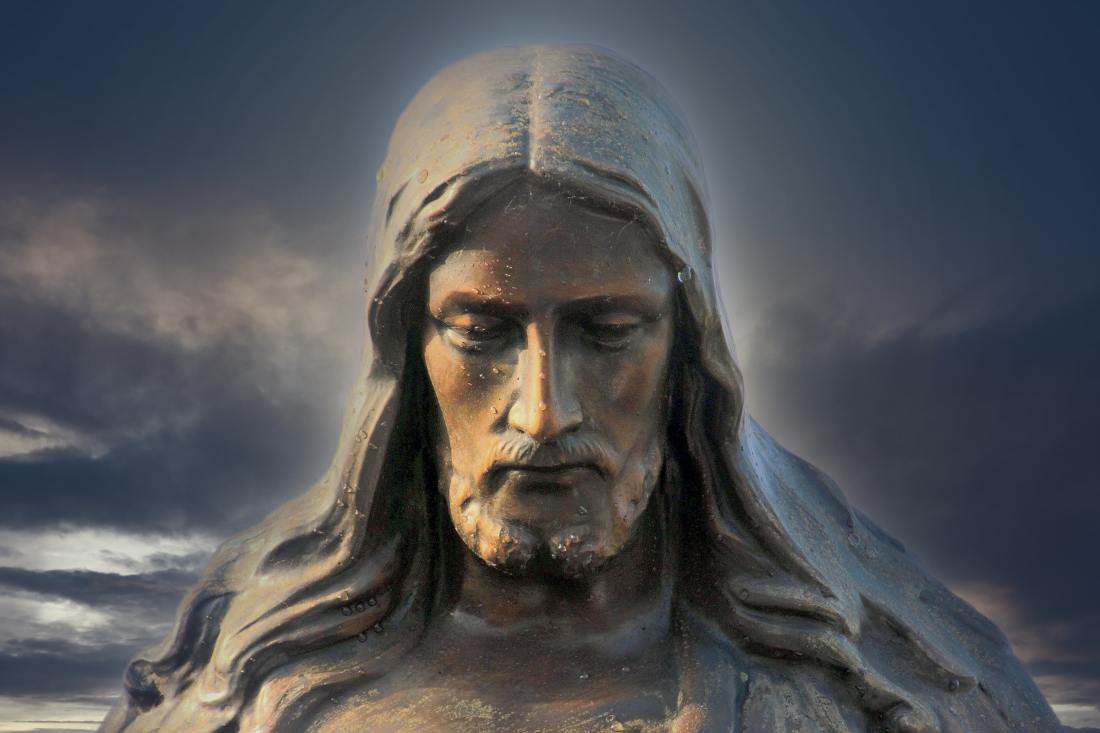
Jesus Christ Statue Photo - Myriam Zilles

This year, the Nicene Creed is 1700 years old.  Way back in 325 A.D., there was the First Council of Nicaea, where a large number of church leaders gathered primarily to discuss the relationship of Jesus Christ to God.  There had been this ongoing controversy (Arianism) on whether or not Jesus was created and thus not the same as God the Father.  Everyone considered Jesus to be divine but what was his relationship to God the Father?  It came down to two Greek words, homoousios, Jesus being “of one substance” with God the Father, or homoiousios, Jesus being of a like substance to the Father.  Arianism  held that Jesus was the first created being, inferior to the Father but like him, and still superior to all other beings.  The Council of Nicaea firmly rejected Arianism and chose homoousios.  I believe homoousios fits much better with what the Bible says.

Emperor Constantine had called the church leaders together because this controversy was dividing the Church.   He got the church leaders together and he let the church leaders decide the controversy and did not influence the decision.  Everyone of the church leaders voted for the creed except for two holdouts.  Emperor Constantine had hoped this would resolve the issue, but unfortunately the controversy continued. 

In 381 A.D., at the First Council of Constantinople, the Nicene Creed was amended with the biggest change being the fleshing out of the third article which is about the Holy Spirit. The Holy Spirit was not the focus in the original creed. All the other changes have been minor.  And that is how the Nicene Creed came to be.

The Nicene Creed makes it very clear that Jesus is God who became human.  It says

And in one Lord Jesus Christ, the only begotten Son of God, begotten of his Father before all worlds, God of God, Light of Light, very God of very God, begotten not made, being of one substance with the Father, by whom all things were made; … became man, …

And at the end of the original Nicene Creed it said

But as for those who say, there was when He was not, and before being born He was not, and that He came into existence out of nothing, or who assert that the Son of God is of a different hypostasis or substance, or created, or is subject to alteration or change – these the catholic and apostolic Church anathematizes [strongly condemns].

The original creed also made it clear what the wrong beliefs were.  The key point of the Nicene Creed is that Jesus is God, a person of the Trinity, who became human for our salvation.

Today there is a falsehood going around that Emperor Constantine called the council because he wanted to make Jesus a so-called mortal human being who was a prophet into a deity and thus suppress the sacred feminine (symbolic of fertility and reproduction and being representative of mother earth).  This is a completely different narrative from the historical documents, and the idea of the Trinity (three persons and yet one God) had already been established so it was not a new idea introduced at the Council of Nicaea. 

And another falsehood that people believe today is that at the Council of Nicaea, the books of the Bible were selected  and the Gnostic Gospels were suppressed at that time.  Nothing about that is true.  The Biblical Canon was not discussed at all.  It had already been set by consensus.  Again the false idea is that Emperor Constantine was suppressing the sacred feminine by banning the Gnostic Gospels. The funny thing is the Gnostic Gospels are much more anti-feminine than the books of the Bible.  Be careful of the lies that surround the Council of Nicaea.  Unfortunately “The Da Vinci Code” popularized many of these lies.

Jesus’ Resurrection

Why is Jesus’ resurrection so important?  It is a major foundation of the Christian Faith.  Early Christians believed in the resurrection, and a large number of them saw Jesus alive after the resurrection (1 Corinthians 15:3-8).  It is a critical piece of the story of God’s redemption of the world through the work of Jesus. It gives us hope, an expectation of an assured future (Romans 15:13).

We are connected to Jesus’ resurrection through our baptism.  In our baptism we were united to Jesus’ death and resurrection (Romans 6:3-4).  If Jesus did not rise from the dead, then we are still in our sins and our faith is worthless  (1 Corinthians 15:17). If Jesus did not rise, then we have nothing to hope for.  If there is no eternal life then we just live a meaningless life, recognizing that our brokenness and evil will always be around until we destroy ourselves.  With no resurrection, any hope we have then is a false hope.  The reality would be then our death would send us into nihilistic oblivion.  Fortunately, Jesus did rise from the dead (Matthew 28:1-10).  The resurrection validated who Jesus was and what he is able to do.  It gives us the assurance that he was victorious over sin, death, and the Devil (Hebrews 2:14; Romans 6:23).

Because of Jesus’ resurrection, we have a new life (2 Corinthians 5:17-18; Romans 6:4).  We have been reconciled to God (2 Corinthians 5:18-19).  Because Jesus rose, we too will rise to eternal life (Romans 6:23).  We will have new immortal bodies (1 Corinthians 15:42-54).  Everything will be made right and we will live forever in the presence of our loving God (Revelation 21:1-4).  

Therefore, because of Jesus’ resurrection, we have the hope that everything now that is broken will be made new (Revelation 21:5).  There will be a perfect life for us with a new Earth and Heaven.

PS For more on Jesus’ resurrection check out “Praise God for Jesus’ Resurrection”.

Affirming People

Two women talking (Christina@wocintechchat)

Today’s culture is all about affirming people. You tell them they are good just as they are, or that they are better than good.  “You are the best” is an affirmation that we all want to hear.  It is good to encourage people, especially people with low self esteem, but are we being truthful when we affirm someone?  Reality is we are not all hot stuff.  In fact, none of us are hot stuff.  We are all broken people in need of fixing.  

Affirming someone means you validate, support, and/or encourage their identity, experiences, or beliefs and by doing so culture says you are recognizing their worth and value.  It is good to treat everyone with dignity and respect, because everyone is of great value and worth, no matter how broken they are.  God loves everyone, just as they are, but God also wants to move us to a better place, to restore us and to fix our brokenness.  Why? It is because he loves us.

However, today’s culture sees everyone as naturally good, and affirming them is telling them they are okay and whatever problems they have are due to society.  It is not their fault. People say “You just be you because you are the best”.  Unfortunately, to some extent, it is their fault, and not society’s fault.  We all are broken and sinful.  It is our fault.  Yes, society has its problems but it is because we are broken self-centered people.  The problem is us.  Each and every one of us are inclined to do evil.  We are not naturally good.  It is wrong to affirm harmful behavior.  It is wrong to ignore our brokenness.

Over the centuries we have tried to solve this problem of our brokenness.  Educating people did not change people’s behavior much.  Enforcing many laws also did not change people’s behavior very much. Punishing people did not change people. Trying to change society did not fix the problem. And affirming everyone does not solve the problem and change people.   All these are external actions.  The real problem is internal.  Deep down inside of us we are selfish self-centered people.  Each and every one of us has this problem.  We want things our way and we would also like to have the advantage. Because the problem is internal to each and every one of us, everytime we try to fix the issue we fail, because we can not fix it ourselves.

Fortunately, God loves us even in our brokenness, and he sent Jesus to provide a solution for our brokenness.  God in Jesus took on human form, lived that perfect life free from sin and then went to the cross to pay our debt.  He died on the cross and rose from the dead on the third day.  Through the work of the Holy Spirit, all who trust in him become children of God.  The Holy Spirit is at work in us who believe, restoring us to become more like Jesus.  Because of our internal change (which is a work in process), we can work for a better world.  We can affirm God and his love because of all he has done for us.

So, affirming one another without recognizing our brokenness is harmful.  This does not mean we cannot praise or encourage people for well done actions or thoughts.  We can and we should, but we need to recognize that we are all still broken people.  We cannot affirm people for the harmful actions and ideas that go against God’s holy standards.  God’s standards are good for us.  It may be kind to affirm someone with a harmful lifestyle, but that would not be the loving thing to do.

Yet, there is one way we can “affirm” everyone, no matter where they are at.  It is by telling them “God loves you”.  It is a truth that everyone needs to know.  We just cannot affirm bad actions or bad ideas. Instead, culture today wants you to affirm everyone no matter what, but we cannot affirm bad behavior.  Out of love, we need to address those harmful actions or ideas.  Let us be affirming of all God has done, and let us share his love to everyone around us.

Love and Kindness

Heartshaped Hands by johan van den berg

People today seem to want to replace the word love with the word kindness.  I can understand since the English word love has a broad set of meanings and in society today the focus is on the romantic meaning of love, but though the words are similar they are also very different.  To be kind is a good thing. In fact it is one of the nine attributes of the fruit of the Spirit.  Love is another attribute.  Love wants the best for the other person.  Kindness does not necessarily have that motivation. 

Being kind means you are friendly, generous, and considerate.  Showing love (agape love) means the love is unconditional, sacrificial, and is an act of the will.  Love is not a feeling, rather love acts with regard for the other person’s best interest. I like this definition from the book “God Space” (by Doug Pollock, p. 92): “Love is a commitment you make to act in someone else’s best interest. True love can only be known by the actions that it prompts.”

To illustrate the difference, suppose a grandmother was making dinner and her grandkids come up and want to have some cookies from the cookie jar.  She would be kind if she handed them the cookie jar, but the loving thing to do would be to say no and say to wait until after dinner.  Love puts the best interest of the other first.  Being kind may not always be the best thing for the other person.

Another illustration shows that kindness is not demanding but love is.  Suppose you give $10 to a homeless person.  That is a kind act, but love would not give the $10 if you smelled alcohol on his breath.  Instead in love you would volunteer to take him to a detox center.  Love is demanding.  With love you cannot keep the person at arm’s length like you can with kindness, rather you care and show concern with their best interests in mind.

There is a meme that states “Kindness is everything” and another meme that states “Just be kind”.  These campaigns to be kind are good but they are lacking.  They equate love and kindness, or they see kindness as love in action.  By being kind you cannot use tough love.  Kindness means you need to affirm and lift up the person.  Sometimes you need to point out to the person some hard truths, like their actions are really destructive behavior.  That would be the loving thing to do and it would not be kind.

Showing kindness is a good thing to do, but let us let our kind acts also be acts of love to show we truly care and are concerned for them.  Kindness without love is empty.

Ancient Words

Bible with heart shadow

Ancient words ever true; Changing me, and changing you. We have come with open hearts; Oh let the ancient words impart. (Ancient Words by Michael W. Smith; songwriter is Lynn Deshazo)

The Bible is unique. It has been around for about 2000 to 3500 years and was written in 3 languages by about 40 different authors over about 1500 years.  The Bible is estimated to have sold  5-7 billion copies and is the most popular book in the world for all time.  It has staying power.  For 2000 years it has been changing lives.  The words found in the Bible are God’s words to a broken world.  The story of the Bible is one of God, out of love, rescuing us and giving us a full life. The Bible is different from other religious texts.  Other religious texts talk about what we have to do to get right with God or the world.  The Bible tells us what God has done to make us right with him.

We know that this world is not as it should be and we desire an utopia where we all can live in peace and harmony.  Through the centuries we have tried to create utopias but for every attempt we have failed.  We have failed because we are all self-centered and selfish.  We live lives centered on ourselves.  We are broken.  We cannot save ourselves from ourselves.  Our self-centered brokenness corrupts everything we try.  We need an outside power to save us from ourselves.

Thank you, God, for coming to save us from ourselves.  God loves us so very much that he came to earth in Jesus to rescue us and restore that relationship.  God saves us and gives us a new life in him.  We are not there yet but God is at work in our broken lives, changing us to be more like Jesus.  Today, we still many times fail to follow God’s standards even though they are good for us.  Fortunately, God’s forgiveness is there for us to allow us to start afresh. He wants the best for us.  One day, Jesus will return and that desire for a peaceful utopia will become a reality. In the Bible, God gives us hope and life.  The Bible is about his story of restoration for us.  

This is why the Bible is the best selling book in the world for all time.  A good summary of the main theme of the Bible can be found in the introduction to “The Jesus Storybook Bible”.  “The Story and the Song” is a video of the introduction of the book.  Yes, the book is aimed at kids, but the introduction points out what the Bible is not and what is the main theme of the Bible.  It is all about Jesus.  These ancient words are always true and life changing.