The Global Supply Chain

Wier Gear Photo by Nic Kilby

We take so much for granted.  I am again surprised to find out how much our economy is dependent on materials or manufacturing halfway around the world.  Russia’s invasion of Ukraine is causing more supply chain problems.  Ukraine supplies about 50% of the world’s neon gas (and about 40% of the world’s krypton gas).  Neon gas is used in lasers for making computer chips. The two neon producing Ukrainian companies have halted neon production. Ukraine is also a significant exporter of wheat.  We live in an interconnected and global economy.

The global supply chain has been a wonderful blessing in many ways.  Take a look at all the fresh produce on our grocery shelves. I think of the bananas we have year round.  They are not local and usually grown outside of America. And the berries we can get anytime of the year.  Much of the produce in winter was grown thousands of miles away.  Some produce is local or from storage, but a lot of produce is shipped to us from far away.  The global supply chain has allowed us to enjoy some of these luxuries.  Our companies these days have greatly benefited from the global supply chain, and it has allowed our companies to become more efficient, but it also has created some vulnerabilities.

We were made acutely aware of these vulnerabilities during the covid pandemic and it showed how fragile the supply chain really is. To illustrate, I remember learning that when I ordered a new laptop, the order was sent to China and parts from various suppliers around the world were assembled according to my specifications before being shipped to me.  And in days I had the laptop.  It was a smooth fast process that was quite efficient. This is known as just-in-time or lean manufacturing. However, there were signs of supply chain fragility.  I remember in 2011 the floods in Thailand caused hard drive production to drop 28%.  That affected the delivery and price of laptops.

Today, the computer chip industry is still trying to get back to operating at full capacity, and now the Russian invasion of Ukraine will slow the recovery of the computer chip industry.  The supply chain, though quick and efficient, is fragile.  All that is needed is for one supplier or service provider to have problems and the rest of the supply chain is in trouble. The covid pandemic caused multiple failures to the supply chain and that ground everything to a halt.  I do not think it will be that severe in this case but there will be an effect on computer chip production.

Also with a global economy, prices tend to get set globally.  This is especially true of crude oil. The price of gas here depends on the global oil price, and this is why prices here have been soaring due to fears of a Russian oil shortage even though America does not import much Russian oil.  And I believe we have many other products whose price is based on the global market.  We live in a global economy.  Our economy depends on events that happen around the world. Some products are more affected by the global events than others, but one should expect supply chain disruptions to occur now and then.  

Companies need to be resilient and flexible to manage these disruptions. Toyota, after Japan’s 2011 earthquake and tsunami, put together a huge database of suppliers, suppliers’ suppliers and suppliers’ suppliers’ suppliers. They asked themselves what were the strategic items they needed to stockpile. They were trying to become more resilient.  I believe short term profit taking is what has made the global supply chain so fragile. There needs to be some longer term thinking to deal with these disruptions, so that there is a more robust and resilient response.

How flexible and resilient are you? How about the companies you depend on?

Open Source Software and Linux

A Linux Logo

I am a fan of open source software and particularly Linux.  Open source software is computer software, where the owner “grants users the rights to use, study, change, and distribute the software and its source code to anyone and for any purpose”.  Linux or the Linux kernel is probably the most well known example of open source software.  Linux is the software that makes a foundation or the kernel of an operating system.  A Linux distribution, of which there are many, is what most people would consider the operating system.  A Linux distribution is a full operating system,  like Windows 10 or Mac OS X.

Linux was started 30 years ago by Linus Tovalds.  The internet was just getting going from being a research project to what it is today.  It was perfect timing for this hobby project to take off and become more than a hobby.  I remember reading the initial announcement of the Linux kernel.  There was immediately tremendous interest in Linux, and it quickly became a group project that programmers from all over the world were writing code for.

Soon after that, Microsoft realized Linux’s potential and a potential impact on Microsoft’s bottom line, so  Microsoft began to actively discourage the use of Linux.  Microsoft used fear, uncertainty, and doubt (FUD) to discourage its use.  Linux was even called a “cancer” in 2001 by then Microsoft CEO Steve Ballmer.  

Move forward 20 years and in a completely different sense Linux has spread like a cancer.  I just installed the “Windows Subsystem Linux (version 2)” on my Windows 10 Home laptop.  This program is a Microsoft developed and approved piece of software.  I am running the Linux kernel and operating system inside Microsoft’s Windows 10 Home with Microsoft’s blessing.  What happened and why is Microsoft now supporting Linux?

It turns out that using the collaborative methods of making open source software produces software better than the proprietary methods (in most cases).  Using collaborative open source methods means that people from all over the world are working on improving the software and correcting any bugs in that software.  There tend to be more people working on open source software than if it were proprietary software.  

My experience with open source software illustrates the point in a small way.  Some of the weather radar processing software that we used was very old.  A friend wrote a program to easily view weather radar files.   He built it on top of some other open source code.  I wanted to have some editing capabilities so I added that capability.  My editing code barely worked.  Another friend added some stuff he wanted in it.  Then someone from Europe, who no one knew, saw the code on Github and he cleaned up the code, made it faster, and he added more capabilities to the code.  Now the program works great and is being used by many people.  The open source code made collaboration easy and improved the software.

Microsoft learned that lesson and decided to give its users/developers what they wanted. Microsoft went into open source software in a big way. Microsoft has open sourced a lot of their software, and Microsoft bought Github, the main collaborative open source software website.   (However their crown jewels, Windows and Office, remain closed source.)  Microsoft has changed from 20 years ago.

Was Microsoft right to be concerned 20+ years ago? Yes, they were, but Microsoft should have embraced the change sooner, instead of fighting it for many years.  Today most web servers, all the top 500 supercomputers, and all non-Apple (android) smartphones run on Linux.  Linux is everywhere, and because of android phones Linux is the number one operating system kernel in the world.  Only on the desktop is Linux missing a significant presence with about a 4.7% presence.  (About half of that 4.7% is Chrome OS (Chromebooks) which has Linux underneath.)   This is the case even though many Linux distributions (e.g. Ubuntu Linux) are as easy to use as Windows or Mac OS X.  Several years ago, after our Windows XP laptop got infected twice, I put Linux on it and for the next several years Gail and I used that Linux laptop to surf the web and do our various computer tasks until we got a Windows 10 laptop.  It was as easy to use as Windows and much more secure than Windows XP.

Open source software is what runs the Internet, and underneath this web page is open source software, the very popular WordPress and the operating system Linux.  Even your web browser is mostly open source. (The Firefox browser is 100% open source.)  Open source software has revolutionized the software industry and it is here to stay.  And I think Linux is the best example of the potential of open source software.

Living in a Digital Babylon

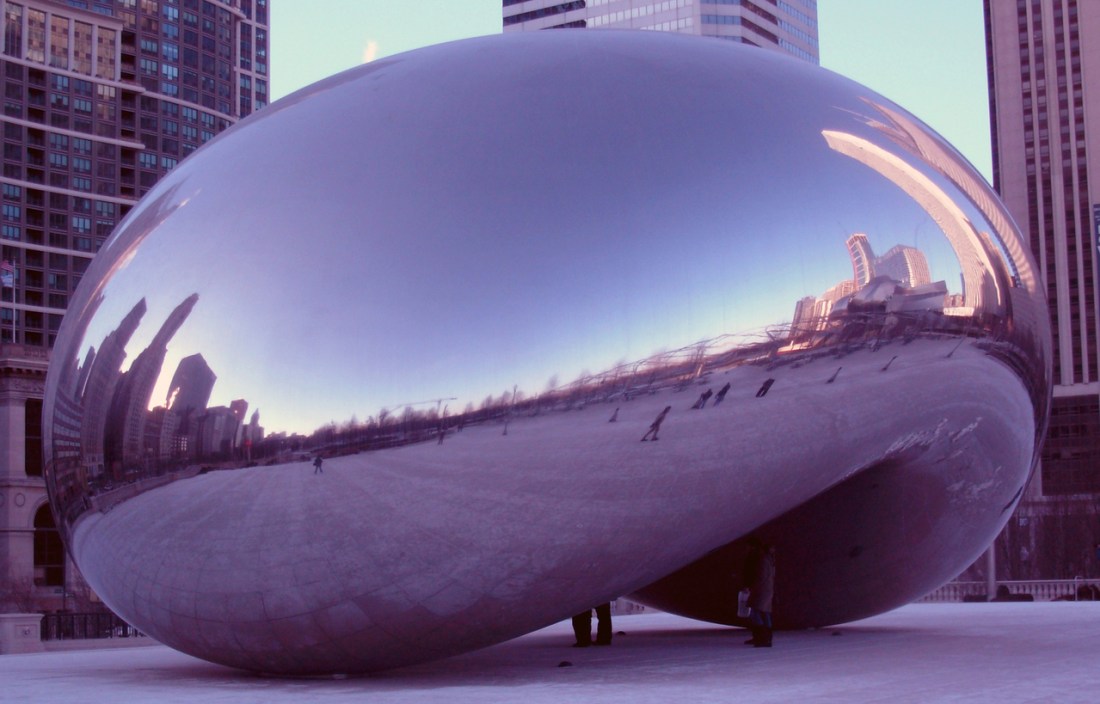
Das Bean Photo by Mark Publava

I believe today we are living in a “digital Babylon”.  The culture has shifted and Christianity now takes a backseat to other influences.  Today the big influencer is the Internet.  The younger you are, the more screen time you spend.  All ages say they spend too much time online.  It can be very addicting.  Just as the Jews found themselves in a foreign culture when they were exiled to Babylon, so we are now exiles in a foreign culture influenced by the Internet. Christianity has become countercultural. We need to recognize that we are countercultural exiles and we should not succumb to today’s prevailing culture.

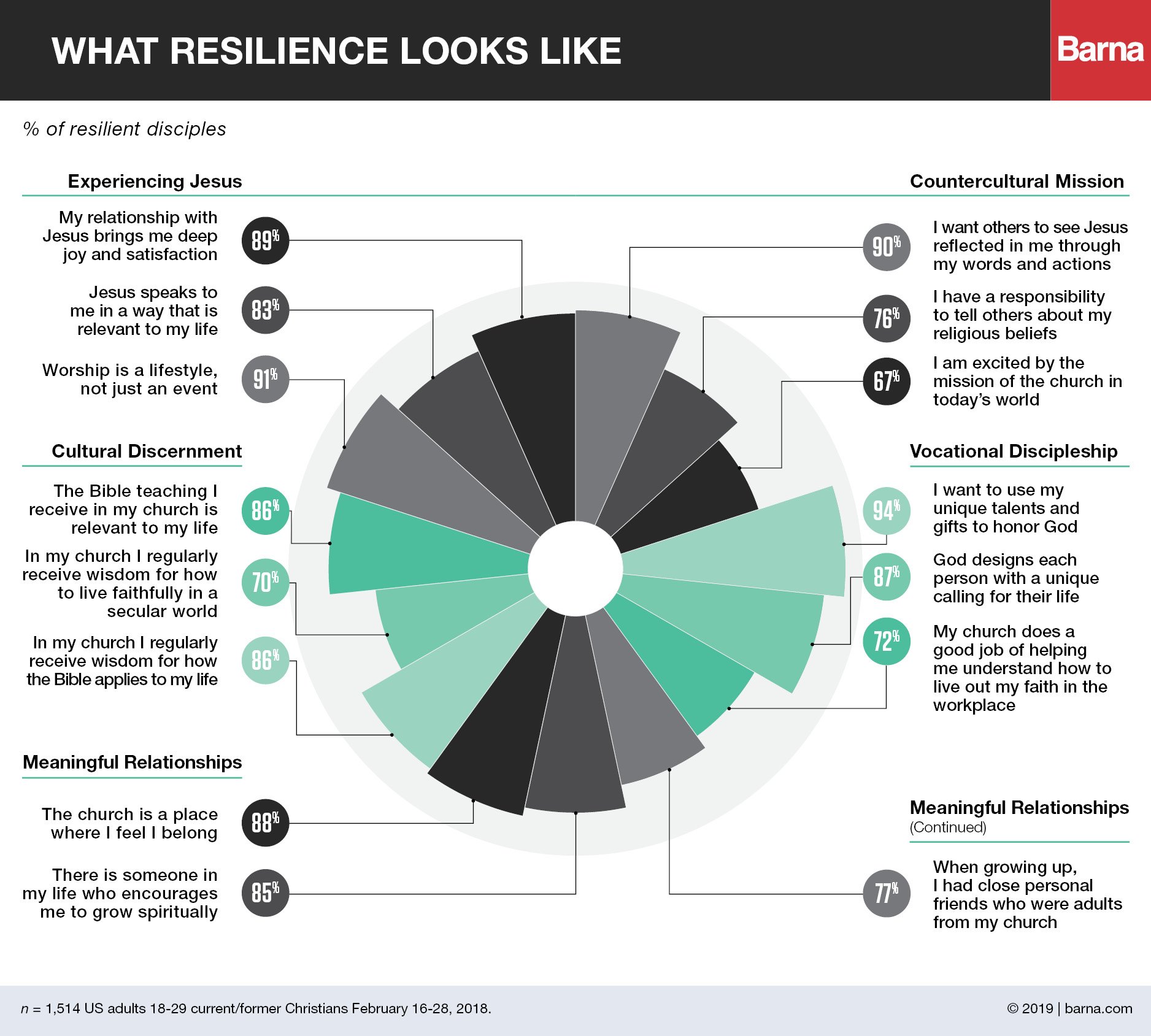
The Barna Group did a couple of studies that looked at 18-29 year olds, first in 2011 and then in 2019.  They found three trends shaping culture.  The first trend is “Access”. Via WiFi and other internet connections we can have access from just about anywhere at any time on about almost any topic.  It is a great resource.  Unfortunately the second trend is “Alienation”.  The Internet is supposed to be a great connector and in many ways it is, but I believe this technology also isolates and promotes Individualism. It is you and your phone, or some other screen device.  Have you looked in a restaurant to see how many people are on their phones and not talking to the person they are with.  I find it kind of scary.  The third trend is a distrust of “Authority”.  Because of the Internet, you don’t need to rely on anyone.  That independence alienates one from tradition and institutions, and in doing so it produces a distrust of institutions. Though Barna’s focus is on those 18-29 years old, I see these trends across all generations.

Barna says these trends have significantly impacted those 18-29 year olds who have grown up in the church.  In 2011, 59% of those 18-29 year olds who had grown up in the church dropped out of any church involvement.  By 2019 the number grew to 64%.  Note these were children and teenagers who were there at worship and took part in youth activities, and now as adults they are gone.  Many of them no longer identify themselves as Christian.

Only ten percent of those 18-29 year olds who went to church as kids are what Barna calls “Resilient Disciples”.  They have a strong faith and they understand that they are countercultural exiles living in a digital Babylon. They attend a local church regularly and engage in other faith activities outside of the worship services.They trust firmly in the authority of the Bible, and they are committed to Jesus personally and affirm his death and resurrection. And they express a desire to live out their faith so that God is honored.  Below is an infographic that gives more detail to what their resilience looks like.

What can we older church folk do?  Note the importance of meaningful relationships.  Be a friend to a teen or a young adult.  We need to support each other in this culture, and use the Bible to keep the countercultural truth front and center.  The Internet is a great resource but truth and falsehood are both easily found online, and there is nothing that tells one what is true.  We are tossed to and fro by different ideas and concepts unless we have been grounded in the truth of Scripture.  The Church provides that anchor of Jesus Christ to ground us, so we can find that needed support in a local church community.  Let us be there for each other, especially those young in the Faith.

The New 21st Century Normal

Photo by Pongsak Kitirojpan

The only thing constant is change or so they say.  Big events like a major war, a depression, or a pandemic causes the change to new ways to accelerate, and the old ways to die off more quickly.  The question I have been pondering is “What will the new normal look like after the pandemic is over?” Or will it ever be over?  COVID19 might just be a part of the “new normal”.  There are a lot of unknowns and many choices that will be made, but we can look at what is happening and be prepared for various possible scenarios that may occur.  We need to prepare to be resilient and robust.  We need to be flexible and adaptable to the changes around us.  Being not willing to adjust to the new normal will lead to failure.

Some would say that the 21st century really started in 2020 with the pandemic.  All those new 21st century ways of doing things are firmly taking root now.  It happened before.  World War I was the catalyst for the 20th century to “really start”.  A lot of aristocratic ways were discarded after the war and the 20th century truly began.

How has the pandemic changed our lives? Are these changes part of the new normal? Or are they temporary?  Looking at what has happened, we see a lot of changes.  People are wearing masks.  People are not shaking hands.  People are working from home.  People are buying online.  Students are learning online, instead of in a classroom.  Meetings are being conducted via video chat.  Concerts are performed online.  People are streaming videos to entertain themselves instead of visiting a movie theater.  People are isolating with no large gatherings allowed.  How much of this is temporary?  How much will become part of the new normal?

Looking at Tourism and the Travel Industries, you can see they have been hit very hard by the pandemic. Tourism provides 1 out of every 10 jobs worldwide.  How does the future look for them?  One possible outcome is that the pandemic will end and people will begin to travel again.  This will likely happen with assurances from the airlines, cruise ships, hotels, and other event centers that they have and will continually disinfect and clean everything to close to hospital standards.  They would also monitor people for fevers and employ other disease monitoring equipment.  They would be motivated because an outbreak would be very bad for business. Likely business would not return to the numbers they saw before.  The worst case scenario would be if the pandemic continues and they are unable to fully open.  They would go bankrupt, or would have to charge enormous rates for the very rich to travel and see the sites.  The rest of us would view the sites from our home in virtual reality or by video.  Travel would be very limited.  That would be a disaster for the travel and tourism industries.  The travel and tourism industries make their money by packing lots of people into close quarters.  Unfortunately that is also the way disease spreads.

Already we see companies saying they will allow employees to continue to work from home after the pandemic is over.  How many offices will be vacant because of this change?  How many companies who rent out office space will be struggling financially due to too many empty offices? There are some adjustments that will need to be made.

Big box stores were in financial trouble before the pandemic.  How many of them will be able to survive with the increased online purchasing?  Many of them got their start with catalogs.  Online shopping is nothing more than using an online catalog, and yet they are struggling to make that change.  It seems to me that they are no longer flexible, and they can not change.  I like to think I see there will be a return to catalog stores, where you can get advice and place an order, and also where you can return those things that were the wrong size, color, or whatever that was not right for you.  I hope that will happen, if they are willing to make the change.

These big box stores remind me of Kodak.  Kodak was the company that invented the digital camera.  Yet Kodak was destroyed because it refused to adopt the digital camera until it was too late.  Its film business was too valuable for them to make the change to digital.  Today Kodak is only a shell of the original company.  

So how flexible are you?  How flexible is your favorite company or organization?  Can they quickly adjust to the changing environment?  I am amazed at the stories of how breweries and distilleries started producing bottles of disinfectant, and companies who changed their production line to produce face shields and even ventilators in a matter of weeks.  These are the companies that are resilient and robust. They saw the opportunity and made the change.  

Likely you have already adjusted a little to the 21st century.  Do you own a smartphone?  That is a 21st century device that is changing society.  I admit I don’t use it to its full potential.  It is more than just a phone and a camera that you carry around.  Some 21st century thinking is needed to make better use of it.  What adjustments will you need to make?

This post was inspired by a very interesting article by Tim O’Reilly, “Welcome to the 21st Century”.

PS For different reasons many local churches have been in distress for years.  They have lost the younger generations.  I feel they have been living in the past, and have not been willing to change and reach out to the younger generations.  Can they be resilient and still live out their calling?  I think for some churches, if they are willing, they can make the change and survive. Unfortunately for many of them with only senior citizens attending it is likely too late.

You Disclosed!

Cell Phone Photo by Steven Waite

There is a new phrase out there.  It is “surveillance capitalism”.   It is the way many companies in the 21st century make their money. Google was one of the companies that developed it.  It wants to know all about you so it can show you targeted ads.  What is valuable today for many companies is information about you.  From grocery stores to tech companies, they all want information about you, and they are collecting it.  There are data brokers who will buy and sell your information.  These are private companies collecting data, like your location, your license plate information, and even your real estate information.  They organize the data to sell it.

Let us look at the 5 big tech titans.  Google and Facebook are really advertising companies that offer you free services so they can learn as much about you as possible so they can show you targeted ads and thus they make their money.  Amazon is also in the business of collecting data on you, so it can better run the Amazon store and sell you its many services.  And Microsoft is also collecting your data, but right now it is playing catch up.  Apple is a hardware company so it has less reasons to collect data on you but it still collects data to help lock you into its ecosystem.

Cell phones can easily track you and with GPS they track you down to about 16 feet.  For example, Google Maps is great for finding places, but that means Google knows exactly where you are.  I realized how much Google Maps tracks you, when I saw Google Maps on my smartphone accurately reporting the speed of my car in the middle of nowhere.  It made me realize that I am most likely always being tracked with my cell phone.  It seems to me that the cell phone is the biggest surveillance device around.  Here is a comic strip (Baldo) that drives home the point of “surveillance capitalism”.

In the last post, we saw all the surveillance that China uses on its citizens.  In the US, your surveillance data is available to the government but it does require a warrant or money to purchase it. It is legal for the government to buy surveillance data and there are plenty of companies collecting the data.  On the other hand, we also see that the police are more accountable due to all the cameras surveilling us today.

Is privacy a thing of the past?  What should our expectations be?  Should surveillance be regulated?  Or are we past the point of no return and we need to accept that we live in a transparent society where privacy is no longer an important value?  So how much privacy is really needed? Those are 21st century questions.

Authoritarian China

China Flag by Raphael Pto

I have known several people who have done mission work to the Chinese people, and because of that I have developed an interest in China.  Over the years, I have seen China open up and Chinese Christians worship without concern.  Unfortunately that began to change about 5 plus years ago.  The Chinese government has become more and more authoritarian.  The Chinese ruling elite have become, in my opinion, increasingly concerned with potential rivals and threats to their power.

July 1, 2020 was the 23rd anniversary of the treaty of the British returning Hong Kong to China which set up the “one country, two systems” arrangement between Hong Kong and China.  Unfortunately July 1, 2020 will also be remembered as the day China in the name of national security forced Hong Kong to enact a new law that greatly restricts freedom of expression. Secession, subversion of state power, terrorism, and collusion with foreign entities are now broadly defined illegal activities with up to life in prison if convicted.  Due to “national security”, the trials can now be moved to mainland China where the trials may be done in secrecy. Hong Kong’s judiciary can now be superseded by China.  A man with a flag calling for Hong Kong independence was one of the first to be arrested.  The “one country, two systems” seems to now be “one country, one dominating system”.  

Also the law empowers China to set up a national security agency in Hong Kong to oversee the investigation and prosecution of any violations.  This law allows China to act outside the law of Hong Kong.  The law also extends past Hong Kong, so that this blog post could be a reason for me to be arrested if I ever visited Hong Kong.  I believe this law is designed to suppress dissent in Hong Kong.  I believe it is already working with two political opposition parties disbanding and several activists resigning from organizations that might be considered subversive.  At least one activist has left Hong Kong out of fear of being arrested.

As you can tell this new law bothers me.  More information about the Hong Kong law can be found here.  But this is nothing new.  In China, you are tracked by many different means.  You are not trusted. You show your ID card everywhere.  For a couple of examples, you show your ID card when you mail something, when you enter or leave a university campus, and when you ride the subway.  Also cameras are everywhere observing you and facial recognition is being used.

I believe that China is now the leader in surveillance technology, and may already be exporting the technology to other authoritarian regimes.  China has the perfect test bed for surveillance technology.  Right now in NW China over 1 million Uighur Muslims are in re-education camps.  There they are monitored 24/7.  With these camps China is implementing social and behavioral controls. They are using surveillance to try to predict behaviors.  If you are in NW China and not in a camp, you are still very closely monitored.  You could be arrested for a ‘pre-crime’ if your behavior and identity suggest a possible crime in the future.  I believe their goal is to create a society where everyone is obedient to the authorities and there is no dissent.  I am afraid that the rest of China could be next. I am especially concerned for the Christians there.  They are viewed with suspicion because their allegiance is not totally for the State.  The legal Christian churches have been given the task to change Christianity to be more Chinese, which I take to mean more beholding to the State.  I am concerned!  More information on Chinese surveillance can be found here.

If you think that is bad, there is talk of ranking people in China, so that if you are in good standing with the government you can go where you want but if you are in bad standing you might not even be able to ride a bus or the subway.

Technology Changing Society

Wier Gear Photo by Nic Kilby

Have you ever considered how technology has changed society?  How has technology changed you?  Are you aware of the influence of technology on you?

Let us look at some “old” technology.  Consider the automobile.  The automobile has allowed us personally to travel great distances whenever we desire and to wherever we want to go.  It allowed us to move out of cities and live in the suburbs.  We no longer go to the corner grocery store to get food rather we go to a large supermarket.  The automobile has had a large effect on society.  Also consider the air conditioner.  It keeps our house cool and allows us to sleep on those hot nights.  Now consider today where we drive our cars into our garages and stay in our cool homes, entertained by TV, streaming video, and electronic games.  Consider what we lost.  Over a hundred years ago, we would have known our neighbors by going to the corner grocery store and sitting out on our porches in the cool of the night.  The neighborhood would have been a small community.  Today I don’t know my neighbors very well and I can go for months without even seeing them.  That isolation was a result of technology.

Neil Postman gave a talk back in 1998 where he brought up five insightful ideas on how new technology affects society.  With these ideas are questions we need to ask ourselves.

Every technology change is a trade-off.  Besides the advantages of the technological change there are always disadvantages.  When we ask the question “What will this technology change do?”, we also need to ask the question “What will this technology change undo?”.  The first insight is there is always a cost to any technological change.

His second insight is the advantages and disadvantages are never evenly distributed among the population.  Some will take advantage of the new technology while others are unable and/or unaware.  Who benefits from the new technology?  Who is harmed?

With every new technology, there is an underlying philosophy.  To exaggerate and oversimplify things, a person with a hammer sees everything as a nail, and a person with a computer sees only data.  The new technology changes the way we see the world and how we use our minds.  How is technology affecting our thinking?  That is the third insight.

The fourth insight is that new technology is not additive, rather it changes everything.  It is not one more thing, because it will affect everything.   After the printing press was invented, it was not the same old Europe and the printing press, rather the printing press quickly changed Europe into a different society.  What will the consequences of technological change be?

The last insight is after a while technology becomes perceived as to be part of the natural order of life.  Once set, this perception is hard to change from.  What is the technology that you can not live without or would be unable to function due to societal expectations?

I am a techie and I love the web.  However, I need to be careful because the five insights make sense.  Since I am familiar with Facebook, I will use Facebook as an example.  Facebook is a great place to connect with friends and family, however the free cost is not free (Insight 1).  Facebook makes it money by targeted advertising.  Facebook works to find out as much as possible about you.   It even tracks you across the web so it can better target ads at you.  Facebook’s goal is to keep you on its site for you to see as many ads as possible.  From my experience it does a good job at keeping your attention.  It is easy to spend many addicting  hours on Facebook (Insight 5).  That is good for Facebook, and likely not so good for you (Insight 2).  It also limits interaction to your family and friends who usually have the same values you do.  By doing so it isolates groups and ideas.  It puts you in a bubble.  And that is not good for society (Insight 4).  Be aware!  This means the news you get on Facebook tends to be limited and one-sided.  Facebook does not seem to care.  You are just a point on their social graph and adjusting the algorithms to reduce divisiveness  is not in their best interests (Insights 2, 3, 4).

Am I going to leave Facebook?  No, but I will be diligent, aware of its effects on me and society.  I will especially be aware of the bubble of family and friends that hide viewpoints that I may disagree with.  (It is possible I could be wrong about some things.) I believe Facebook is here to stay (Insight 5?).