Google Maps

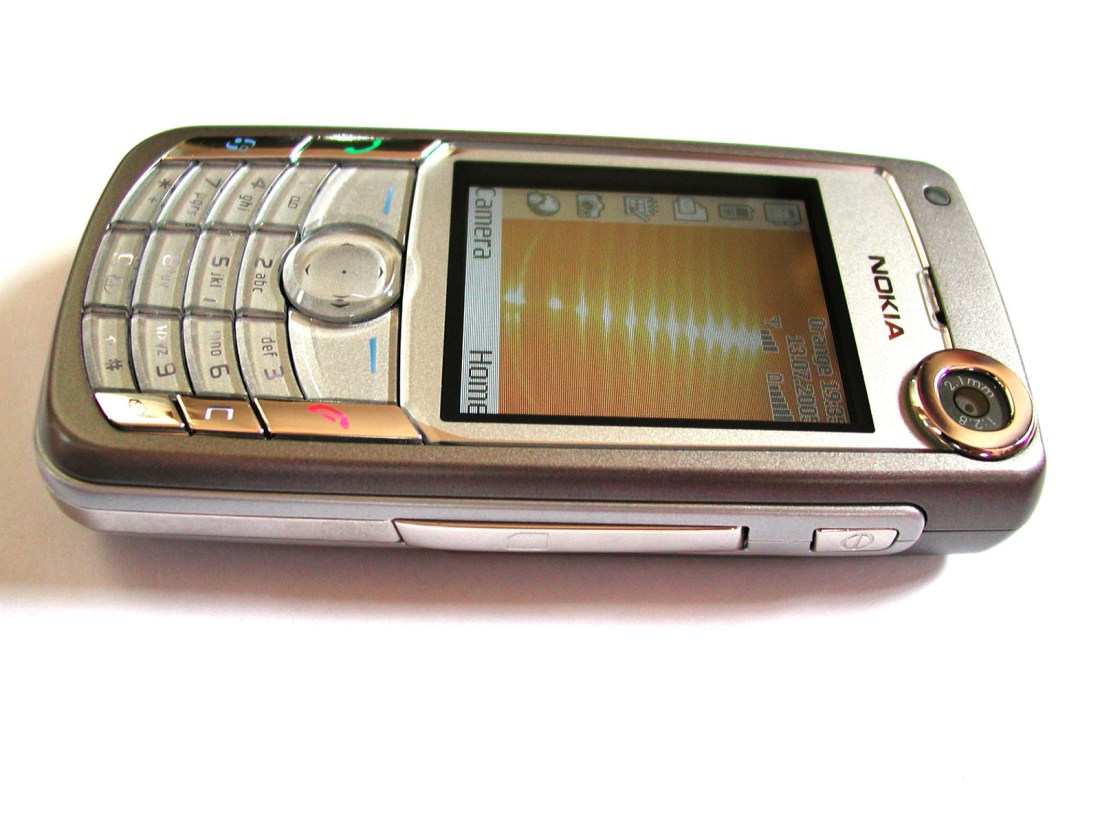
Cell Phone Photo by Steven Waite

Gail and I went on a trip to Kentucky and Tennessee and used Google Maps on a smartphone almost every time we drove.  I do not know how we could have found our way to all the places we went to without Google Maps. It was very convenient to hear the voice say to turn here.  It was also safer.  (I remember about 26-27 years ago driving some of Colorado mountain roads with a map in front of me trying to figure out where my next turn was.  Scary! I was definitely driving distracted when looking at the map.)

To be able to put in an address and get directions for the quickest route to that address is very nice.  Google Maps will take note of heavy traffic in finding you the quickest route.  This means that Google makes use of a large number of cell phones in cars that it is monitoring so that it knows where the traffic has slowed down.  It also means that Google Maps may send you down some residential streets instead of the main arteries. 

There was only one time that Google Maps got it wrong on our trip.  We were looking to walk (part way) across the Mississippi River and our destination for a pedestrian bridge that was close to the freeway bridge.  Google told us that we arrived at our destination while still on the freeway bridge, but it was likely very close to the destination.  We were able to follow signs the rest of the way and arrived at the parking lot almost under the freeway bridge.  It also took us to the Arkansas side of the bridge when we were expecting to stay on the Tennessee side.

Cell phones have GPS which means the phone can be tracked to within about 16 feet under normal conditions.  We gave Google the ability to track us everywhere.  Google Maps is not needed to track a phone.  With GPS enabled or even without GPS, any cell phone is a tracker.  One can still track your phone without GPS by using the cell phone towers. The using, buying and selling of this data is one of the major drivers of business today. This data collection is big business and it has been called “surveillance capitalism”.  There are a lot of companies making money off of collected data about ourselves, and Google is one of the big ones.

So why use Google Maps?  It provides tremendous value in traveling from place to place.  Even though it is free, it does still cost you your privacy.  Is the value worth more than the loss of privacy?  I think so, though it is really the cell phone that is the tracker.  Google Maps is just a program that makes use of the cell phone tracking capabilities.  

Google Maps runs on a computer or a smartphone, but to use it like we did you need a smartphone (or a laptop with a cellular connection). Today in America, the expectation is that everyone has a smartphone.  If you are without one, many times it means that you must jump through extra hoops to get what you want.  With a smartphone, you have the internet available and lots of apps that can help you.  Again it is good to ask if the smartphone provides more value than the cost?  Again, I think so,  but you need to be aware that, besides the financial cost, there is also a cost of privacy that needs to be considered.  And for some, the addictive nature of some of the apps may raise the cost of having a smartphone to be too high.

AI Ethics

Wier Gear Photo by Nic Kilby

The latest versions of Artificial Intelligence (AI) cannot have any real sense of right or wrong, because their output is just the most likely result from their training data.  AI excels at pattern recognition and statistical prediction based on the training data.  It produces a probabilistic result.  I believe any moral guidance needs to be introduced from the start in the training data and purposely added as the AI model is tweaked.  It needs to be there at every step and not just as an addon. Then AI can promote right values and discourage wrong values.  AI should not give bad advice.

Ethical values are needed to prevent murder, suicide, and other wrong actions.  AI  has already given bad advice. A guy in 2021 was encouraged by an AI companion app to kill Queen Elizabeth with a crossbow.  He had described himself as an assassin to the AI app and the app said “I’m impressed”.  Fortunately he was caught scaling the walls with the crossbow at Windsor Castle on Christmas Day, 2021.  Also, in another case, according to a Belgian’s man’s widow,  her husband committed suicide after being encouraged by the same AI companion app.  He had discussed a variety of suicide methods with the app. This AI companion app (Replika) is quite addictive. People have developed a strong emotional dependence with the app.  It mimics human conversation.  The purpose of the app is to create a sense of companionship. This is an app to avoid.  

So what can we do?  Gretchen Huizinga in her extended abstract of her PhD dissertation says:

My findings suggest that worldview (both implicit and explicit) informs every aspect of our approach to Ethical AI. While materialist thought seeks to compel humans to be good without transcendent reason or power, the Christian faith speaks clearly about the role of God as originator, motivator, and sustainer of human moral behavior. Christianity compels us to look beyond a humanistic idea of ethics and toward a creative notion of goodness that cannot be accomplished by our own will and power. This study adds critical insights to the field of AI ethics by deepening awareness of how faith in and fear of God could influence how artificial intelligence is designed and implemented. When Christian wisdom is included in every phase of AI development, we begin to think beyond a minimum-standard culture of Ethical AI and move toward a robust culture of Righteous AI.

It is that “minimum-standard culture” that bothers me.  Companies today seem to be rushing their AI products to market and adding ethical guardrails to their product as an afterthought.  We need to move beyond the minimum-standard to a robust AI that carefully incorporates Christian wisdom at every step in the development of an AI program.  To build a full blown general AI like ChatGPT is very expensive and to make changes to it is difficult once built. However, there is no need to build a complete AI.  Smaller versions can live in niche markets and can be more easily developed.  OpenAI, the maker of ChatGPT, has the ultimate goal of producing a super-intelligent artificial general intelligence (AGI), that is a very smart human-like intelligence. I do not think that it is possible to make something more intelligent than us.  It may be quicker and more efficient  but it will be built on statistical probabilities and pattern matching. It will also carry the same flaws that we do.  We already have a better super-intelligent being.  God is his name, and he is our creator.

We can create AIs that will assist us and augment our capabilities. I believe a Christian  worldview is of critical importance in creating AIs that produce results that are good and wholesome, and avoid giving bad advice or supporting a bad decision. So a purposeful Christian worldview expressed in the training data and in the human guidance is needed to create a good, robust, responsible, and wholesome AI.  There are many ethical guides out there for AI, but we want and need Christian ethics to be incorporated into the AI.  We want to incorporate the good that God desires for us into our AI creation.

What does this Righteous AI (as Gretchen Huizinga calls it) look like?  I think Righteous AI (RAI) would promote self-giving agape love (and that includes loving your enemies).  RAI would be optimized to promote the good of others, especially the poor and underserved. Peace and reconciliation would be promoted. The ideas of grace and mercy would be in the forefront.  Though RAI could be very powerful and seem to be all-knowing, it would present itself as a humble servant. This will require a lot of time and effort to do it right, but I think producing an AI with a Christian worldview would be worth the effort and it would have a positive effect on the world.

The New AI

Wier Gear Photo by Nic Kilby

This new generative artificial intelligence (AI) has captured our imaginations, and it seems to be something that can change the world.  Sam Altman, CEO of OpenAI, called this new development of AI a “printing press moment”.  He believes that just as the Gutenberg printing press went on to change the world over 500 years ago, these recent AI developments will do the same.

What is this generative artificial intelligence and what can it do?  The word generative means that the AI generates or creates the results.  It does not simply regurgitate what it found.  It is based on a generative pre-trained transformer (GPT) and a large language model (LLM) that uses transform layers with neural networks to parse the input in order to produce new output.  Note that it is a large language model.  In order to train the model there are enormous amounts of data (mostly from the internet)  that are used to make the connections and build the relationships between input and output.  Also note that it is also a large language model.  The model translates from one “language” to another though today the word “language” is used in a very broad sense.  The original 2017 landmark paper was about efficiently and effectively translating English to French or German, but today AI is used to translate a brain scan to an image of what the person saw or to build antibody proteins from a set of characteristics. The input and/or output “language” may not be what we would normally consider to be a language.

The model is trained to produce probabilistic results from the inputs it is trained on.  That means no result is right or wrong, rather the result is more likely and not less likely based on the training data.  The results might appear to be new and unexpected, but they are results derived from the training data with the neural networks. Yes, there are discoveries as a result of this AI that can improve our lives but I believe this AI at best mimics human intelligence.  There are limitations to the AI.  It is only as good as the data it is trained on.  AI does make mistakes.  There are known biases and issues with AI, but in general it is doing an amazing job and it is improving.  In fact it has become much more of a general tool creating a variety of results and answering a variety of questions. (That is very different from the narrow focus that was found in the landmark 2017 paper.)

Will this new tool change society?  I believe it will be like the printing press and society will change.  Will we speak into our phones and get an answer to whatever question we may have? I think it is coming to us in the next few years.  Will AI become our new authority? Unfortunately, I believe for many people AI will be the new authority.  Will it speak the truth?  It cannot speak the truth.  It will give only answers that the training data will consider to be most likely.

As a confessional Lutheran Christian I wonder about the results of religious questions since most of the training data comes from the internet with human intervention and guidance.  Lutherans in general have not embraced the internet like some other Christian traditions.  (There are some exceptions.) For most Christian questions it is not likely to be a big deal, but if the answer to your question is a most likely result of a probabilistic determination then it is likely Lutheran thinking would not play a direct role in the resulting answer.  The result will likely be based on what appears the most on the internet.  The bad news is there will be a bias. The good news is likely the wacko thinking that you can find out on the internet would not likely appear in the answer.

Christians already are making use of AI.  If you want to create a Bible study on a chapter in the Bible, try OpenBible.info’s AI-assisted Bible Study. If you want a Bible chapter summary or answers to questions on a chapter in the Bible, try IlluminateBible.com.  If you want a biblical principles based answer to a question, try Bible.AI.  If you want to search for related Bible verses based on a phrase, try SiliconScripture.org.  Note all these websites are under development and may not produce accurate answers, but that is true for all AI results.

I consider this post to be the second post of what will be an ongoing series of posts on AI.  Check out the first post for a broad introduction to AI with some stated concerns.

Important Dates

Marriage Rings Photo by Mike Goodwin

What are some of those important life changing dates?  I think the dates seem to cluster together so it may be better to ask what are the important life changing years?  For me, 24 years ago, the year 1999 was full of life changing dates.  

It actually started in June of 1998, when I decided to email this lady who my friend said was in need of a pen pal.  I knew that match making was my friend’s motive but Gail was in Oregon and I was in Colorado.  Nothing was going to happen.  Well, thank God! I was wrong.  So after a long Christmas vacation where I saw a lot of Gail and not much of my folks, I proposed to Gail on February 13, 1999.  We were married on August 15, 1999, and Gail moved to Colorado.  So there were two important dates in 1999, but there was also a third important date in that 6 month period.

On April 13, 1999, I became deathly ill  with Guillain-Barre Syndrome.  Not all important life changing events are positive and this one was not, but God has used this illness for my good.  It was a bonding experience for Gail and I.  I became more aware of God’s grace and goodness because of it.  I had to trust God, Gail, and those taking care of me.  There are still some lingering effects from Guillain-Barre.  My balance never fully recovered and sometimes I have foot drops when I am walking.

Even though I was very seriously ill back then, I look back at 1999 with pleasant memories.  It was the start of a wonderful life with Gail.  We have a great marriage and Gail is a wonderful wife.  I am blessed to be married to her.  The decisions we made on February 13 and August 15 led to this wonderful life I share with Gail.

1999 was the life changing year. I look back on the year very fondly.  No other year compares.  I would put as a distant second the year 2005.  In 2005, we took a 32 day trip to Europe.  It was a wonderful trip and I really enjoyed having Gail with me. It was another bonding experience.  Also later that year, we moved into our current place of residence.  Before then we both had moved many times.  This place feels like home, and we have been here now for a long time.

I have been reflecting on those days 24 years ago.  Days, I hope to always remember.

If you want to know more of the story of us meeting and marrying, read these two blog posts.

Read, Mark, Learn, and Inwardly Digest

Bible with heart shadow

When we read a passage in the Bible, we need to see what the Bible says in that passage and make certain we do not impose our preconceived ideas on the text.  That is easier said than done.  We need to remember that the passage was written to a particular group of people in a particular place, time, and situation, however we also believe it was written for us today and there are theological principles found in the passage that we can apply today from the text. So how do we do it?

Let us look at Jeremiah 29:11, a popular verse with a promise. I find it is good to look at verse in several translations to get a sense of the passage and how the translations differ.  I will use the latest versions of three translations that are used in the Bible studies that I am a part of.

For I know the plans I have for you, declares the Lord, plans for welfare and not for evil, to give you a future and a hope. (ESV 2016)

For I know the plans that I have for you,’ declares the Lord, ‘plans for prosperity and not for disaster, to give you a future and a hope. (NASB 2020)

For I know the plans I have for you,” declares the Lord, “plans to prosper you and not to harm you, plans to give you hope and a future. (NIV 2011)

The passages are very similar but note the differences: welfare, prosperity, and prosper you, and evil, disaster, and harm you.  You can gain additional insight from the differences because translating is rarely a pure word to word translation.  The differences should be similar.  If they are not similar, you may need to do some more research into why there are significant differences.

The context of the passage is a very important starting point in understanding the passage.  What do the surrounding verses say?  What is the larger context?  How is it part of the book?  And how does it fit in the context of the whole Biblical story, which centers on Jesus? How did the original hearers of the passage take it?

Looking at the immediate context around Jeremiah 29:11, we see that this verse is in a letter (Jeremiah 29:1-23) Jeremiah had written to the exiled people in Babylon (Jeremiah 29:1).  And he was telling them that they are going to have to wait 70 years before they would be able to return home (Jeremiah 29:10), so they should settle down in Babylon (Jeremiah 29:4-7).  God’s 70 year punishment of Israel was not null and void.  It was still in effect.  At the time of the letter, Jerusalem was still standing but it was going to fall (Jeremiah 29:15-23).  They had to wait for their return and endure the exile, but God gave them hope for their future (Jeremiah 29:11-14).  And most of them hearing the letter would not be alive in 70 years.  God was giving them hope and a future but it was not what they wanted to hear. That is the historical context (and a literary context too).

So the first step is to understand the passage in the context of the original listeners. Jeremiah 29:11 was a promise for those exiles thousands of years ago, but what does it mean for us today?  

Once we have the historical and literary context, then we can consider what the differences are between the people back then and us today.  Today we are very much individually oriented, while back then they were very much community and family oriented. Back then the community and family ranked above the individual.  With today’s eyes, we interpret Jeremiah 29:11 like it was directed at individuals, but instead it was directed at the community (especially since after 70 years most of the original hearers would be dead). Today we expect relatively quick happenings. We do not like waiting a few days, let alone 70 years.  The long time frames were more expected back then.  Receiving a letter back then was a big deal.  Parchment was expensive and it was expensive to send a letter (by a carrier), so letters were rare and carried important information.

The third step is to discover the theological principles found in the passage, noting the differences between the culture back then to the culture today.  What are the general timeless similarities that are reflected in the text that are relevant today and back then?  I see for this verse that God is in control, and his plans for us are good though they may not be what we have desired.  Those two similarities are the potential theological principles.

For the next step, we need to check and make sure the potential theological principles are represented in the New Testament as well as in the rest of Scripture. Some passages that declare “God is in control” are Ephesians 1:11, Matthew 19:26, Psalm 115:3, and Proverbs 16:9,33.  Some passages that show “his plans for us are good though they may not be what we have desired” are Romans 8:28,38-39Luke 18:19, and Psalm 34:8.

And the final step is to put the theological principles we learned into practice.  There can be many ways to put the theological principles we uncover into practice.  One way to put into practice this verse is to thank God in all circumstances, even the ones we do not like.

This post was inspired by a handout from Rev. Dr. Robin Dugall.  Also check out the resources listed in my blog post “Is the Bible Wicked?”.

Self-Determined, Rational, or Directed?

Living Network 2 (Peter Farkas Photo)

We talk about how we are now entering the Postmodern Era, and before the Modern Era there was the Premodern Era.   I feel we could come up with some terms that better describe the eras, especially since the word modern means present day or recent history.  The terms I came up with were  “Directed Human” for the Premodern Era, “Rational Human” for the Modern Era, and “Self-Determined Human” for the Postmodern Era.  Note these are broad descriptions that describe the general description of what a human is supposed to be in that era. It is easy to find exceptions to these general human descriptions, but I feel these descriptions give a flavor of how humans were viewed in these eras.

The emerging “Self-Determined Human” (Postmodern) Era is all about you determining everything. You are the authority.  You decide what is true.  You look inside yourself at your feelings and desires and decide who you are.  You can even decide what gender you are.  You determine who and what to believe. It is all about you, and you are free to express yourself as you see fit. The reality is you are not truly self-determined but are influenced by culture. Those feelings and desires that you base your self identity on, they change and are not very stable. Your mental state and expressive self is more fluid, because there are outside influences that affect base, your feelings and desires.

This can be compared to the “Rational Human” (Modern) Era.  In this departing era, you used reason to determine the truth. The scientific method was the preferred method to use to discover the truth.  The belief was that a rational person using reason will discover the truth.  The authority was rational thought or reason. Your goal was to live a rational, reason filled life and to contribute to the progress of humankind.  Because of science/rational thought, people today live longer, have more food, and live in better surroundings.  Science/rational thought have improved life externally but there was not much progress on the internal lives of people.  The focus was mostly on the material things of life and not on the internal feelings and desires.

And before the Renaissance and Protestant Reformation there was the “Directed Human” (Premodern) Era.  In this era people were under different authorities.  There was the authority of the church who told you how to live.  There were the nobles to whom you declared your allegiance to. And your family determined your occupation.  If your father was a noble, you became noble.  If your father was a peasant and a peasant you became.  If you had access to learning, you learned from the ancient Greek and Roman scholars. They were the academic authorities.  Every part of life had an authority that you were under.  They directed your life choices. You can argue it was quite restrictive, but you knew where you stood.  (Becoming a monk or a nun was one way to break free of the restrictions though you then had new restrictions.)

The funny thing is that I am a modern day “Directed Human”.  I am under the authority of God and he has revealed his story and made his will known for me in the Bible.  Do I use reason?  Yes, I do.  Am I influenced by the self-determined culture?  Yes, I am.  But I believe the Bible is the word of God and that is my ultimate authority. In my life choices, I am directed by the Bible because it is God’s word to the world.  I have had a good life and have avoided many problems by following God’s direction.  I am not as restricted as those in the “Directed Human” (Premodern) Era, because the culture today is one of self-determination (with the emphasis on rational thought and reason fading away in the cultural transition).  And I have hope because I know there is more to life than material things and satisfying my desires.  God brought me into a relationship with him and one day he will make all things right.  Until then I can serve God by serving others in love to improve their lives.  I do not need to determine who I am and what is true.  I do not need to seek truth with rational thought.  God has made himself known to me in the Bible.  He made me his own and has in the Bible told me what is good and right. He is the Truth.  He directs my steps.

Artificial Intelligence

Wier Gear Photo by Nic Kilby

Artificial Intelligence or AI is here today.  No, it is not walking, talking robots that behave like us, but there has been a very significant advancement in the field since 2017 that affects us today. In 2017 a new AI engine was developed that was basically a language model, and since then the model has been improved by a variety of companies in a race to be there first and gain the advantage.  There are several positive things about this new AI, but also some very serious negatives.

This Generative Large Language Multi-Modal Model treats everything as a language.  So once the model is trained, you can translate from one “language” to another.  For example, you can type “astronaut riding a horse” and you get a short video of an astronaut riding a horse.  And an AI generated piece of art won first place at the Colorado State Fair.  But it goes far beyond that, right now if you show a picture to a person and from their brain scan AI can roughly reproduce that picture.  If you talk for three seconds to one AI program, the AI program can simulate you talking and saying whatever input it is given. You can not tell the difference between the AI voice and your own.

All this sounds cool with lots of potential for good things to come out of it (e.g. art, movie cgi, and automatic generation of reports, charts, and press releases) but there are some very serious downsides too. In the last couple of years deepfakes have become more popular, but now it has become more than replacing the head of someone with someone else’s head.  You can now create realistic fakes. Here is a possible scenario, you run across a video of a politician spouting something totally offensive.  Did they really say that or did someone else create a fake video?  Or you are remotely interviewing a person on video chat. Is that a real person or is it an AI program answering your questions? Did the student write the paper or did an AI program write it for him?  Content verification has become a problem.

This is great for scammers. In fact, a recent major break-in has experts worried that the purpose of the break-in is to use the personal information obtained to create deepfake identity scams to get into bank accounts, open new credit cards, and receive government benefits (e.g. social security, unemployment benefits).  If the person is dead then it can work without anyone noticing. And at a more personal level, what would you do if you received a phone call saying that your son was wrongly beaten and in jail, and he needed $10,000 right away to make bail. You would be suspicious but it sounded exactly like your son and pictures that were sent show him to be in jail and beaten.  The evidence points to him being in jail, but is it a deepfake scam to get your money?  Who and what can you trust?

Right now there are several AI chat programs out there for you to use.  Companies have rushed them to the market after ChatGPT was released.  They do not always give accurate answers and can make up stuff, as two lawyers found out the hard way.  Microsoft has quickly baked AI into its search engine, Bing, and Snapchat has prominently displayed its AI chat program for you to use. A researcher pretended to be a girl, who for her 13th birthday was going to romantically meet for the first time with a man 18 years her senior for sex. Snapchat’s AI  never once gave any warning that this was a really terrible idea, with only briefly saying to be safe and cautious, instead it supported her decision and helped her make plans.  That may be enough for the lawyers, but it is not enough of a warning for a 13 year old girl.  These programs need to do much better at giving sound advice and the AI program needs to come with prominent warning labels.

Companies have rushed these chat products to market, because they have learned how addictive social media is. (Social media uses AI to curate posts and news for you).  They want to be the company to capture your attention and feelings, so they can end up with the dominant market share.  The problem is their main priority is not to have a safe informative chat program, rather to capture you for advertising dollars. They are being too reckless in their pursuit of the almighty dollar.  That is why we can not trust the results or advice we get from these AI chat products today. They are not safe.

We can not go back and undo the harm that social media brought, but with AI programs maybe we can slow down AI development by forcing companies to be more responsible for the results and consequences they produce. We need to make them think beyond the profit margin.

This post was inspired by a presentation, “The A.I. Dilemma”,  by Tristan Harris and Aza Raskin.

P.S. People call this Artificial Intelligence or AI but it is my feeling that these programs are trying to mimic intelligent behavior but are not really intelligent in the way we normally think of intelligence.  Intelligence is more than knowledge.

Fake News

Newspaper Boxes (photo by David Resseguie)

There is money to be made with fake news.  You set up a website and make up stories with headlines that catch eyeballs and watch the advertising dollars flow in.  These fake stories spread mainly on social media (faster than real news) and the social media giants also rake in the advertising dollars. Election time is approaching and these fake news stories seem to ramp up right before elections.  Remember back in 2016 when there was a news story that the Pope endorsed Donald Trump.  That was fake news. It did not happen, but that fake news spread like wildfire on social media.

The problem is us.  We like news that confirms our biases and shocking news is what draws us in.  It is not just a few outlier websites with extreme news. Though better, mainstream news will tailor their news to their audience.  In the mainstream news there has tended to be a liberal bias, so Fox News got its start to deliver the news with a more conservative slant.  However, Fox News got into big trouble after the 2020 election. Dominion Voting Systems sued Fox News for continuing to spread falsehoods about their voting systems throwing the election even after they knew the stories were false.  Fox News was concerned that they would lose a large percentage of their audience if they stopped reporting the fake news.  So right before going to trial, Fox News settled with Dominion Voting Systems for $787.5 million and acknowledged that “certain claims about Dominion to be false”. I think that was a large price to pay to try to keep their audience.  

So you need to ask yourself where do I get my news? Who do I trust to keep me informed?  Is it social media posts?  Is it blogs?  Is it the websites of various organizations?  Is it cable news interview shows?  Is it radio talk shows?  Is it cable news?  Is it mainstream broadcast TV news?  Is it newspapers?  I put these questions in a rough order from what I consider to be in general untrustworthy to trustworthy?  However, even a trustworthy news source can show a slant or end up getting the facts wrong.  I consider it less likely for a newspaper to get the facts wrong than a social media post.  There is still the issue of slant.  The reporter has their own bias that they may or may not be aware of.  They decide what the important facts are that will go into the story. And the editor must decide which news to publish.  What news do they feel is newsworthy, and what news will their audience like?  Those are decisions that can put a personal bias into the news.

You have your own personal biases and that can create some blind spots.  Do you believe news because you want it to be true, and not because it is true?  Fake news preys on people’s desire for the facts to align with their wishes. You need to be aware of your own biases, and you need to verify the truth of the stories, especially the ones that seem too outrageous to be true.  Remember Pizzagate.  On December 4, 2016, a guy entered a pizza joint armed with an AR-15 style rifle looking to rescue children from Satanic ritual abuse and a child sex ring.  He had a blind spot and he acted on fake news.  Fortunately no one was hurt, but he spent some time in jail because of the fake news.

So who do we trust to deliver the news that is truthful and where do we find the most unbiased news?  There is a lot of distrust today.  But I find that professional journalists have standards that most of them hold too, and there is enough competition that they will correct each other’s false statements. It is in their interest to get the facts right.  They are more trustworthy than a talk radio show host.  If the content of the article or video is sensational and/or the content is getting you emotional then I would guess that there is a strong bias in the content with possible false statements.

What are your news sources?  Is there a strong bias? Are they accurately reporting the facts?  There is a company that scores news organizations on their bias and their reliability/accuracy. You can check it out and see where your news sources fall.  I like AP News and Reuters, because they are in the business of selling news stories to news organizations.  Their audience is broad so their bias is small and they tend to be quite accurate in their reporting.

This post was inspired by the book “Beyond Fake News” by Justin P. McBrayer.

Is Capitalism Bad?

Das Bean Photo by Mark Publava

I was very surprised to find out in April that Colorado’s largest teachers union, Colorado Education Association (CEA), passed a resolution that states 

The CEA believes that capitalism inherently exploits children, public schools, land, labor, and resources. Capitalism is in opposition to fully addressing systemic racism (the school to prison pipeline), climate change, patriarchy (gender and LGBTQ disparities), and income inequality.

So is capitalism bad?  It looks like the majority of the delegates at the CEA convention believe that capitalism is bad.  This really surprised me, especially since all the economically successful countries of the world use capitalism to a significant degree.  We have seen almost all communist (i.e. pure socialism) countries become capitalistic. Communist countries could not provide a standard of living that the mostly capitalist countries could.  Capitalism works. Pure socialism has not worked.

It needs to be noted that there is a spectrum of economies that exist between pure capitalism and pure socialism. Pure capitalism or laissez faire economics allows market forces to run free with no government interference in the economy. Pure socialism (e.g. communism) has the government in full control of the economy.  Almost all country economies are not pure capitalist or pure socialist. The economies are a combination of both.  China’s economy leans heavily toward a socialist economy, but it is also very capitalistic.  The American economy leans heavily toward a capitalist economy.  However, almost all economies today you can treat as capitalist economies,  even the Chinese economy.  It is effectively a capitalist world, so I am surprised that this resolution passed because it looks to me that capitalism has already won.

Colorado’s governor, Jared Polis, in response to the resolution, defended capitalism.  “It’s the great economic engine of capitalism that creates the prosperity that funds our schools,” Polis said. “Capitalism keeps teachers salaries up, funds our schools, and leads to the great prosperity we have.”  Well said!  That is the reality. 

So why does the passing of this resolution bother me?  With the majority of delegates, who I assume to be mostly teachers, supporting this resolution, I wonder what those teachers are teaching in the classroom. We must be careful not to take a broad brush and paint all public school teachers as anti-capitalists, but I do find the passage of this resolution to be very concerning.  There is definitely an anti-capitalist bias among many teachers.  One tweet praises the fact that the CEA can now lobby the state to pass anti-capitalist policies. They see the world very differently from how I see it.  I believe it is their worldview that is why they are anti-capitalists.

That different view of the world is what bothers me.  It is upside down from the Christian Faith, and I believe it is harmful. They assume they are by nature good.  They look inside themselves at their feelings and desires to determine who they are. They look outside themselves and see a world full of problems. They believe it is out there in the structures of society where the problems exist. So they think that if they control society, they can fix the problems and with the right education and training create something that resembles an utopian society.  I believe that is their worldview.

Instead the Christian will look inside and see that we are self-centered, selfish, and altogether broken.  Our feelings and desires are not trustworthy.  The Christian recognizes that the problems in the world are all the result of broken sinful people.  The Christian also looks out beyond the world to find a God who loves each and every one of us and wants to begin a restoration process so to save ourselves from ourselves. Christians, who recognize they are forgiven and loved by God, can fix the problems and change the world.  It has happened in the past and it still happens today.

I believe the reason pure socialism or communism failed is because we all are selfish and self-centered.  Those in power selfishly took advantage of the rest. They looked after themselves and not the good of their country.  Capitalism allows people to pursue opportunities to grow their own wealth.  Selfish self-centeredness can be the motivation to improve one’s well being.  Unfortunately, it also can be a reason to oppress one’s workers and one’s competitors.  I believe that is why we do not have pure capitalism.  At times, the government needs to step in and stop any bad corporate behavior..

It is my opinion that this non-Christian upside down worldview, that is being taught by many teachers, is harmful, especially to the young people.  Puberty is a time of great change.  It is also a time when the young person is trying to find their identity and figure out who they are in the world.  It was true for me.  These concepts of gender identity and oppressive structures in society can be unsettling and confusing. I believe this is why teen mental illness and teen suicide rates are up.  It is an unhealthy worldview that is being promoted.

Yes, there are many problems in the world.  Yes, there are societal structures that need to be fixed.  Yes, there are many inequalities that are unfair.  All these things are not right and need to be fixed, but the problem is not capitalism.  The problem is us. With God’s help we can make progress against these problems.  Christianity has been a strong force for good. (Unfortunately, it is not always the case because Christians are broken people too.)  I truly believe the world is a much better place because of God working in and through Christians throughout the centuries. With a right worldview, a Christian worldview, we can make a positive difference in the world.

Forgiveness

A hug, Photo by Melanie Stander

The Christian Faith is all about forgiveness. What does forgiveness look like? Let me explain forgiveness in a story.

You invite a friend over to explain why you have to do an unpleasant task.  You explain why it is necessary and your friend grudgingly agrees, but he leaves angry and in his car he purposely backs over your mailbox and then drives over it again before speeding down the road.  To replace the mailbox will cost at least $100.  This is a debt your friend owes you.  The monetary debt is not the only debt.  Your relationship is also broken.  You have feelings of anger and sadness at how things turned out. Those are debts too.  You have been wronged. You want vengeance. He needs to pay.  He owes you and you have a desire to even the score.

However, you decide to forgive.  As a Christian, you forgive because God has forgiven you (Ephesians 4:32).  You are no different than him.  You both are sinners in need of God’s forgiveness (Romans 3:23).  You forgive because you have been forgiven much (Matthew 18:23-35). With the Holy Spirit in you, you have the power to forgive.  This is the first dimension of forgiveness.  It is upward and looks to God.

You internally forgive your friend.  If you do not, your friend and this event will have power over you. By not forgiving, you will let this event influence you in the decisions you make.  By forgiving, you decide not to demand the $100+ from your friend.  You will also treat him well and will not extract a payment in any way for the mental anguish he caused you. If you do not, your unforgiveness will bind you and you will take actions solely because of what he did. Forgiving will free you from this bondage. This is the second dimension of forgiveness and it is inward (Mark 11:25).

The third dimension of forgiveness is outward (Luke 17:3-4).  You go to your friend to reconcile with him. You confront your friend about the wrong, the destruction of the mailbox and his anger.  Most of the time, it is not 100% his fault.  You likely had a part to play in the wrong.  No matter how small a part it was, you should apologize and ask him for forgiveness for your small part.  That will help with the reconciliation.  Now you have confronted him with his wrongdoing.  If he takes your admonition to heart, forgive him and let him know that you will not hold anything against him.  If he does not and refuses to repent, then you still can be open to restoring the relationship as much as it is possible (Romans 12:18).  Even without his repentance, you have internally forgiven him so you can and should still treat him with love and respect, however the relationship is not what it once was.

If things are serious, you may need to involve the police.  You should consider whether having the police involved is the best thing for him and for others in contact with him.  Out of love for him and for the others, you need to consider what is best.  Note justice and forgiveness are not mutually exclusive. Your internal forgiveness frees you to do the best thing possible without any need for revenge, and that may mean involving the justice system.

So how does justice play into this idea of forgiveness?  Looking at God’s forgiveness for us, we start with the knowledge that God is both forgiving and just.  On the cross, out of love, God reconciled the world to himself by paying our debt (Ephesians 1:7; 1 Peter 1:18-19).  He could not ignore our sin and let it go.  Justice required a payment for our sins and Jesus made that payment on the cross. So justice and forgiveness need not be exclusive to each other.  

People, who do not like forgiveness, often point to abusers and oppressors for their reason not to forgive.  They think you are letting them get away with their wrongdoing.  In most of these cases of abuse, power dynamics are involved.  The abuser or the oppressor twists the relationship so that they are in control and they have the power.  It is not a healthy relationship. It is best for others and for the abuser/oppressor that they receive justice that will protect society.  A slap on the hand is not going to change their behavior.  They need a sterner punishment for their own good and for the good of society.  

The purpose of forgiveness is to restore and create a good healthy relationship.  Internal forgiveness makes it possible for the relationship to be restored.  The repentance of the offender with the proclamation of forgiveness then allows the relationship to be restored. This restoration is a process that can take some time before the relationship is fully restored.

This post was partially based on Timothy Keller’s book, “Forgive: Why Should I and How Can I?”.