
The Kingdom of God

Is the Kingdom of God here today or is it coming at the end of time?  The answer is “Yes”.  Both are true. The Kingdom of God will be fully realized at the end of time, but it is here today.  Too often we focus on the end and not on what God is doing today.  If we focus only on what Jesus has done for us, we then miss out on what the Holy Spirit is doing in us and through us.

In the Lord’s Prayer (Matthew 6:9-13) we learn to pray “Your kingdom come”.  The Kingdom of God is not just about being with Jesus someday with a new earth and heaven (Revelation 22:1-5), because God is reigning now (Psalm 93:1-2) though we may not always see it.  Jesus proclaimed that the Kingdom of God was here right now (Mark 1:15; Matthew 3:2).  The Kingdom of God is here today, because Jesus reigns in the hearts of all believers and through our witness the Kingdom of God is expanded. So when we pray “Your kingdom come”, we are asking that by his grace the Kingdom of God would be made known in our lives and the lives of others. God’s reign will be fully realized at the end of time.

The Kingdom of God comes to us when God saves us, forgives us, and calls us his own. But salvation is not just about forgiveness (Colossians 1:13-14).  Salvation is also about restoration and healing (Jeremiah 30:17; Isaiah 53:4-5) now.  Jesus paid the price for our sins (Romans 6:23; 1 Peter 1:18-19), but salvation is more than a legal transaction that brings us back to God. Salvation is also a way of life (1 Corinthians 6:20; 1 Peter 2:24). Likewise, eternal life is not only something for us in the future (John 3:15-16), rather eternal life is something we have now (John 3:36).  Also we are not just saved from Hell (Matthew 25:46), but we are also saved to restoration, healing and wholeness (John 10:10; Colossians 2:9-10).

This restoration, healing, and wholeness allows us to become Kingdom Ambassadors for God (2 Corinthians 5:20), sharing the Good News of God’s love for us.  God has prepared good works for us to do (Ephesians 2:10)  so that people may glorify God the Father (Matthew 5:16).  Feeling overwhelmed!  No need to worry.  The Kingdom of God is all about Jesus and he with the Holy Spirit gives us the power to do those good deeds.  Jesus is the vine and we are the branches (John 15:1-11).  The juice that nourishes us flows from the vine to us, the branches, to produce good fruit.  We need to abide in him and let his grace transform our lives to produce good fruit that honors God.

Christianity is more than receiving  a “Get out of Hell Free Card” for the future. It really is all about restoring your relationship with God, and that is life changing right here and right now.

This post was inspired by a table in an article by Robin Dugall.

Inside, Outside, Upside Down

Das Bean Photo by Mark Publava

Today, many of us feel like the world has been turned upside down.  Now today’s emerging culture has people looking inside at their feelings and desires to determine if they are male or female and whether or not they are gay.  It used to be that you looked at the outside, and found out whether your body was male or female.

Again today we look outside of ourselves to find what is wrong in the world, and we look inside to try to find a solution to all that is wrong, because we are considered to be good by default.  This is upside down from the Christian Faith, which points out that when we look inside, we find that we are self-centered and selfish, and that is the origin of all that is wrong in the world.  And as Christians we look outside to God for our help and salvation.

So this emerging culture change is very much upside down from the previous Christian influenced culture.  So which worldview or culture is right-side-up? It depends on how you look at it.  I believe the Christian worldview is right-side-up, but you can make an argument that the nonChristian worldview is dominant and thus it should be right-side-up. About 2000 years ago, the Thessalonians referring to Paul and Silas, shouted “These men who have turned the world upside down have come here also” (Acts 17:6-7).  Christianity has always been countercultural to the sinful ways of the world.

I have friends who have a grown child, who is gay.  I believe this person looked inside to discover their homosexual desires and looked outside to blame the parental upbringing for all the struggles the adult child currently faces.  And this young adult also blames the conservative government where they live for their problems.  It appears that this young adult is quite unhappy, and I believe their issues and their unhappiness is due to their worldview.  That is to say this person has embraced this emerging worldview that they are good and anything wrong that happens is outside themselves. They think they are not to blame.

This means this emerging worldview also takes a dim view of forgiveness.  Forgiveness allows the offender to not pay their dues, while the forgiver takes on the offender’s “debt”.  Forgiveness is not fair, and some say it promotes injustice, but reconciliation is very hard without forgiveness.  Forgiveness goes against human nature.  We want justice and vengeance for those who have harmed us.  However, we would rather not take the punishment for our own wrongdoing.  As Christians we note that God has forgiven us.   Every one of us is a sinner and is in need of God’s forgiveness.  Because God has forgiven us so very much, we are able to forgive others and bring peace and reconciliation.

In this post-Christian society, there is this darkness of unhealthy thinking that is causing a lot of chaos, suicides, and mental problems.  As Christians, we can be lights to show a better way to live.  We show a life that offers love, peace, and security that is only found in Jesus Christ. Forgiveness is a key tool Christians can use to show God’s love and bring some peace and reconciliation to the world. There will be pushback because Christianity is countercultural and counter to our human nature, but we have the answer.  Therefore let us go out in love to serve, to speak the truth in love, and to lovingly correct the wrong thinking. 

Paul’s Rule of Life

A year ago, I suggested that having a “Rule of Life” might be better than New Year’s Resolutions.  A Rule of Life is a document of simple statements that create a pattern of life to live by.  In today’s world it is good to become more intentional and less reactive about how you interact with people and with God.  I have created some “rules” or “habits” for me to follow. Below is my “Rule of Life” document.

Paul F. Hein’s Rule of Life

Listed below are some of the “rules” or “habits” of life that I try to follow.  The motivation for all “habits” listed below is:

Jesus Christ, who out of love, gave his life and rose from the dead to restore life to me and for all in the world. And now his Spirit empowers me that I might have a wonderful and abundant life in him.  For this reason I am his disciple and out of gratitude I try to live my life to his glory.

Spiritual Activities and My Relationship with God

  • Be intentional and disciplined about growing spiritually.
  • Daily read Scripture..
  • Pray as often as possible.
  • Weekly gather together with other Christians for worship.
  • Give of my time, abilities, and finances to support Christian ministries.
  • Serve with others in Christian ministries.
  • Follow all that Jesus has commanded.
  • Daily repent and turn from my sins so that I might be renewed and restored.
  • Share my faith with others that do not know Jesus so they may come to know Jesus.
  • Share my faith with those that do know Jesus to encourage and help them grow in their faith.

Interactions and Relationships with Others

  • Be intentional and disciplined in my relationships with others.
  • Remember all people are important.
  • Make my relationships a priority.
  • Be kind, loving, generous, and gracious toward others.
  • Listen to people and try to understand where they are coming from.
  • Ask for forgiveness to those I have done wrong to or have wrongly offended.
  • Promote peace in my relationships, and as much as it is possible be at peace with everyone.

Healthy Living

  • Be intentional and disciplined in living healthy.
  • Walk daily to exercise.
  • Limit the eating of sweets and fats.
  • Eat healthy foods most of the time.
  • Eat small portions and limit seconds.
  • Take vitamins.

Service Opportunities

  • Be intentional and disciplined in my serving.
  • Be open to all opportunities that arise.
  • Be willing to step out of my comfort zone.
  • Do my best while serving.

Paul F. Hein’s Rule of Life as of 27 December 2022

Advent: Jesus is Coming

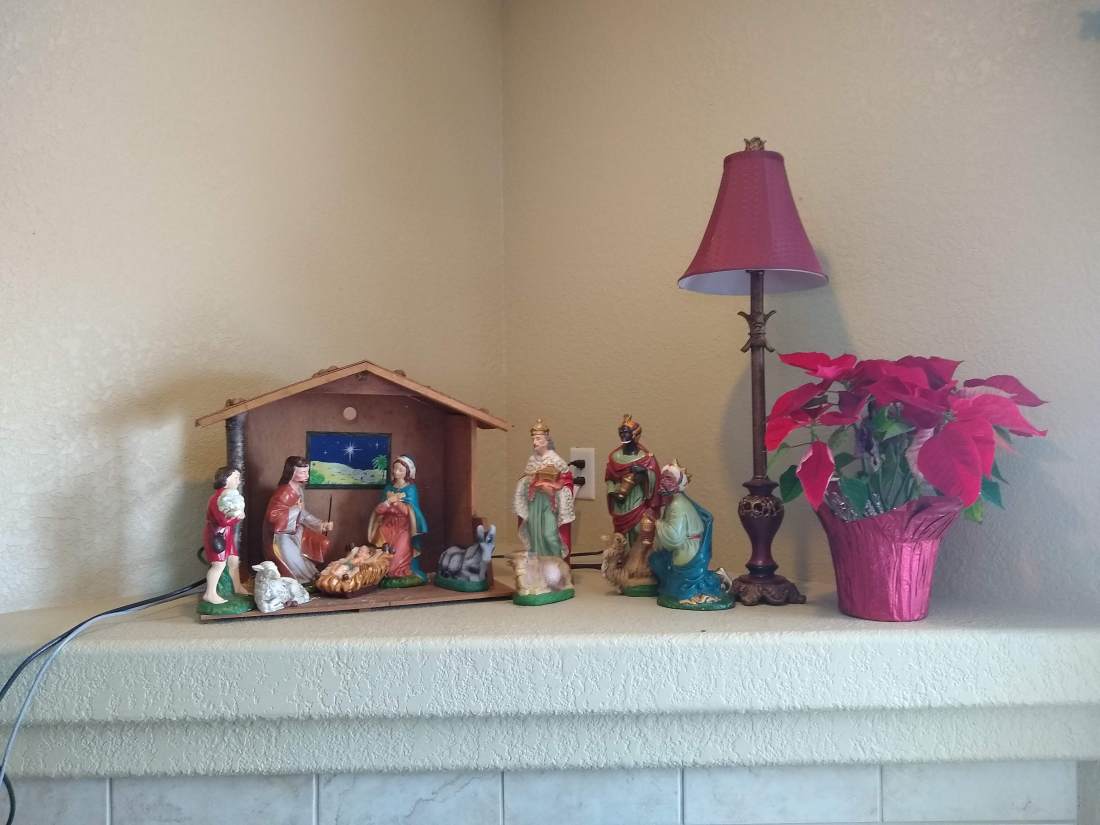
Christmas Nativity

This is the season of the church year when we remember Jesus coming at Christmas; Jesus coming into our hearts; and Jesus coming at the end of time. The name of the season is called Advent, which means coming.  (For the secular world, December is the Christmas season with shopping and family gatherings.)  Advent is 4 Sundays long.  The traditional focus of the Sundays is on hope, peace, joy, and love (in that order for each Sunday).  

You can see progression in the Advent Wreath which has four candles surrounding the white Christmas candle in the center.  Three of the candles are purple and one, the Joy Candle is pink.  You light one more candle each week as one counts down the weeks to Christmas.  (The Joy Candle is week three.) There are also Advent Calendars where each day you open a door or flap for a message or a small gift as you count down the days until Christmas. (Advent Calendars have become popular in the secular world too with secular messages.)

The first Sunday is traditionally focused on hope.  We have a sure and certain hope found in Jesus. Out of love, 2000 years ago, Jesus came into this world to reconcile us with God (Romans 5:6-11). We are broken, because of our self-centered natures.  The world is broken, full of wrongs, because of us. Jesus paid the price for our freedom from sin, and began the process of righting the wrongs in this world.  Because of Jesus, we are made right before God and can be agents of change for the good of all.  And we look forward to when Jesus bodily returns. He will then set all things right.  That is the hope we have (1 Peter 1:3-5).

The second Sunday in Advent is on the theme of peace.  Because of Jesus’ death and resurrection, we have peace with God (Romans 5:1).  We can live our lives confidently, knowing that we are his and he is working things out for our good.  I experience peace in the midst of many different circumstances of life because I know Jesus.  I cast my burdens on him, because I know he cares for me (1 Peter 5:7).  Because of him, I have peace with God and I can live in that peace.  When the problems and messiness of the world gets to us, we can rest in the fact that God has these situations in his control.  We are his and there is no need to worry.  We can have peace (Philippians 4:4-7).

The third Sunday is the Sunday of joy.  Joy is not happiness.  Happiness is connected to what is happening around us.  Joy is a fruit of the Spirit and is not influenced by circumstances.  Here is how Kay Warren defines joy:  “Joy is the settled assurance that God is in control of all the details of my life, the quiet confidence that ultimately everything is going to be all right, and the determined choice to praise God in all things.” This means we can rejoice even in our trials and sufferings (James 1:2-4; 1 Thessalonians 5:16-18). It does not mean a happy face 24/7, but joy is the confidence that God is good and everything will work out. We look to Jesus for our joy. We have joy as we remember all God has done for us, that God is using these events for our good, and there is a full life today and a wonderful life that is waiting for us in heaven.

For the fourth Sunday the focus is on love.  It is because of God’s love for us that Jesus came, so that we might have life in him.  It is not because who we are and what we have done, rather it is totally about God’s love for us.  We love because God first loved us (1 John 4:7-19).  Jesus restored that relationship with God.  That is what Christmas is all about Jesus coming in love, so that we might be reconciled to God and have full and eternal life in him.

So as you celebrate Christmas, remember there is more to Christmas than just gifts, family, and food.  It is about God loving you so much that he came down and became a little baby so that he might restore this broken messed up world.  Jesus came for you so that you might have life in him (John 10:10-11).

For God so loved the world that he gave his only Son, that whoever believes in him should not perish but have eternal life. For God did not send his Son into the world to condemn the world, but in order that the world might be saved through him. (John 3:16-17)

It is Good to be Thankful

Photo of wheat by Jimmy Lemon

This is the third year I am doing a Thanksgiving post.  Why?  Because it has been shown that it is healthy and therapeutic to be thankful.  It is good for you!  God has blessed you!  When I stop and think about my life, I can have two different attitudes.  I could complain and grumble about all that I have had to endure.  I could complain about what is wrong with myself or with the people around me.  I can complain about the country and the world and all that is wrong with it. OR I can give thanks that I am alive.  That God has clothed me and fed me.  That I am not starving, and I have a place to sleep.  All this and so much more, I can be thankful for.

Gail read “The Last Green Valley”. It is historical fiction based on a true life story about this German couple who fled Ukraine during World War II.  The husband, because of all the difficulties, lost faith in God.  He focused on all the difficulties and thought that God had left him.  A friend pointed out his wrong thinking.  Yes, he went through a lot of tough situations but he survived.  God was with him, guiding him through these tough situations.  God in seemingly miraculous ways had allowed him and his wife to survive several difficulties.  They made it to the West and ended up in Montana.  Having a positive, thankful attitude did not change the difficulties, but it helped him go through the remaining difficulties.

There is no question in my mind what the focus of this attitude should be.  We focus on God who made us and loves us.  God has our best interests at heart.   He works things out for our good (Romans 8:28), even in the difficult circumstances of life. We remember his goodness and all he has done for us. Even in those tough situations he uses it for our good. That is why he tells us to “give thanks in all circumstances” (1 Thessalonians 5:18).

If you are in a tough situation, how can you move to thanksgiving?  I would look to the Psalms of lament, and you can even write your own.  You first address God, and then tell him what is wrong. You then request God’s help and express your trust in him. And you end with praise and thanksgiving for God’s many blessings.  You move from focusing on the problem to focusing on God with thanksgiving and praise.

Actually, worship is giving thanks and praise by remembering who God is and what he has done for us.  An example of this is David offering a great song of thanks and praise in 1 Chronicles 16:8-36. At the end David says

Oh give thanks to the Lord, for he is good; for his steadfast love endures forever! (1 Chronicles 16:34)

Let us remember the goodness and love of God, and give him praise and thanksgiving.

Basic Discipleship

Bible with heart shadow

My church, Immanuel, recently went through the Red Letter Challenge (RLC).  The challenge is about basic discipleship.  So as Christians, saved by God, how do we live as followers of Jesus Christ?  What does it look like?  RLC gives us 5 Biblical principles for us to put into practice: Being, Forgiving, Serving, Giving, and Going.  These are based on the words of Jesus, the red letters of Jesus speaking as found in some Bibles.  Jesus at the end of the Sermon on the Mount (Matthew 5-7) says doing his words is like building your house on a rock, and not doing them is like building your house on sand which means the house will collapse when the storms of life come (Matthew 7:24-27).  Doing his words gives your life a solid foundation. 

Being is a foundation principle. God wants you to be in a relationship with him.  How can we build that relationship?  God speaks to us through the words of Scripture (Psalm 119:105).  The words of Scripture were inspired by God and were written to God’s people then but for us today.  We respond in prayer with praise and thanksgiving (1 Thessalonians 5:16-18), as well as sharing our concerns and requests (Philippians 4:4-7).  We worship together (Hebrews 10:23-25), remembering all God has done for us and supporting one another. Our doing flows out of who we are as people of God and who we become when we spend time with God.  God changes us.

Forgiving is needed in our broken world.  We are broken people who do wrong and hurt people.  We need God’s forgiveness (Romans 3:23). God has every right to punish us, but when we turn from the wrong we do, say, or even think, and turn to him, God forgives us (Acts 2:37-38). There is no sin too big for God to not forgive (1 Timothy 1:15-16). He empowers us to forgive others and bring reconciliation. Forgiveness is all about showing mercy and grace and realizing we are no better than those who offended or hurt us.  We forgive because God has forgiven us (Matthew 18:21-35).

Serving is a way we can share God’s love with those around us and point them to God (Matthew 5:16).  We do it because we love Jesus (John 14:15) and want to imitate him (Philippians 2:5-11; Ephesians 5:1-2).  As people of God, he has given us good deeds for us to do (Ephesians 2:10).  God loves everyone so the people we serve are people loved by God and are worthy of our love and service.  We put their needs ahead of our own.

Giving starts with us realizing all God has done for us (John 3:16). Everything we have really belongs to God (1 Chronicles 29:14). He has been very generous with us and for our benefit wants us to be generous to others (Acts 20:35).  Too often our possessions and money become idols (Matthew 6:24).  We put our security in them more than trusting God for his provision.  We should seek after the things of God and not worry about our needs but trust that God to provide (Matthew 6:32-33).

Going happens as we follow Jesus.  God chose us and saved us though we did not deserve it. He did it, because he loves us and wants us to be in a relationship with him.  He desires that for all people (1 Timothy 2:3-4), and he has given us the task of going forth to share the good news of God’s love and make disciples by teaching them all we know about God and the good he desires for us (Matthew 28:19-20). We can share the good news of how God loves us and has been good to us (Acts 1:8). We do not need to worry, God will give us the words (Matthew 10:19-20).

This post is inspired by the book, “Red Letter Challenge” by Zach Zehnder.

The Future is Here

Photo by Pongsak Kitirojpan

“The future has arrived — it’s just not evenly distributed yet.” (William Gibson)  I thought of this quote when I saw what is happening with the war in Ukraine and Putin using natural gas against European support of Ukraine.  Russia has been fighting the war with old 20th century thinking. (They are slowly learning.)  My perspective says change is happening but it is not always seen, because change first happens in select groups and early adopters. 

Let me explain why I think the Russian leadership is behind the times.

The Ukraine war started with a massive show of overwhelming force, but the Russians moved in slowly and had logistic problems.  The Ukrainian army was able to stop the Russians, and it was small drones and commercial satellites that were able to inform the Ukrainians of the Russian movements. Because of the information, the Ukrainians were able to stop the Russian advance by making targeted attacks.  Today drones and satellites are important information sources in a variety of circumstances.

Recently, the Russian army with Iranian technical support is now using “kamikaze” Iranian drones to deliver explosive payloads.  In the past, I would think of planes dropping bombs and missiles being fired.  The Russians have done that but that is old school.  Remotely piloting drones to targets is the latest method.  Drones can play a major role in warfare whether it be shooting at targets or blowing them up.

And Putin is attempting to punish Europe by withholding natural gas.  That will cause pain, but it is nowhere near the pain as it would have 5-10 years ago.  Renewable energy, wind and solar, will and can carry a major load this winter.  Europe has lessened the pain with renewable energy resources, as well as importing natural gas from other sources. In fact, right now Europe has an oversupply of natural gas due to warm temperatures and increased shipping of liquid natural gas to Europe from other sources. 

Russians are thinking that the world has a petroleum based economy and they are still right, but the world is changing to an electricity based economy, so the impact of their withholding natural gas is less than it would have been.  I believe that we are headed to an electricity based economy and we are moving away from a petroleum based economy.  Why?  Because battery technology has been improving a lot.  Remember when garden tools were gas powered with few electric tools that required an extension cord.  Now everything is battery powered. When I look at all the devices I have that are battery powered, I am amazed.  I count 5  battery powered devices that I use at least once a day, and there are many more battery powered devices in the house. 

There are also the dropping prices of wind and solar energy.  DOE in a report for 2021 (before the recent hike in gas prices) says that solar is competitive with “the cost of burning fuel in existing gas-fired generators.”  So it may be cheaper to build a solar farm instead of paying for natural gas for an existing gas-fired generator.  From a purely economic perspective, solar and wind are well on their way to become the cheapest option.  The future can be seen in the trends.  The future is here now, but it will take awhile before the future is realized everywhere.

The “future is here” has shown up in other places.  I think of the company O’Reilly Media whose “mission is to change the world by sharing the knowledge of innovators.”  They  track trends by watching “the alpha geeks”.  Alpha geeks adopt or innovate the technological future, and by watching them you can get an idea of what the future may look like.  The company has been at the forefront of many tech trends because of it.

A philosophical cultural trend today is this focus on looking inside oneself to find the authentic you.  Back in the 1980’s my wife, Gail, was at a “Christian” retreat center where participants were encouraged to “Be still and know”.  Back then she felt it was odd that they did not include the rest of the verse in the instructions and to her the whole exercise seemed like an exercise in futility.  That Bible passage starts with “Be still, and know that I am God …” (Psalms 46:10).  Today, finding yourself by looking inside at your feelings is very popular, but back then it was found only with the early adopters.  And those four words, “be still and know” are still being misused to promote finding yourself without God.  The future took a while to spread from the early adopters, and yet this trend took me by surprise.

What does the future hold? I do not know, but I can make some guesses based on what I see happening now.  Not everything happening now will be in the future but some of it will be.  Besides an electricity based economy, I have some other guesses. Government will go much more online. Estonia is creating a digital society by embracing the internet for its citizens as the way for the government to interact with its citizens.  Web3 and blockchain technology appear to be in the future, but I think it might look different than it does today.  And today the West is post-Christian and I see Christian missionaries coming from the Third World to evangelize us here. 

“The future has arrived — it’s just not evenly distributed yet.”

The Five Solas

The Five Solas or Solae of the Protestant Reformation summarize the Reformation beliefs that differed from the beliefs at that time.  Sola is Latin for alone. The five solas are “grace alone”, “faith alone”, “Scripture alone”, “Christ alone”, and “to the glory of God alone”. The funny thing is the Five Solas were not put together as a group until the 20th century. Some people only count three solas, but I find all five to be important core theological truths. These beliefs are central to my faith.

Sola Scriptura

“Scripture alone” says Scripture is the sole infallible source of authority for faith, doctrine, and practice.  It is the final authority from which other authorities derive their authority.  The 66 books of the Bible are God’s words (2 Peter 1:21), that tells us of God’s salvation for us (John 3:16) and how to live our lives to the glory of God (2 Timothy 3:16-17).

Sola Gratia

“Grace alone” tells us by our own merit we can not save ourselves from the judgment and condemnation of God, because we are not righteous or good (Romans 3:10-12). But God, by his goodness and grace through Jesus’ life, death, and resurrection, restores us to a right relationship with him not because of anything we did but purely out of his mercy and grace (Ephesians 2:8-9). Salvation is his gift to us (Romans 6:23).

Sola Fide

“Faith alone” reminds us that we are not saved by anything we do or by who we are, but it is through faith in God, who can justify us (Romans 4:4-5), that we are saved and are made righteous (Romans 5:8-9).

Solus Christus

“Christ alone” points us to Jesus as the only way (John 14:6) to be reconciled with God.  Salvation is found in no one else (Acts 4:23).  Jesus is at the center of the entire story of Scripture (Luke 24:27).

Soli Deo Gloria

“To the glory of God alone” because he is the one who has saved us (Titus 3:4-5).  Out of gratitude for his restoring us to himself and empowered by the Holy Spirit, we live our lives to his glory (1 Corinthians 10:31).

These five core beliefs help define my faith and the Christian faith of the Protestant Reformers, and yet many times we want to add or subtract from these core beliefs.  We want to put reason, culture, and/or tradition at the same level as Scripture so to water it down.  We want to make certain we have something to do for our salvation so we can feel good about ourselves, take credit, and/or feel better than those who do not have faith.  We want Christ to be not the all in all but rather to be only a piece of our lives.  We want him to be just a nice guy and not Lord and Savior.  We want to do our own thing and not to worry if the action glorifies God or not. In all these cases, we are taking the truth found in Scripture and changing it because we think we know better than what God’s Word says.  We do this because we are broken self-centered people.  So we need to take care and not let these five core beliefs be added to, subtracted from, or minimized. These five solas are essential to my faith.

American Caste

When I think of a caste system, I think of India. Though it has been outlawed in India since independence, it is still very much alive.  Much of the time today you know by the surname of the person who is of higher caste and who should be subordinate. “Caste is the granting or withholding of respect, status, honor, attention, privileges, resources, benefit of the doubt, and human kindness to someone on the basis of their perceived rank or standing in the hierarchy.” A caste system has several principles or characteristics that define it.  There is a belief that the inequality is divinely or naturally ordained.  You inherit your inferior status from your parents. This means that it is wrong for people of two different castes to marry. Your caste status decides what job you can do.  There are fears of an upper caste being polluted by a lower inferior caste.  The upper castes are more superior than the lower castes.  The lower castes are less human than the upper castes. Violations of these principles would result in severe punishment.  The resulting caste system is more than just a rank.  It creates a state of mind that affects all in the culture.

I believe there is an American Caste System that is alive and well in the USA.  While it is no longer codified into law and I believe we have made major improvements toward racial and ethic equality, it is still a part of American culture. Like the air around us, we may not realize it but it is there as an unconscious bias in our culture.  We need to be aware of this unconscious bias and fight against it.  Today being racist is a bad thing, but less than 100 years ago skin color was a defining factor and racism was the norm.  African-Americans were considered to be the lowest caste and their status was cruelly enforced in many ways.  

One extreme way of enforcing compliance through terror was by lynching, which was usually by hanging.  Many times it was not a secretive event.  Many times it would be publicized and there would be crowds and a photographer who sold pictures and postcards of the event.  People would buy souvenirs and mail off the postcards.  Lynchings were events that terrified the African-Americans and comforted the Whites in their superior status in society.  More common was the beatings that were inflicted on the lower caste.

According to a 2017 study, 59% of poor people depicted in the news are African-American when they make up only 27% of the poor people in America.  (Only 22% of African-Americans are poor.)  66% of poor people are White and yet the White poor were depicted in the news only 17% of the time. African-Americans represent 37% of criminals shown in the news, but consist of 26% of those arrested.   The FBI crime reports show Whites make up 77% of crime suspects and yet the news media portray Whites as criminals only 28% of the time. Ask yourself, why the disproportionate coverage of African-Americans in poverty and crime.  Could it be an unconscious bias (or a conscious bias) that is supporting the American Caste System?  I believe this is an effect of the caste system, and it is still alive and well today, even if we do not realize it.

The caste system was not just Whites and African-Americans. There were subcategories or classes.  If you were from Northwestern Europe (English, Dutch, German, Scandinavian, etc.) with the exception of the Irish then you were in a higher class than those Irish and those from Southern Europe or Eastern Europe. If you were from outside of Europe, then you were in a lower class than the Europeans. There were also the economic classes where you were of a higher class if you were richer.  But the big difference is that the discrimination was codified for the African-Americans (and in many cases for other non-whites too).  The African-Americans were the lowest level of the American Caste System with Native Americans possibly there too. These caste distinctions still exist today though sometimes “quotas” reverse the discrimination in hiring.

I have a relative who is African-American.  He dresses up to go shopping.  Why?  He wants to avoid being mistakenly arrested.  He has been followed several times through a store by store employees.  He will lead them to a remote part of the store and then turn and tell them they do not need to be following him. He knows what is happening because he was at one time in charge of an anti-shoplifting effort at a store.  He also does not run at night.  He does things that a White person would not consider necessary to do to make certain those around him are not mistakenly concerned.  I believe this fear is a remnant of caste behavior.  Unfortunately there are still good reasons for his behavior, because Whites have a tendency to judge the actions of African-Americans more harshly.  Many Whites expect the worst from an African-American.  Again this is caste behavior by the Whites.  Would you rather meet a big muscular Black person in an alley or a big muscular White person in the alley? I admit I would be less afraid of the White person.  That is an unconscious bias of this caste system that I need to fight against. 

We need to recognize that there is a caste system in place and it will take a lot of effort and time to remove it from the American consciousness.  But to dig deeper into the problem, we find that we are selfish sinful people.  That is the real problem, and that means hierarchical discrimination is worldwide and not just in America and India.  America and India have in the past been more extreme in their discrimination.  

As a Christian, I need to be aware of the caste system, recognize it, and fight against it by giving everyone the love, respect and dignity they deserve as a human being regardless of their skin color.  Dr. Martin Luther King Jr. said “I have a dream that my four little children will one day live in a nation where they will not be judged by the color of their skin but by the content of their character.”  We are not there yet. People are still being judged by their skin color. Unfortunately, it still matters in American society.

I was inspired to write this post by the book, “Caste: The Origins of Our Discontent” by Isabel Wilkerson

PS My thoughts that follow do not apply to caste systems directly but to the poor.  What makes it hard for them to climb the economic ladder? The lack of available cash or inherited wealth can keep a poor person from college or starting their own business.  When you are living from paycheck to paycheck with no funds for anything extra, it becomes hard to improve your life. (Yes, there are some grants and loans available to those who qualify and are able to navigate the requirements.)  My parents paid for my room and board at college.  My grandmother gave me some cash to help me buy a car.  When my parents died, I received some funds that made me feel like I was finally going to have enough money to be able to retire.   Those little gifts helped me.  A poor person does not have access to those funds and opportunities. A rich person has access to a lot more possibilities with all the extra funds that are available to them.  What more can we do for the poor to give them more opportunities?

Adolescent Gender-Affirming Care

Right now you can make comments on the “Nondiscrimination on the Basis of Sex in Education Programs or Activities Receiving Federal Financial Assistance” proposed rule by the Education Department until 09/12/2022. (There is not much time left to comment.)  It sounds not so bad from the title until you realize that “Sex” includes the LGBTQ+ protections with an expanded definition of harassment. For parents, it may not be possible for them to take part in their child’s transgender decisions if they disapprove of the child’s chosen gender identity.  My comment addresses the dangers of “gender-affirming care” and I now realize does not directly address the issues of discrimination in Title IX, but I was rushed to post it before the deadline and to let you have the opportunity to post too. Here is my comment.

Docket ID: ED-2021-OCR-0166

I am concerned with these Title IX rule revisions.  I have many concerns about the rule revisions but my biggest concern is transgender adolescents getting gender-affirming medical care, that is using puberty blockers and then cross-sex hormones and finally surgery. It is dangerous and does not address their psychological issues that often accompany their desire to change gender.  

The FDA has recently added a warning to the “puberty blockers”, gonadotropin-releasing hormone (GnRH) agonists, which may cause brain swelling and vision loss in some children.  Sweden and Finland have reversed course and now ban the puberty blockers and hormone treatment in almost all cases of youth transgenderism.  Why?  They say the evidence is lacking and as a result of their study they now assert that the risks of hormonal treatment outweigh the benefits for most transgender youth. Their first treatment now is to deal with the psychological issues that these youth are facing.  There tend to be other issues besides gender dysphoria (transgenderism).  And in the vast majority of cases adolescent gender dysphoria resolves itself during puberty without any medical treatment.  We should follow the example of Sweden and Finland and not go down the hormone treatment route. These treatments can cause irreversible damage to the youth, including permanent sterilization.   Parents need to and must play a role in this too, because in most cases they know their child better than most, so do not allow schools to hide the treatment from the parents. 

I believe these rules will create more problems than they solve.  This can be seen in the UK where they shut down the largest gender-affirming care facility in the country and have removed gender-affirming care from the “affirmative care” model. And they are now facing lawsuits from 1000 families.  Sweden, Finland, and the UK all have reconsidered gender-affirming medical care for adolescents.  America should not make the same mistake and should not allow gender-affirming medical care for adolescents.  The science is not there.  The risks of the treatment outweigh the benefits.

That is my comment to the Federal Register. You can make a comment too before 09/12/2022.  Some more information is available.  (Be sure to include ‘Docket ID: ED-2021-OCR-0166’.)

Puberty is a time of big change.  It is not only a time of physical change but it is also a time where the youth becomes more independent.  I once heard that the teenage years are like “having a car with the brakes on backorder”.  Looking back at my life, puberty was a time of uncertainty.  Parental involvement is needed to provide stability for a teenager. The teenager should not be making life changing irreversible decisions about one’s gender.

If you are thinking that the idea of choosing your gender is crazy, you are not alone but this is where the emerging culture has taken us. Biologically we are binary, male and female, and yet the idea that you can look inside yourself and find the real sexual you is popular.  Reality is in love God made you.  He did not make any mistakes in choosing your sex.  Because of this broken world and our sinful nature, you may feel out of place but know that God has your best interests at heart.  You are loved and he is there for you.  Let Jesus be your Lord and Savior. Turn to him and let him lead.