Inside, Outside, Upside Down

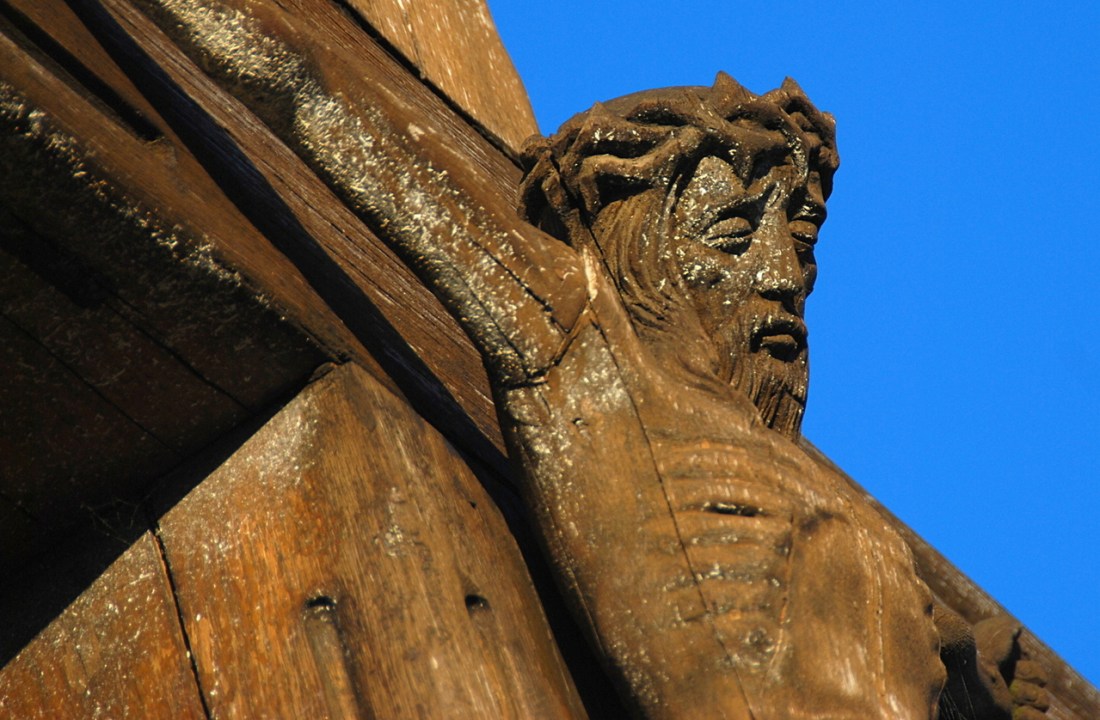
Das Bean Photo by Mark Publava

Today, many of us feel like the world has been turned upside down.  Now today’s emerging culture has people looking inside at their feelings and desires to determine if they are male or female and whether or not they are gay.  It used to be that you looked at the outside, and found out whether your body was male or female.

Again today we look outside of ourselves to find what is wrong in the world, and we look inside to try to find a solution to all that is wrong, because we are considered to be good by default.  This is upside down from the Christian Faith, which points out that when we look inside, we find that we are self-centered and selfish, and that is the origin of all that is wrong in the world.  And as Christians we look outside to God for our help and salvation.

So this emerging culture change is very much upside down from the previous Christian influenced culture.  So which worldview or culture is right-side-up? It depends on how you look at it.  I believe the Christian worldview is right-side-up, but you can make an argument that the nonChristian worldview is dominant and thus it should be right-side-up. About 2000 years ago, the Thessalonians referring to Paul and Silas, shouted “These men who have turned the world upside down have come here also” (Acts 17:6-7).  Christianity has always been countercultural to the sinful ways of the world.

I have friends who have a grown child, who is gay.  I believe this person looked inside to discover their homosexual desires and looked outside to blame the parental upbringing for all the struggles the adult child currently faces.  And this young adult also blames the conservative government where they live for their problems.  It appears that this young adult is quite unhappy, and I believe their issues and their unhappiness is due to their worldview.  That is to say this person has embraced this emerging worldview that they are good and anything wrong that happens is outside themselves. They think they are not to blame.

This means this emerging worldview also takes a dim view of forgiveness.  Forgiveness allows the offender to not pay their dues, while the forgiver takes on the offender’s “debt”.  Forgiveness is not fair, and some say it promotes injustice, but reconciliation is very hard without forgiveness.  Forgiveness goes against human nature.  We want justice and vengeance for those who have harmed us.  However, we would rather not take the punishment for our own wrongdoing.  As Christians we note that God has forgiven us.   Every one of us is a sinner and is in need of God’s forgiveness.  Because God has forgiven us so very much, we are able to forgive others and bring peace and reconciliation.

In this post-Christian society, there is this darkness of unhealthy thinking that is causing a lot of chaos, suicides, and mental problems.  As Christians, we can be lights to show a better way to live.  We show a life that offers love, peace, and security that is only found in Jesus Christ. Forgiveness is a key tool Christians can use to show God’s love and bring some peace and reconciliation to the world. There will be pushback because Christianity is countercultural and counter to our human nature, but we have the answer.  Therefore let us go out in love to serve, to speak the truth in love, and to lovingly correct the wrong thinking. 

Paul’s Rule of Life

A year ago, I suggested that having a “Rule of Life” might be better than New Year’s Resolutions.  A Rule of Life is a document of simple statements that create a pattern of life to live by.  In today’s world it is good to become more intentional and less reactive about how you interact with people and with God.  I have created some “rules” or “habits” for me to follow. Below is my “Rule of Life” document.

Paul F. Hein’s Rule of Life

Listed below are some of the “rules” or “habits” of life that I try to follow.  The motivation for all “habits” listed below is:

Jesus Christ, who out of love, gave his life and rose from the dead to restore life to me and for all in the world. And now his Spirit empowers me that I might have a wonderful and abundant life in him.  For this reason I am his disciple and out of gratitude I try to live my life to his glory.

Spiritual Activities and My Relationship with God

  • Be intentional and disciplined about growing spiritually.
  • Daily read Scripture..
  • Pray as often as possible.
  • Weekly gather together with other Christians for worship.
  • Give of my time, abilities, and finances to support Christian ministries.
  • Serve with others in Christian ministries.
  • Follow all that Jesus has commanded.
  • Daily repent and turn from my sins so that I might be renewed and restored.
  • Share my faith with others that do not know Jesus so they may come to know Jesus.
  • Share my faith with those that do know Jesus to encourage and help them grow in their faith.

Interactions and Relationships with Others

  • Be intentional and disciplined in my relationships with others.
  • Remember all people are important.
  • Make my relationships a priority.
  • Be kind, loving, generous, and gracious toward others.
  • Listen to people and try to understand where they are coming from.
  • Ask for forgiveness to those I have done wrong to or have wrongly offended.
  • Promote peace in my relationships, and as much as it is possible be at peace with everyone.

Healthy Living

  • Be intentional and disciplined in living healthy.
  • Walk daily to exercise.
  • Limit the eating of sweets and fats.
  • Eat healthy foods most of the time.
  • Eat small portions and limit seconds.
  • Take vitamins.

Service Opportunities

  • Be intentional and disciplined in my serving.
  • Be open to all opportunities that arise.
  • Be willing to step out of my comfort zone.
  • Do my best while serving.

Paul F. Hein’s Rule of Life as of 27 December 2022

Advent: Jesus is Coming

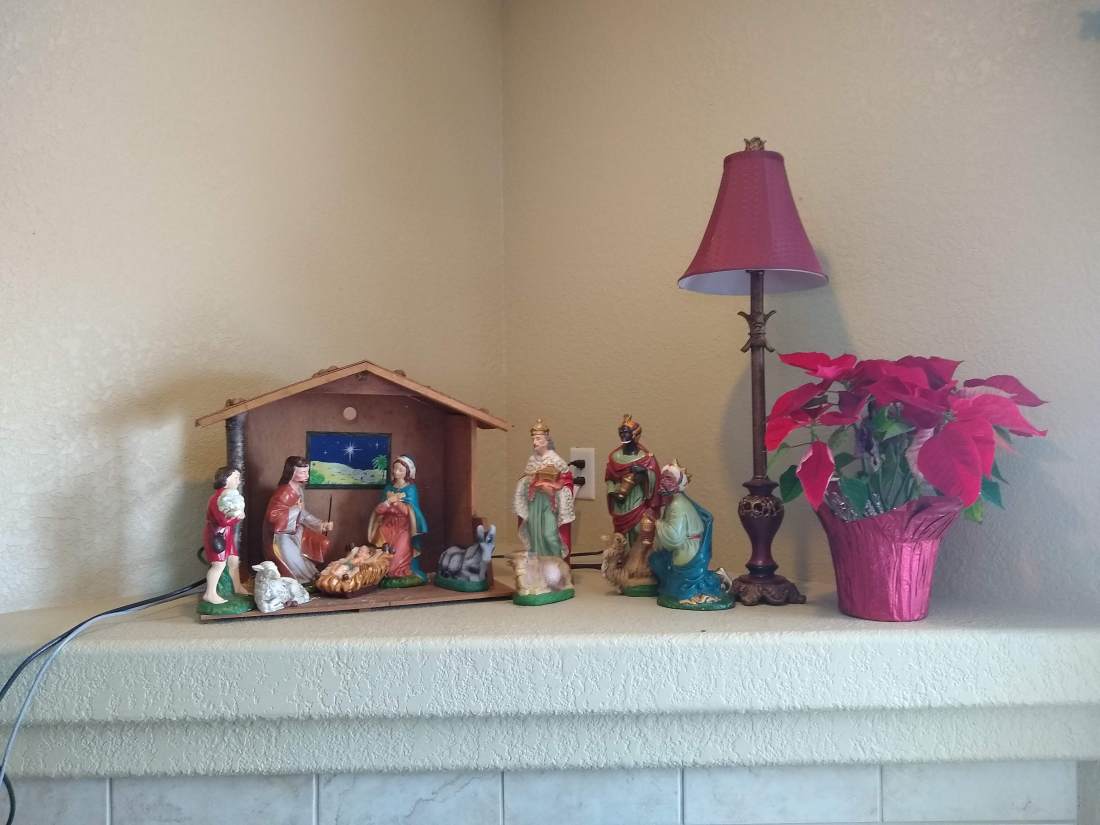
Christmas Nativity

This is the season of the church year when we remember Jesus coming at Christmas; Jesus coming into our hearts; and Jesus coming at the end of time. The name of the season is called Advent, which means coming.  (For the secular world, December is the Christmas season with shopping and family gatherings.)  Advent is 4 Sundays long.  The traditional focus of the Sundays is on hope, peace, joy, and love (in that order for each Sunday).  

You can see progression in the Advent Wreath which has four candles surrounding the white Christmas candle in the center.  Three of the candles are purple and one, the Joy Candle is pink.  You light one more candle each week as one counts down the weeks to Christmas.  (The Joy Candle is week three.) There are also Advent Calendars where each day you open a door or flap for a message or a small gift as you count down the days until Christmas. (Advent Calendars have become popular in the secular world too with secular messages.)

The first Sunday is traditionally focused on hope.  We have a sure and certain hope found in Jesus. Out of love, 2000 years ago, Jesus came into this world to reconcile us with God (Romans 5:6-11). We are broken, because of our self-centered natures.  The world is broken, full of wrongs, because of us. Jesus paid the price for our freedom from sin, and began the process of righting the wrongs in this world.  Because of Jesus, we are made right before God and can be agents of change for the good of all.  And we look forward to when Jesus bodily returns. He will then set all things right.  That is the hope we have (1 Peter 1:3-5).

The second Sunday in Advent is on the theme of peace.  Because of Jesus’ death and resurrection, we have peace with God (Romans 5:1).  We can live our lives confidently, knowing that we are his and he is working things out for our good.  I experience peace in the midst of many different circumstances of life because I know Jesus.  I cast my burdens on him, because I know he cares for me (1 Peter 5:7).  Because of him, I have peace with God and I can live in that peace.  When the problems and messiness of the world gets to us, we can rest in the fact that God has these situations in his control.  We are his and there is no need to worry.  We can have peace (Philippians 4:4-7).

The third Sunday is the Sunday of joy.  Joy is not happiness.  Happiness is connected to what is happening around us.  Joy is a fruit of the Spirit and is not influenced by circumstances.  Here is how Kay Warren defines joy:  “Joy is the settled assurance that God is in control of all the details of my life, the quiet confidence that ultimately everything is going to be all right, and the determined choice to praise God in all things.” This means we can rejoice even in our trials and sufferings (James 1:2-4; 1 Thessalonians 5:16-18). It does not mean a happy face 24/7, but joy is the confidence that God is good and everything will work out. We look to Jesus for our joy. We have joy as we remember all God has done for us, that God is using these events for our good, and there is a full life today and a wonderful life that is waiting for us in heaven.

For the fourth Sunday the focus is on love.  It is because of God’s love for us that Jesus came, so that we might have life in him.  It is not because who we are and what we have done, rather it is totally about God’s love for us.  We love because God first loved us (1 John 4:7-19).  Jesus restored that relationship with God.  That is what Christmas is all about Jesus coming in love, so that we might be reconciled to God and have full and eternal life in him.

So as you celebrate Christmas, remember there is more to Christmas than just gifts, family, and food.  It is about God loving you so much that he came down and became a little baby so that he might restore this broken messed up world.  Jesus came for you so that you might have life in him (John 10:10-11).

For God so loved the world that he gave his only Son, that whoever believes in him should not perish but have eternal life. For God did not send his Son into the world to condemn the world, but in order that the world might be saved through him. (John 3:16-17)

It is Good to be Thankful

Photo of wheat by Jimmy Lemon

This is the third year I am doing a Thanksgiving post.  Why?  Because it has been shown that it is healthy and therapeutic to be thankful.  It is good for you!  God has blessed you!  When I stop and think about my life, I can have two different attitudes.  I could complain and grumble about all that I have had to endure.  I could complain about what is wrong with myself or with the people around me.  I can complain about the country and the world and all that is wrong with it. OR I can give thanks that I am alive.  That God has clothed me and fed me.  That I am not starving, and I have a place to sleep.  All this and so much more, I can be thankful for.

Gail read “The Last Green Valley”. It is historical fiction based on a true life story about this German couple who fled Ukraine during World War II.  The husband, because of all the difficulties, lost faith in God.  He focused on all the difficulties and thought that God had left him.  A friend pointed out his wrong thinking.  Yes, he went through a lot of tough situations but he survived.  God was with him, guiding him through these tough situations.  God in seemingly miraculous ways had allowed him and his wife to survive several difficulties.  They made it to the West and ended up in Montana.  Having a positive, thankful attitude did not change the difficulties, but it helped him go through the remaining difficulties.

There is no question in my mind what the focus of this attitude should be.  We focus on God who made us and loves us.  God has our best interests at heart.   He works things out for our good (Romans 8:28), even in the difficult circumstances of life. We remember his goodness and all he has done for us. Even in those tough situations he uses it for our good. That is why he tells us to “give thanks in all circumstances” (1 Thessalonians 5:18).

If you are in a tough situation, how can you move to thanksgiving?  I would look to the Psalms of lament, and you can even write your own.  You first address God, and then tell him what is wrong. You then request God’s help and express your trust in him. And you end with praise and thanksgiving for God’s many blessings.  You move from focusing on the problem to focusing on God with thanksgiving and praise.

Actually, worship is giving thanks and praise by remembering who God is and what he has done for us.  An example of this is David offering a great song of thanks and praise in 1 Chronicles 16:8-36. At the end David says

Oh give thanks to the Lord, for he is good; for his steadfast love endures forever! (1 Chronicles 16:34)

Let us remember the goodness and love of God, and give him praise and thanksgiving.

Basic Discipleship

Bible with heart shadow

My church, Immanuel, recently went through the Red Letter Challenge (RLC).  The challenge is about basic discipleship.  So as Christians, saved by God, how do we live as followers of Jesus Christ?  What does it look like?  RLC gives us 5 Biblical principles for us to put into practice: Being, Forgiving, Serving, Giving, and Going.  These are based on the words of Jesus, the red letters of Jesus speaking as found in some Bibles.  Jesus at the end of the Sermon on the Mount (Matthew 5-7) says doing his words is like building your house on a rock, and not doing them is like building your house on sand which means the house will collapse when the storms of life come (Matthew 7:24-27).  Doing his words gives your life a solid foundation. 

Being is a foundation principle. God wants you to be in a relationship with him.  How can we build that relationship?  God speaks to us through the words of Scripture (Psalm 119:105).  The words of Scripture were inspired by God and were written to God’s people then but for us today.  We respond in prayer with praise and thanksgiving (1 Thessalonians 5:16-18), as well as sharing our concerns and requests (Philippians 4:4-7).  We worship together (Hebrews 10:23-25), remembering all God has done for us and supporting one another. Our doing flows out of who we are as people of God and who we become when we spend time with God.  God changes us.

Forgiving is needed in our broken world.  We are broken people who do wrong and hurt people.  We need God’s forgiveness (Romans 3:23). God has every right to punish us, but when we turn from the wrong we do, say, or even think, and turn to him, God forgives us (Acts 2:37-38). There is no sin too big for God to not forgive (1 Timothy 1:15-16). He empowers us to forgive others and bring reconciliation. Forgiveness is all about showing mercy and grace and realizing we are no better than those who offended or hurt us.  We forgive because God has forgiven us (Matthew 18:21-35).

Serving is a way we can share God’s love with those around us and point them to God (Matthew 5:16).  We do it because we love Jesus (John 14:15) and want to imitate him (Philippians 2:5-11; Ephesians 5:1-2).  As people of God, he has given us good deeds for us to do (Ephesians 2:10).  God loves everyone so the people we serve are people loved by God and are worthy of our love and service.  We put their needs ahead of our own.

Giving starts with us realizing all God has done for us (John 3:16). Everything we have really belongs to God (1 Chronicles 29:14). He has been very generous with us and for our benefit wants us to be generous to others (Acts 20:35).  Too often our possessions and money become idols (Matthew 6:24).  We put our security in them more than trusting God for his provision.  We should seek after the things of God and not worry about our needs but trust that God to provide (Matthew 6:32-33).

Going happens as we follow Jesus.  God chose us and saved us though we did not deserve it. He did it, because he loves us and wants us to be in a relationship with him.  He desires that for all people (1 Timothy 2:3-4), and he has given us the task of going forth to share the good news of God’s love and make disciples by teaching them all we know about God and the good he desires for us (Matthew 28:19-20). We can share the good news of how God loves us and has been good to us (Acts 1:8). We do not need to worry, God will give us the words (Matthew 10:19-20).

This post is inspired by the book, “Red Letter Challenge” by Zach Zehnder.

The Five Solas

The Five Solas or Solae of the Protestant Reformation summarize the Reformation beliefs that differed from the beliefs at that time.  Sola is Latin for alone. The five solas are “grace alone”, “faith alone”, “Scripture alone”, “Christ alone”, and “to the glory of God alone”. The funny thing is the Five Solas were not put together as a group until the 20th century. Some people only count three solas, but I find all five to be important core theological truths. These beliefs are central to my faith.

Sola Scriptura

“Scripture alone” says Scripture is the sole infallible source of authority for faith, doctrine, and practice.  It is the final authority from which other authorities derive their authority.  The 66 books of the Bible are God’s words (2 Peter 1:21), that tells us of God’s salvation for us (John 3:16) and how to live our lives to the glory of God (2 Timothy 3:16-17).

Sola Gratia

“Grace alone” tells us by our own merit we can not save ourselves from the judgment and condemnation of God, because we are not righteous or good (Romans 3:10-12). But God, by his goodness and grace through Jesus’ life, death, and resurrection, restores us to a right relationship with him not because of anything we did but purely out of his mercy and grace (Ephesians 2:8-9). Salvation is his gift to us (Romans 6:23).

Sola Fide

“Faith alone” reminds us that we are not saved by anything we do or by who we are, but it is through faith in God, who can justify us (Romans 4:4-5), that we are saved and are made righteous (Romans 5:8-9).

Solus Christus

“Christ alone” points us to Jesus as the only way (John 14:6) to be reconciled with God.  Salvation is found in no one else (Acts 4:23).  Jesus is at the center of the entire story of Scripture (Luke 24:27).

Soli Deo Gloria

“To the glory of God alone” because he is the one who has saved us (Titus 3:4-5).  Out of gratitude for his restoring us to himself and empowered by the Holy Spirit, we live our lives to his glory (1 Corinthians 10:31).

These five core beliefs help define my faith and the Christian faith of the Protestant Reformers, and yet many times we want to add or subtract from these core beliefs.  We want to put reason, culture, and/or tradition at the same level as Scripture so to water it down.  We want to make certain we have something to do for our salvation so we can feel good about ourselves, take credit, and/or feel better than those who do not have faith.  We want Christ to be not the all in all but rather to be only a piece of our lives.  We want him to be just a nice guy and not Lord and Savior.  We want to do our own thing and not to worry if the action glorifies God or not. In all these cases, we are taking the truth found in Scripture and changing it because we think we know better than what God’s Word says.  We do this because we are broken self-centered people.  So we need to take care and not let these five core beliefs be added to, subtracted from, or minimized. These five solas are essential to my faith.

Grace

Photo of wheat by Jimmy Lemon

It seems to me what is lacking today is grace and the recognition of grace.  Grace is a word that has many meanings, but I think a core meaning to grace is “free and unmerited favor”, or a similar definition is “undeserved love”.  With these definitions you think of God and his grace.  A related definition for us also is “courteous goodwill”.  That seems to be lacking today.  

Another way of looking at grace is to look from a justice perspective.  Justice is you getting what you deserve.  Mercy is not getting the bad that you deserve, and grace is getting the good that you do not deserve.  Some people argue that grace and mercy (and forgiveness) promote injustice. Practicing grace, mercy, and forgiveness is not fair, and today some people are against this leniency. Maybe the unfairness of showing grace is why we do not see more gracious behavior today. It is always the person showing grace, mercy and/or forgiveness who sacrifices their personal right for a fair outcome.  Without mercy, grace, and forgiveness, reconciliation becomes very difficult.

Pondering the gracelessness of today’s society, I am reminded of a book that I first read about 25 years ago called “What’s So Amazing About Grace?” by Philip Yancey.  It is an excellent book that I have read several times and it helped me grow in my faith.  Now I just got done defining the word grace, but Philip Yancey avoids those definitions and instead uses stories to describe grace.

For me,  one great story told in the book is “Babette’s Feast”.  (The Danish movie is worth watching too.) This great French cook, Babette, flees for her life and arrives in Denmark at this small strict pietistic aging congregation where she begs to be taken in by these two aging sisters of the founding pastor.  She works for free, cooking their bland food in keeping with their belief to avoid the pleasantries of the world.  A friend in Paris keeps buying a lottery ticket for her every year.  After many years, she wins 10,000 Francs in the lottery, and she buys and prepares this fabulous feast. The small congregation decides not to offend her and to eat this exotic meal but they decided they would not speak of the pleasures of the meal.  Of course, they can not help but enjoy this fabulous meal.  During the meal, various relationships are restored. The sisters thank her for the meal and ask when she would be leaving.  Babette replied that she had spent all the money on the feast and she would be staying.  That story of a free undeserved feast illustrates grace wonderfully.  There are so many good stories in the book.

In the book, we have the parable of the Prodigal Son (Luke 15:11-32).  Philip Yancey modernizes the story in his chapter called “Lovesick Father”.  Think of the concern and agony a parent feels when a child rebels and disappears.  It is because the parent loves them and is concerned for their well being.  The parent rejoices when the child finally reappears.  Throwing a party is not out of the question.  The child does not have to prove their worth.  In the same way God loves us unconditionally (Romans 5:8), and because of his love he sent Jesus (John 3:16) so that we might be reconciled to him (2 Corinthians 5:18-19).

On the other side of grace, there is a story of a grandmother who was unwilling to forgive and see her formerly drunk abusive father, even after he cleaned up and found Jesus.  That unforgiveness was passed onto her daughter and onto her estranged grandson who spoke the exact same words of ungrace about his ex-wife, “I hope I never see her again as long as I live”.  The lack of forgiveness in each generation results in broken relationships.   Your words and attitudes create a culture that can affect generations.  My dad had a coworker who had not seen his mom in many years even though he drove past her house everyday on his way to work. It is hard for me to imagine the hardness of heart in that broken relationship.

Attitudes of grace can affect political situations.  South Africa’s transition away from apartheid to an open and free democracy was bloodless.  This was because of grace and forgiveness that was offered.  Grace brings reconciliation.   The fall of the Berlin Wall was in part due to the churches having candlelight vigils and processions.  It was another peaceful transfer of power.

Are we being gracious? Do we give people the benefit of the doubt or do we assume the worst?  Are we willing to forgive? Jesus forgave those who accused and put him to death (Luke 23:34).  Can we not do the same?  Jesus also tells us to love our enemies (Matthew 5:44).  So as we imitate Jesus (1 Corinthians 11:1), we should be able to show some grace.

I have read most of Philip Yancey’s books and they are all good and insightful.  I highly recommend his books, especially “What’s So Amazing About Grace?” and “The Jesus I Never Knew”.

The Identity of the Expressive Individual

Living Network 2 (Peter Farkas Photo)

The individual is king in today’s Western Culture. I  just finished reading a very enlightening book that made sense of how this messed up world in the West has changed in the last 50+ years.  This excellent book is “Strange New World” by Carl R. Trueman.  While reading it, there were times, I stopped and said to myself, “So that is why those people think that way” and by the end of the book I was also wondering how much of my thinking has been influenced by these ideas. The problem is every good lie has a kernel of truth in it.  That is what makes these false ideas believable for many people.

The expressive individual wants to be authentic and to express the real person they are, so they look inside themselves to find their core feelings and intuition, while dismissing any external influences, such as the surrounding culture. That defines them and gives them their identity. The person then expresses their inner core to be an authentic individual. The authority is only in themselves.  Jean-Jacques Rousseau (1712-1778) developed the idea and you can see his influence in the following centuries.  The traditional identity authorities of nation, family and faith would say of me that I am an American, son of Erwin and Irene Hein, and a Christian.  And there are also other ways to identify oneself (e.g. occupation, sex, marital status, etc).  Whereas the expressive individual rejects all that and only looks to oneself as the only authority.

Along comes Friedrich Nietzsche and Karl Marx who both said that morality is society’s way of oppressing or controlling the individual.  In other words, they believe that there is no natural morality. It is only a societal construct used to oppress or control us.  That idea is present in today’s culture.  Also today’s cultural thinking was strongly influenced by Sigmund Freud, who declared sex is fundamental to human happiness.  He considered that the inner self was primarily defined by our sexual desires. Because of Freud, our identity became our sexual psychological self,  His student, Wilhelm Reich, a Marxist, put it all together to form the intellectual underpinnings of today’s culture change.  Only one thing missing was the technology to make it practical.  The birth control pill allowed sex to become much more recreational, and the internet allowed the porn industry to easily reach us and influence us in all things sexual.  (Note the author of the book, Carl Trueman, said the evolution of this culture change is more complicated than his broad overview, and in this post I have significantly simplified it a whole lot more.)

So an expressive individual today will usually look inside oneself and decide one’s identity with the eye on one’s sexual desires. With the collapse of the traditional identities (nation:loss of trust in government, family:high divorce rate, and faith: church scandals), the LGBTQ+ community has stepped in to encourage the individual to consider their alternate sexual identities.  They have become a major influencer, in part, because they also provide a sense of belonging as they praise you and validate your chosen sexual identity.

With the individual being the only authority, it has left Western Culture in a very unstable fluid state.  Your self, your identity, is fluid.  It can change. It can be anything.  Nothing seems to be solid. You get to decide.  With your identity being personal and psychological (and many times sexual) that sets situations where one’s identity can offend another identity. Or one finds a viewpoint to be oppressive to them and an attack on who they are. Dealing with a variety of identities can be tricky business. This is especially true with transgender people. How do you handle a boy who identifies as a girl or vice versa? Do you let a transgender boy, who is biologically a girl, use the boy’s locker room? Or let a transgender girl, who is biologically a boy, use the girl’s locker room?  This is happening today.

Also today’s thinking is that moral codes of society are oppressive and  support the (past) status quo (where white heterosexual males dominate). So then, one needs to rebel against this systematic bias, and oppose all institutions (like the Christian Church) who were part of the old culture.  They declare that they are victims of this systematic bias, and therefore deserve our support.  If this sounds a lot like Critical Theory, that is because it is at least related to it.  Anyone who does not support them is an oppressor who is attacking their identity, the core of their being.  Those whose identity is found in the past status quo could be considered to be a threat to the emerging status quo and must be censored and in this way prevent hurting the feelings and thus the identity of the oppressed victims. Thus, this radical freedom of the individual can end up restricting freedom of speech, in the name of preventing an attack on an individual’s identity and feelings.

As Christians, we need to realize that this emerging culture is not friendly to the Christian Faith. Because of this we need to have strong communities in our local churches. We need solid meaningful worship services. We do have our identity as forgiven and loved children of God, being found in Jesus Christ.  We are his. We need to know that and have a firm foundation in the who, whats, and whys of the Christian Faith.  Though the Bible is our authority, it is not an authority for many people today, so we will need to also use Natural Law to help share our Christian ideas.  Those ideas are quickly becoming lost to Western Culture.  We need to stand firm in the Christian Faith.

The book ends with this paragraph:

The world in which we live seems set to be entering a new, chaotic, uncharted and dark era. But we should not despair. We need to prepare ourselves, be informed, know what we believe and why we believe it, worship God in a manner that forms us as true disciples and pilgrims, intellectually and intuitively, and keep before our eyes the unbreakable promises that the Lord has made and confirmed in Jesus Christ.  This is not the time for hopeless despair, nor naive optimism. Yes, let us lament the ravages of the fall as they play out in the distinctive ways that our generation has chosen. But let that lamentation be the content for sharpening our identity as people of God and our hunger for the great consummation that awaits at the marriage feast of the Lamb. 

Subsidiarity

Subsidiarity is a word and concept I did not know existed until recently. One of the first places the word first appeared for me was in a list of 10 Principles of Catholic Social Teaching. I am fairly certain this is not an official list, but it appears to be a summary of Catholic social teaching. I found the list interesting and well thought out.  The list got me thinking.  I am not certain of all the implications of the list, but I like it. 

The list starts with a foundational principle that every person has dignity and is invaluable, because they have been created in the image of God and redeemed by Jesus Christ.  So we must consider the common good, so that all may prosper.  We are all part of the human family and all in this together (solidarity).  We need to take care of the needy and the poor.  We also need to take care of the earth.  The government has a role to play to promote human dignity, protect human rights, and develop the common good.  This should be done at the most immediate, or the lowest local level possible (subsidiarity).  We all are entitled to participate in all aspects of the community.  No one should be excluded.  We all have human rights and responsibilities that need to be protected.  We all have a right to fair wages, good working conditions and dignified work.  The goal, the end result, of all of this should be a wholesome peace between us and God, and us and others.

It is hard for me to argue with the list, except possibly with subsidiarity and that may be me just having a hard time getting my head around how that works in real life. So I am going to explore more of this concept of subsidiarity.

Subsidiarity has been described by Pope Pius XI with “Just as it is gravely wrong to take from individuals what they can accomplish by their own initiative and industry and give it to the community, so also it is an injustice and at the same time a grave evil and disturbance of right order to assign to a greater and higher association what lesser and subordinate organizations can do. For every social activity ought of its very nature to furnish help to the members of the body social, and never destroy and absorb them.

Pope John Paul II with regards to the principle of subsidiarity saysA community of a higher order should not interfere in the internal life of a community of a lower order, depriving the latter of its functions, but rather should support it in case of need and help to coordinate its activity with the activities of the rest of society, always with a view to the common good.”  

With these two descriptions, I take this to mean that the top down approach to society’s organizations, institutions, and governments is considered to be wrong.  I would say communism breaks the principle by setting up community life from the highest level, and I would say laissez-faire capitalism also breaks the principle by not actively supporting the lower community for the good of all. Subsidiarity seems to plot a course between individualism and collectivism. 

Also I see this principle as a bottom up approach to social work.  We need to involve those who are being affected by the ministry.  They need to have ownership as much as they are able. It should not be a top-down-one-size-fits-all program.

Subsidiarity also shows itself in the economic theory of Distributism, which states the belief that wealth should be widely owned instead of being concentrated in the hands of a few corporations and individuals.  Distributism is in favor of small family or locally owned businesses and is against large corporations controlling a market.  It is in favor of competition.

I am not certain how to put subsidiarity into practice in today’s world and how well it would work but I can see it working in some small ways.  I like a lot of what I learned about subsidiarity.  I am not certain I agree 100% with it but I do appreciate all the thought that has gone into it.  Catholic social teaching has been well thought out and I appreciate the effort over the centuries that have been put into it.  Again the key Biblical foundation principle is every person has dignity and is invaluable, because they have been created in the image of God (Genesis 1:27) and redeemed by Jesus Christ (1 John 2:2).

God’s Holiness

Rays of light in a forest

When I think of God’s holiness, I think of his moral perfection (Matthew 5:48) and my sinful behavior (Romans 3:23), but there is more to God’s holiness than just his purity.  God’s goodness, his moral perfection, is definitely a big part of his holiness, but there is also his transcendence and his otherness that sets him apart and makes him holy.  He is the Creator of the Universe (Jeremiah 10:12).  He gives life (Acts 17:25).  He is totally unique (Jeremiah 10:6).  He is above and beyond all of us, above and beyond everything. He is incomparable (Psalm 89:6-8).  And God is changeless (Psalm 102:27). God is self-existent.  He has always existed (Genesis 21:33).  He is 100% independent.  He has no needs (Acts 17:25), so he is totally self-sufficient.  He is complete in himself.   He is without fault.  He is transcendent in all things. There is no one like him.  He is very different from us, and yet we are made in his image (Genesis 1:27). God is faithful, and there is no falsehood in him (Numbers 23:19).  We can trust his love and goodness (Psalm 145:8-9), and God is worthy of our worship and praise (Revelation 4:11).

This excellent Bible Project video on God’s holiness inspired me to write this post. (I would rather read, so I tend to avoid videos, but Bible Project videos are very well done.) Do watch the video! I am going to ruminate on what the video talked about.  The video starts out by comparing God’s holiness to the Sun as a metaphor. Our Sun is unique, the only star in our solar system.  It is powerful and its rays give life to us on Earth.  It is also dangerous.  If you get too close, you can burn up.  The same is true of God’s holiness.  God’s holiness can be dangerous too.  Because we are morally impure (i.e. sinners) we can not abide in the presence of God because he is so very good.  Moses’ encounter with God in the burning bush illustrates this.  He was told to take off his sandals and not get too close (Exodus 3:1-6).  God’s holiness is intense. Moses never got to see God’s face.  He could only see God’s backside from a protected place (Exodus 33:18-23).  Another example is only once a year on the Day of Atonement could the High Priest enter the Holy of Holies, where God was in the Temple, and atone for the sins of the people by sprinkling the blood of the sacrifice on the mercy seat..  Any other time was certain death (Leviticus 16:2). 

Besides us being morally impure, the Old Testament law designated several things that could make you ritually impure, things like menstruation, childbirth, nocturnal emissions, touching a corpse, certain types of skin diseases, and eating ritually unclean food. There was a lot that could make you ritually impure.  A ritually impure person was unable to worship in the Temple and had to be isolated (Numbers 5:1-4). Touching an unclean person or thing could make you ritually impure. There were a variety of ways to become ritually clean, varying from washing (Numbers 19:11-12) to sacrifice (Leviticus 15:25-30).  Leprosy is the skin disease I am most aware of in the Bible and it has a pretty serious procedure for one to be proclaimed clean (Leviticus 13).  These ritually impure things point out how God’s holiness is something to be taken seriously and that sin has corrupted us and broke the world. Our impurity (sin) must also be taken seriously.

When Isaiah had a vision of being in the presence of God, he cried out that he was done for, because of  his uncleanliness (Isaiah 6:5) , but he had his lips touched by a burning coal from the altar and he was cleansed of his sin (Isaiah 6:6-7).  God’s holiness went out with forgiveness and made him clean.  That was his commissioning as God’s prophet. Similarly, Ezekiel has this vision of water flowing from the Temple (Ezekiel 47:1-12).  It creates a river and brings life to the land with fish and fruit trees and more.  Here again we see God’s holiness going forth and restoring the brokenness of the world.

This all comes together with Jesus.  He was and is morally perfect,  the human embodiment of God’s holiness (John 6:68-69), because he is God.  Jesus went around and instead of becoming impure when touching a leper (Matthew 8:1-4) or a dead person (Matthew 9:23-26) or being touched by a woman with chronic bleeding (Matthew 9:20-22), he remained pure and instead brought healing and restoration to those in need.  The holiness flowed out from him to heal and restore.

By the power of the indwelling Holy Spirit, we are God’s Temple (1 Corinthians 6:19-20) and we have “rivers of living water” flowing from us (John 7:37-38).  We have the ability to heal and restore. That is our calling. We can be a part of the Lord’s business of reconciling the world to himself.  One day at the end of time, we will be totally free from sin, pure, and fully restored. Ezekiel’s vision of the River of God will then be fully realized (Revelation 22:1-2).

Let us praise God now for he is a mighty and holy God!

Make a joyful noise to the Lord, all the earth! Serve the Lord with gladness! Come into his presence with singing! Know that the Lord, he is God! It is he who made us, and we are his; we are his people, and the sheep of his pasture. Enter his gates with thanksgiving, and his courts with praise! Give thanks to him; bless his name! For the Lord is good; his steadfast love endures forever, and his faithfulness to all generations. (Psalm 100)