
The New 21st Century Normal

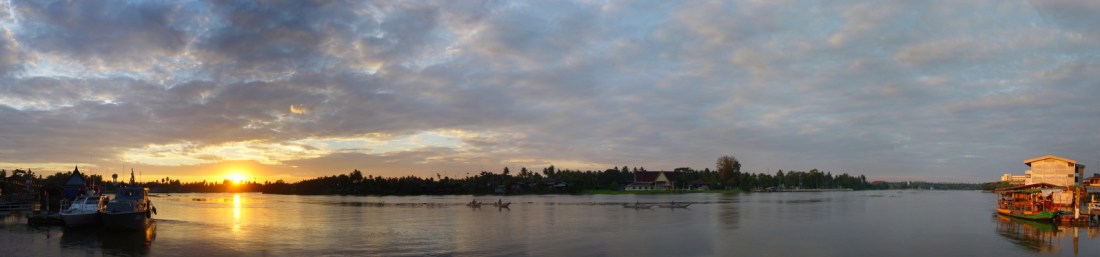
Photo by Pongsak Kitirojpan

The only thing constant is change or so they say.  Big events like a major war, a depression, or a pandemic causes the change to new ways to accelerate, and the old ways to die off more quickly.  The question I have been pondering is “What will the new normal look like after the pandemic is over?” Or will it ever be over?  COVID19 might just be a part of the “new normal”.  There are a lot of unknowns and many choices that will be made, but we can look at what is happening and be prepared for various possible scenarios that may occur.  We need to prepare to be resilient and robust.  We need to be flexible and adaptable to the changes around us.  Being not willing to adjust to the new normal will lead to failure.

Some would say that the 21st century really started in 2020 with the pandemic.  All those new 21st century ways of doing things are firmly taking root now.  It happened before.  World War I was the catalyst for the 20th century to “really start”.  A lot of aristocratic ways were discarded after the war and the 20th century truly began.

How has the pandemic changed our lives? Are these changes part of the new normal? Or are they temporary?  Looking at what has happened, we see a lot of changes.  People are wearing masks.  People are not shaking hands.  People are working from home.  People are buying online.  Students are learning online, instead of in a classroom.  Meetings are being conducted via video chat.  Concerts are performed online.  People are streaming videos to entertain themselves instead of visiting a movie theater.  People are isolating with no large gatherings allowed.  How much of this is temporary?  How much will become part of the new normal?

Looking at Tourism and the Travel Industries, you can see they have been hit very hard by the pandemic. Tourism provides 1 out of every 10 jobs worldwide.  How does the future look for them?  One possible outcome is that the pandemic will end and people will begin to travel again.  This will likely happen with assurances from the airlines, cruise ships, hotels, and other event centers that they have and will continually disinfect and clean everything to close to hospital standards.  They would also monitor people for fevers and employ other disease monitoring equipment.  They would be motivated because an outbreak would be very bad for business. Likely business would not return to the numbers they saw before.  The worst case scenario would be if the pandemic continues and they are unable to fully open.  They would go bankrupt, or would have to charge enormous rates for the very rich to travel and see the sites.  The rest of us would view the sites from our home in virtual reality or by video.  Travel would be very limited.  That would be a disaster for the travel and tourism industries.  The travel and tourism industries make their money by packing lots of people into close quarters.  Unfortunately that is also the way disease spreads.

Already we see companies saying they will allow employees to continue to work from home after the pandemic is over.  How many offices will be vacant because of this change?  How many companies who rent out office space will be struggling financially due to too many empty offices? There are some adjustments that will need to be made.

Big box stores were in financial trouble before the pandemic.  How many of them will be able to survive with the increased online purchasing?  Many of them got their start with catalogs.  Online shopping is nothing more than using an online catalog, and yet they are struggling to make that change.  It seems to me that they are no longer flexible, and they can not change.  I like to think I see there will be a return to catalog stores, where you can get advice and place an order, and also where you can return those things that were the wrong size, color, or whatever that was not right for you.  I hope that will happen, if they are willing to make the change.

These big box stores remind me of Kodak.  Kodak was the company that invented the digital camera.  Yet Kodak was destroyed because it refused to adopt the digital camera until it was too late.  Its film business was too valuable for them to make the change to digital.  Today Kodak is only a shell of the original company.  

So how flexible are you?  How flexible is your favorite company or organization?  Can they quickly adjust to the changing environment?  I am amazed at the stories of how breweries and distilleries started producing bottles of disinfectant, and companies who changed their production line to produce face shields and even ventilators in a matter of weeks.  These are the companies that are resilient and robust. They saw the opportunity and made the change.  

Likely you have already adjusted a little to the 21st century.  Do you own a smartphone?  That is a 21st century device that is changing society.  I admit I don’t use it to its full potential.  It is more than just a phone and a camera that you carry around.  Some 21st century thinking is needed to make better use of it.  What adjustments will you need to make?

This post was inspired by a very interesting article by Tim O’Reilly, “Welcome to the 21st Century”.

PS For different reasons many local churches have been in distress for years.  They have lost the younger generations.  I feel they have been living in the past, and have not been willing to change and reach out to the younger generations.  Can they be resilient and still live out their calling?  I think for some churches, if they are willing, they can make the change and survive. Unfortunately for many of them with only senior citizens attending it is likely too late.
Authoritarian China

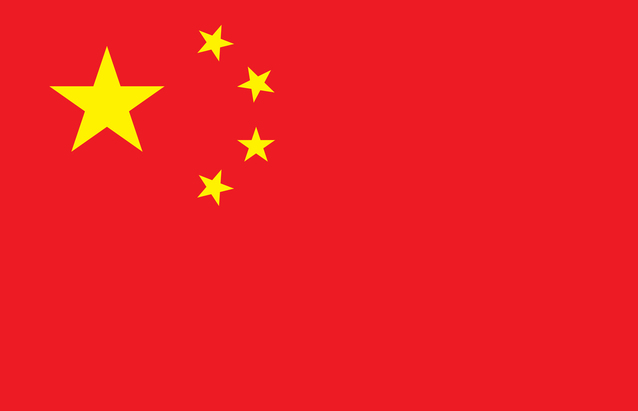
China Flag by Raphael Pto

I have known several people who have done mission work to the Chinese people, and because of that I have developed an interest in China.  Over the years, I have seen China open up and Chinese Christians worship without concern.  Unfortunately that began to change about 5 plus years ago.  The Chinese government has become more and more authoritarian.  The Chinese ruling elite have become, in my opinion, increasingly concerned with potential rivals and threats to their power.

July 1, 2020 was the 23rd anniversary of the treaty of the British returning Hong Kong to China which set up the “one country, two systems” arrangement between Hong Kong and China.  Unfortunately July 1, 2020 will also be remembered as the day China in the name of national security forced Hong Kong to enact a new law that greatly restricts freedom of expression. Secession, subversion of state power, terrorism, and collusion with foreign entities are now broadly defined illegal activities with up to life in prison if convicted.  Due to “national security”, the trials can now be moved to mainland China where the trials may be done in secrecy. Hong Kong’s judiciary can now be superseded by China.  A man with a flag calling for Hong Kong independence was one of the first to be arrested.  The “one country, two systems” seems to now be “one country, one dominating system”.  

Also the law empowers China to set up a national security agency in Hong Kong to oversee the investigation and prosecution of any violations.  This law allows China to act outside the law of Hong Kong.  The law also extends past Hong Kong, so that this blog post could be a reason for me to be arrested if I ever visited Hong Kong.  I believe this law is designed to suppress dissent in Hong Kong.  I believe it is already working with two political opposition parties disbanding and several activists resigning from organizations that might be considered subversive.  At least one activist has left Hong Kong out of fear of being arrested.

As you can tell this new law bothers me.  More information about the Hong Kong law can be found here.  But this is nothing new.  In China, you are tracked by many different means.  You are not trusted. You show your ID card everywhere.  For a couple of examples, you show your ID card when you mail something, when you enter or leave a university campus, and when you ride the subway.  Also cameras are everywhere observing you and facial recognition is being used.

I believe that China is now the leader in surveillance technology, and may already be exporting the technology to other authoritarian regimes.  China has the perfect test bed for surveillance technology.  Right now in NW China over 1 million Uighur Muslims are in re-education camps.  There they are monitored 24/7.  With these camps China is implementing social and behavioral controls. They are using surveillance to try to predict behaviors.  If you are in NW China and not in a camp, you are still very closely monitored.  You could be arrested for a ‘pre-crime’ if your behavior and identity suggest a possible crime in the future.  I believe their goal is to create a society where everyone is obedient to the authorities and there is no dissent.  I am afraid that the rest of China could be next. I am especially concerned for the Christians there.  They are viewed with suspicion because their allegiance is not totally for the State.  The legal Christian churches have been given the task to change Christianity to be more Chinese, which I take to mean more beholding to the State.  I am concerned!  More information on Chinese surveillance can be found here.

If you think that is bad, there is talk of ranking people in China, so that if you are in good standing with the government you can go where you want but if you are in bad standing you might not even be able to ride a bus or the subway.

Four Acts of Love

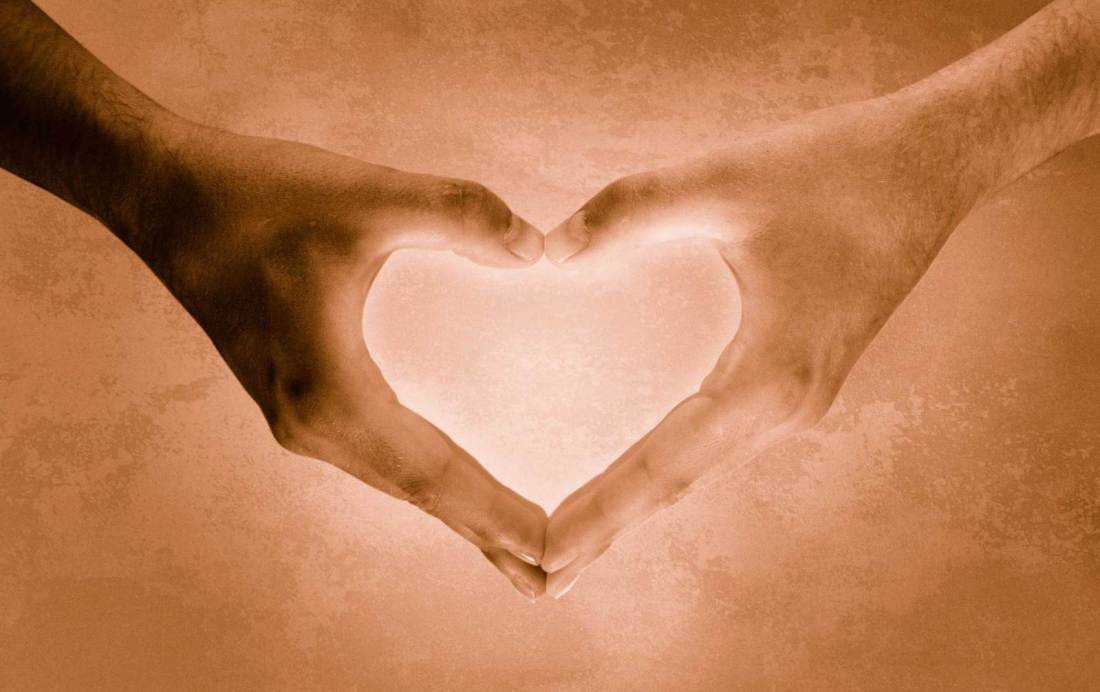
Heartshaped Hands by johan van den berg

With all that has happened in the last week from the tragic death of George Floyd to the protests and to the riots, I debated whether to postpone or rewrite this post.  But I believe that all that has happened has only confirmed the message of this post.  It is not only a toxic online environment (discussed in the following paragraph) but the toxicity flows through everyday life.  Though I am leaving the post as is, consider how in your life, in your conversations, and even in your thoughts to put into action the 4 acts of love listed below.  As the Apostle Paul wrote to the messed up church at Corinth, “Do everything in love” (1 Corinthians 16:14), so we should strive to do that.  Then the healing can begin.

There is a toxic environment online. It seems to me, many people want to demonize the opposing view and those people with it.  This usually seems to happen in political social media posts.  Conversation, dialogue, and civility are missing.  It is very much a “us versus them” environment with the “I am right and you are so very wrong” as the prevailing attitude. It is not a friendly environment.  How do we change that? 

I believe we change it with love.  Christians know that God loves us and wants each one of us. Our job is to love others. Our lives are a witness of his love, and we need to share that love.  Note true love comes from God. If love is self sourced it ends up being about one’s self, and that is not really love. I believe to change this toxic environment, we need to practice the 4 acts of love in the table below. 

When people say … Imagine Jesus saying … Christians practice …
“I feel judged.”“You’re welcome just as you are.”Radical Hospitality
“I don’t want to be lectured. You don’t care what I think.”“Your thoughts are welcome; your doubts are welcome.”Fearless Conversation
“Church people are a bunch of hypocrites.”“We’re all in this together.” Genuine Humility
“Your God is irrelevant to my life.”“God is here, ready to connect with you a fresh way.” Divine Anticipation 

Radical hospitality is about being welcoming to even your enemies.  You do not have to agree with their ideas, lifestyle, or talk, but welcoming acceptance and respect of them as a person is one way to show them God’s love.  There is no need to judge, rather there is an opportunity to dialogue and build a relationship.

Fearless conversation is about sharing and conversing without fear.  There needs to be a lot of listening with questions asked to understand each other.  The welcoming respect of the person  allows one to not worry about the conversation.  Be natural, authentic, and humble because God has this.  There is nothing for you to prove.

Genuine humility means you can be yourself.  You can be vulnerable, because we are all in this together.  Humility is not defined as one’s shortcomings or by self depreciation. It does not involve comparing yourself to others. There is no judging. Rather “True humility is not thinking less of yourself, but it is thinking of yourself less” (C. S. Lewis). Genuine humility is relational: meeting people where they are at; being open to learn from others; and being willing to admit mistakes. 

Divine anticipation is recognizing that God is at work in our daily lives, and anticipating the work that God is doing around us and through us.  Don’t be afraid.  Tell your story in an authentic and natural way.  Just love them and let God work.  And remember to pray.  God is ready to connect with you and with them.

Toxic environments can be overcome with love.  Most of this information is from the book “Why Nobody Wants to be Around Christians Anymore” by Thom and Joani Schultz (2014).

Oh My!

Coronavirus (Fusion Medical)

Worry! Fear! Panic!  The coronavirus has produced a lot of worry, fear, and panic.  The quick spread of the coronavirus is concerning, but as Christian I need not worry or  be afraid. I still worry a little because the unknown is scary, but I need to remind myself that God has this and he is ultimately in control.  We trust him because he desires the best for each of us, and we can rest in the peace that he gives. There is no need for fear and worry.   

Most who get sick with the coronavirus will have mild symptoms.  That is the case for 80% of those who get it. About 20% get it bad and only about 1-2% of the cases will result in death. That 1-2% is about 10 times of what it is for the flu.  Those who are old or with fragile health are the ones at greater risk of serious complications.

As a child of God,  I should respond to the situation with love and concern for others.  It is those of old age or with fragile health that we need to be concerned about.  That is why taking the warnings and recommendations seriously is important. I don’t want to infect a vulnerable person.  I am doing a better job of washing my hands and doing it more often. I will do more disinfecting. I will go to less events, and I will be more careful at the events I do attend. The goal is to reduce the spread of the coronavirus.  I will be especially careful around those of fragile health or old age. The last thing I want to do is to infect them. That will mean more phone calls and less visits. I don’t want to isolate them either. And there may come a time when I could be of service delivering meals to those quarantined.  Those are my plans. What are yours? How calm are you? Don’t worry. Don’t panic. God is there for you with his love and peace.