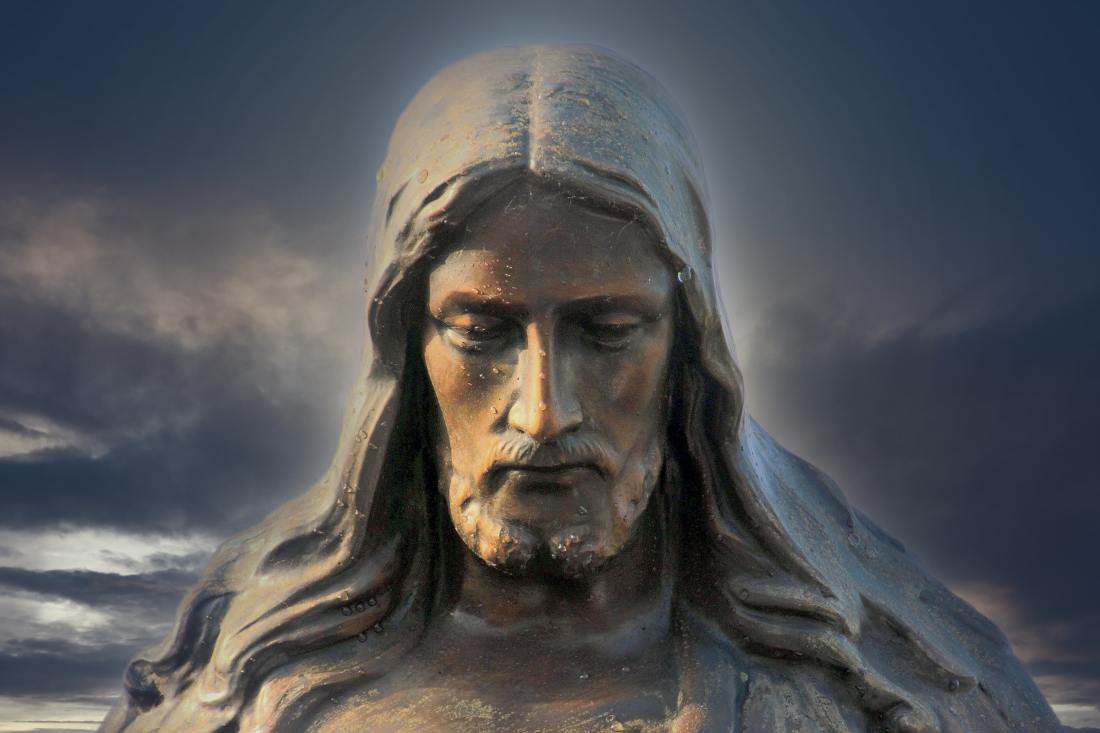
This year, the Nicene Creed is 1700 years old. Way back in 325 A.D., there was the First Council of Nicaea, where a large number of church leaders gathered primarily to discuss the relationship of Jesus Christ to God. There had been this ongoing controversy (Arianism) on whether or not Jesus was created and thus not the same as God the Father. Everyone considered Jesus to be divine but what was his relationship to God the Father? It came down to two Greek words, homoousios, Jesus being “of one substance” with God the Father, or homoiousios, Jesus being of a like substance to the Father. Arianism held that Jesus was the first created being, inferior to the Father but like him, and still superior to all other beings. The Council of Nicaea firmly rejected Arianism and chose homoousios. I believe homoousios fits much better with what the Bible says.
Emperor Constantine had called the church leaders together because this controversy was dividing the Church. He got the church leaders together and he let the church leaders decide the controversy and did not influence the decision. Everyone of the church leaders voted for the creed except for two holdouts. Emperor Constantine had hoped this would resolve the issue, but unfortunately the controversy continued.
In 381 A.D., at the First Council of Constantinople, the Nicene Creed was amended with the biggest change being the fleshing out of the third article which is about the Holy Spirit. The Holy Spirit was not the focus in the original creed. All the other changes have been minor. And that is how the Nicene Creed came to be.
The Nicene Creed makes it very clear that Jesus is God who became human. It says
And in one Lord Jesus Christ, the only begotten Son of God, begotten of his Father before all worlds, God of God, Light of Light, very God of very God, begotten not made, being of one substance with the Father, by whom all things were made; … became man, …
And at the end of the original Nicene Creed it said
But as for those who say, there was when He was not, and before being born He was not, and that He came into existence out of nothing, or who assert that the Son of God is of a different hypostasis or substance, or created, or is subject to alteration or change – these the catholic and apostolic Church anathematizes [strongly condemns].
The original creed also made it clear what the wrong beliefs were. The key point of the Nicene Creed is that Jesus is God, a person of the Trinity, who became human for our salvation.
Today there is a falsehood going around that Emperor Constantine called the council because he wanted to make Jesus a so-called mortal human being who was a prophet into a deity and thus suppress the sacred feminine (symbolic of fertility and reproduction and being representative of mother earth). This is a completely different narrative from the historical documents, and the idea of the Trinity (three persons and yet one God) had already been established so it was not a new idea introduced at the Council of Nicaea.
And another falsehood that people believe today is that at the Council of Nicaea, the books of the Bible were selected and the Gnostic Gospels were suppressed at that time. Nothing about that is true. The Biblical Canon was not discussed at all. It had already been set by consensus. Again the false idea is that Emperor Constantine was suppressing the sacred feminine by banning the Gnostic Gospels. The funny thing is the Gnostic Gospels are much more anti-feminine than the books of the Bible. Be careful of the lies that surround the Council of Nicaea. Unfortunately “The Da Vinci Code” popularized many of these lies.






 heinsite