Coasting

A question I am asking myself is “Am I coasting?”  If I am coasting through life then I am not striving for something. When I am coasting, I am going downhill.  I need to be intentional (and disciplined) in living my life.  When I coast, I just live and react, and let my desires and the influences of the culture determine my response.  Instead I should be living for God and responding to life’s issues in a God-pleasing way.  That takes intentionality.

We live in a very self-centered culture. Today’s culture does not help us live a life for God.  Comfort and convenience for oneself are promoted.  There is nothing wrong with convenience or comfort, but we need to make certain that it is not self-centered desires driving our life.  If I coast, I tend to let my desires as well as cultural influences determine my actions. While coasting I tend to let convenience and comfort dictate my actions.  That is not good or altogether healthy.  I need a plan, a “rule of life” (a pattern of habits), to live  by to help me counteract my selfish desires and the cultural influences.

I set up a “rule of life” two years ago, and I found that to be quite helpful but I do not always follow it and end up coasting through life instead of being intentional.  The good news is the “rule of life” has created some habits so when I am coasting many of those good habits from the “rule of life” are still active.  However, when I am coasting I miss opportunities to serve God and others.

My motivation for the “rule of life” is not to do something to earn the name of Christian or to even become a “better Christian”, rather I am motivated to serve God for his glory out of love and gratitude for what he has done for me.  Jesus came to earth to take the punishment I deserve.  He saved me and gave me a full life.  As I rest in his love, mercy and grace, how can I not seek to give him thanks and show him love by living a life he desires. Fortunately, I am empowered by his Spirit to live this full life.  So all praise and honor belong to him.

I am committed to serve Jesus Christ.  The “rule of life” needs more than only good intentions. It also needs discipline to do and build the habits found in the “rule of life”.  And so with the help of the Holy Spirit I strive to live a life that pleases him.  I fail more times than I wish, but God is a work in me to make me more Christ-like.  It is with that hope or expectation I move forward.  I feel my “rule of life” is a helpful tool for me.

Maybe creating your own “rule of life” would be helpful for you.  I would encourage you to give it a try.  It has helped me to avoid coasting through life.

Peace

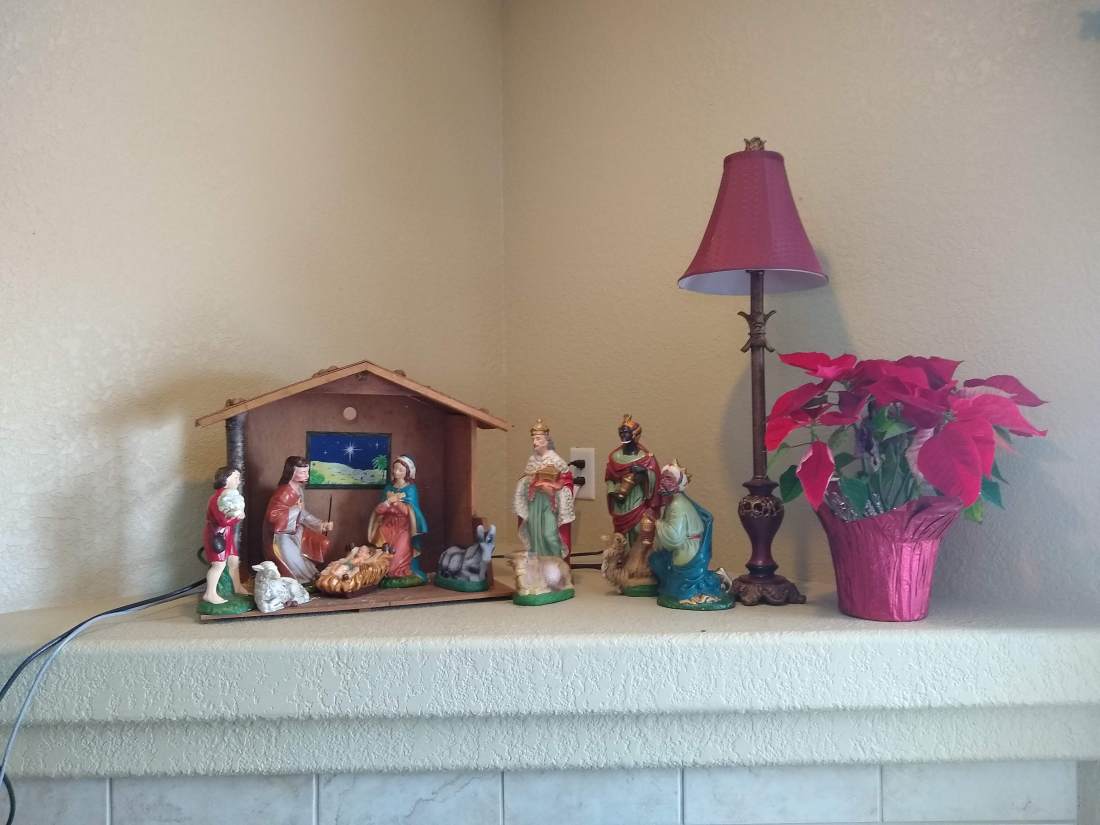
Christmas Nativity

Peace is something everyone seems to want. Peace in the Bible is a rich concept.  It is more than just the absence of conflict.  Peace is a state of wholeness and completeness.   With peace what is broken is restored or made whole.  Peace brings a sense of calm and renewal, especially in our relationships. 

The Hebrew word for peace is shalom. The idea of wholeness and well-being comes from shalom.  Shalom can be used as a greeting. It asks about our welfare.  Much like our greeting, “How are you doing?”, but shalom gives that added sense that everything should be right and whole.  Shalom also implies a restoring of the relationship.

We rob ourselves of peace when we worry about things.  Much of our worry and anxiety is about things we have no or very little control over. There is no good reason to worry and yet we do.  We fear the future.  We fear the unknown and even the known.  We are troubled by the events in the world.  What we need to do is to recognize that we have a God who is good and loves us.  He is in control and he desires the best for us, so we need not worry but instead we need to let his peace wash over us.

God showed his love for us by coming in the person of Jesus.  That is what Christmas is all about.  On Christmas we celebrate the birth of Jesus.  Jesus came in love to save us from our brokenness and to restore the relationship  between us and God.  He brought us peace.  That is why the angels announcing the birth of Jesus said “… on earth peace among those with whom he is pleased!” (Luke 2:14).  Jesus offers his peace to us so we can no longer be troubled or afraid  (John 14:27).  It is a peace that “surpasses all understanding” (Philippians 4:7).

Do you want peace?  Jesus wants to come and give you his peace.  It is something I am thankful for and I rejoice in his peace.

You keep him in perfect peace whose mind is stayed on you, because he trusts in you. Trust in the Lord forever, for the Lord God is an everlasting rock. (Isaiah 26:3-4)

This blog post was inspired by the Bible Project video, “Shalom/Peace”.
P.S. Here is our 2024 Christmas letter.

Justice

Hammer for a Judge

Today there is a lot of talk about justice, especially social justice.  We care a lot about justice.  God actually has a lot to say in the Bible about justice and injustice.  The Bible Project has an excellent video (animation) giving a great overview of justice in the Bible.  Justice in the Biblical story is pretty radical, and is different from what we naturally do or expect.

We need to start at the beginning.  God created us in his image, and gave us dominion over the earth (Genesis 1:27-28).  Since we all were made in the image of God, we are all equal and deserve to be treated with dignity and fairness.  It doesn’t matter who you are.  You should be treated fairly and with respect.

Unfortunately, we take the good and selfishly take advantage of the situation at the expense of another and then injustice appears.  This injustice or evil also infects families, communities, and whole civilizations.  We create vulnerable people that we take advantage of.  We do not treat them with fairness and respect.  Out of self-centered selfish motives, we instead take advantage of them. Even if we are oppressed and we gain the advantage, we will take the advantage to become the oppressor. We do not learn, because we are broken and do not have the respect toward others to treat them fairly and with dignity.

All is not lost.  God had a plan and called Abraham.  Genesis 18:17-19 talks about Abraham. Through him “all the nations of the earth shall be blessed”, and that Abraham would teach his family “to keep the way of the Lord by doing righteousness and justice”.  Doing righteousness is about being a “good” person, but it is more about having right relationships with people.  We need to treat people with the dignity that comes from being made in the image of God. In the Bible, justice can refer to retributive justice (you pay the consequences), but most of the time in the Bible justice is about restorative justice (helping people, charity).  This means to do justice, we seek out vulnerable people and help them. So doing righteousness and justice is about having a radical, selfless way of life. 

And as the Bible story clearly shows, we fail at doing righteousness and justice.  We  may not be actively perpetuating injustice, but we all take part in injustice, whether actively, passively, or even being unintentionally.  Injustice is everywhere, and we are all guilty of it.

God’s plan comes to fruition with the coming of Jesus Christ.  Jesus lived a life doing righteousness and justice.  He paid our debt to God by dying on the cross and he rose again so that we might be declared righteous before God.  This is the gift God gives us, guilty people.  Empowered by the Holy Spirit, we respond to this gift of life by doing righteousness and justice.  It is not always easy or comfortable, but we reach out to those in need with love and compassion.  We love our neighbor as ourselves (Mark 12:31). 

He has told you, O man, what is good; and what does the Lord require of you but to do justice, and to love kindness, and to walk humbly with your God (Micah 6:8)

Thanksgiving

I have written a lot about being thankful, because it makes life better so for the fifth Thanksgiving I will write again about being thankful.  It is important and it puts life in proper perspective.  Everything we have comes from a loving gracious God.  It is all a gift that we often take for granted.

It is healthy and therapeutic to be thankful.  It is good for relationships, mental health, and even sleep.  So let us give thanks and express gratitude, because it is not only good for the person receiving the thanks but it is good for us as well.  You take the focus off yourself when you are thankful, and I believe it also makes you more resilient. 

Back in 1789, George Washington at the urging of Congress set aside a day for thanksgiving and prayer to acknowledge all God had done for them.  Our founding fathers recognized the need to give thanks to God and so started the holiday of Thanksgiving.  Today it seems to be more about food and family and less about thanking God.  This Thanksgiving find a church that has a Thanksgiving service and attend it. (My church, Immanuel, in Loveland, CO, has a Thanksgiving service on Thanksgiving at 9 AM.)  I find the service to be important, because it resets my mind on the love and goodness of God because of his provision for us.  Our Heavenly Father is gracious and merciful, and he provides for all our needs. That is worthy of thanks and praise.

We are called to give thanks for everything (Ephesians 5:20) and to give thanks in all circumstances (1 Thessalonians 5:18).  That seems like a hard thing to do, until you realize that God is working everything out for our good (Romans 8:28).  Tough situations can turn into blessings.  Let us have that attitude of thanksgiving, recognizing that our Heavenly Father has provided all that is needed in his love.

Heavenly Father, we give you thanks and praise for this beautiful world you created.  You provide for every need of ours, food, clothing, shelter, family and friends, and even the air we breathe.  It is all from you.  You are good, gracious, and merciful to us.  We especially thank you for sending your Son, Jesus Christ, to take our place and die on the cross for us.  Because of him we have a Spirit empowered life.  Thank you for everything!  Amen!

Unnatural Act

Rays of light in a forest

Forgiveness is an unnatural act.  It is unfair, but I believe it is the best way to promote reconciliation and to stop any on-going retribution.   Too often both sides want justice and feel they are totally in the right.  They do not want reconciliation.  They want revenge and justice for themselves.  They need and humbly look at their own actions. For in a broken relationship both sides are usually to be at fault in some way.

We find ourselves there many times.  Too many times we wait for the person to come to us to apologize and ask for forgiveness, and we find that they have been waiting for us to come to them.  There are too many sons who drive past their mom’s house everyday for years and refuse to stop because of some old grudge.  Both are too proud to admit they may have a part in the wrong, and are waiting for the other to apologize.  We may not be in that bad of a situation, but is there some broken relationship that needs your grace and forgiveness?

It is not just people and their relationships that are missing some grace.  Nations and people groups also seek vengeance under the guise of justice.  Many centuries have gone by and the Croats, Serbs, and their Muslim neighbors are still fighting.  And the same is true for the Israeli and Palestinian conflict.  Recently, Israel responded to Iran’s missile attacks, which was a response to Israel’s attack which was a response to ….  You get the idea.  How many people must die before there can be peace?  Can grace and forgiveness play a role?

As Christians, we have been given the ministry of reconciliation (2 Corinthians 5:16-21).  Of first importance is the restoration of our relationship with God, but reconciliation with one another and with nations are also a part of the mission to heal our brokenness. God has forgiven us so very much and how can we not out of gratitude forgive others (Matthew 18:21-35)?  And how can we not share the good news of God’s love and forgiveness for us?

This unnatural act of grace and forgiveness is also needed after this contentious election.  Too many unkind words and outright lies were said.  How can we reconcile with each other and unite for the good of the nation?  Let us Christians create a gracious atmosphere where the animosities can be put aside in order to allow us to work together.

Note forgiveness is not the same as a pardon.  A forgiven person can still pay the consequences of their actions. I think of the relatives of those killed in a Bible Study in Charleston, SC in 2015 who offered forgiveness.  Pardon was not offered and the murderer was tried for the 9 deaths.  Forgiveness releases the forgiver from the need for vengeance. That is an important and necessary part of healing.

Forgiveness is an unnatural act in our broken world, instead we want justice for ourselves and what we often mean by justice is vengeance.  God has called us to think differently.  He has empowered us to be about the ministry of reconciliation.  Let us step out and graciously work to reconcile people to God and to each other.

Law and Gospel

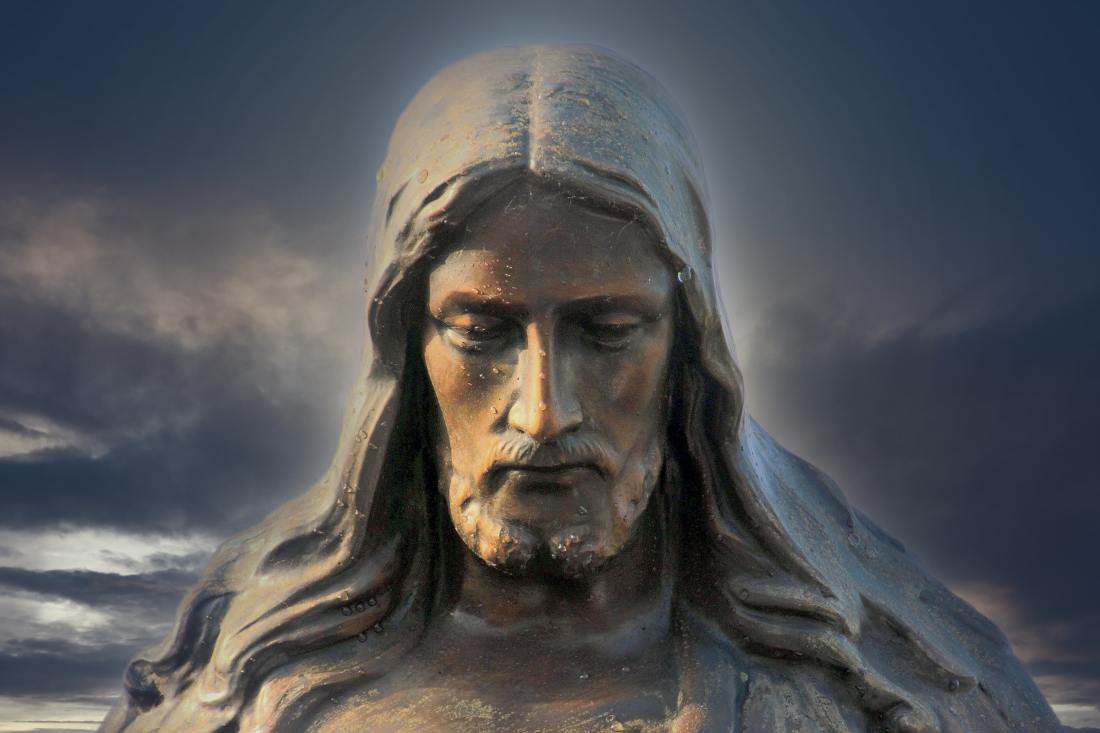
Jesus Christ Statue Photo - Myriam Zilles

Out of the Protestant Reformation, from Martin Luther, came the concept of Law and Gospel.  It is used to read and interpret  Bible passages. Confessional Lutherans especially make a big deal out of using it.  I find it to be a very helpful concept.  The Law tells us what to do.  The Gospel tells us what God has done and what he is doing in Christ Jesus.  Primarily, the Law shows us our sin, and the Gospel shows us our Savior.

There are three functions or uses of the Law.  The Curb function of the Law restrains people from doing wrong. You do not steal because it is wrong and there are consequences to stealing.  The Law as a Mirror shows us who we are, sinners.  It shows us our sin and how we have failed to keep the law.  The third use of the Law is the Guide function.  The Law shows us how to live, and how to respond to God’s saving love (the Gospel).

The Gospel shows us what God has done for us.  It is Good News.  It is usually focused on what Jesus has done, but any saving action by the Triune God can be considered Gospel.  The main focus is on Jesus since that is the entire Bible story points to him.  He came to Earth to save us and restore that broken relationship with us.

If we look at Exodus 20:1-17, we can easily find Law and Gospel.  The Ten Commandments are found there but in verse two before any commandment is given we find the Gospel.  God reminds them that he had saved them from Egyptian slavery. So the Gospel appears right before the giving of the Ten Commandments, the Law.  Therefore these commandments told them how to respond to God who had saved them (the third use of the Law).  The commandments were to restore a covenant relationship with God. The commandments unfortunately also show us how we fail to keep those commandments (the second use of the Law) and our need to be freed from the bondage of sin. And in the Ten Commandments you can also find the first use of the Law (civil laws), for example “You shall not steal”. So the uses of the Law are not mutually exclusive. These commandments are applied today telling us how to respond in gratitude to God’s saving love.

Law and Gospel can be applied to ourselves and our conversations.  When a person is suffering and feeling worthless, that is when we need to share the Gospel message of God’s love for them.  When a person is feeling that what they are doing is not that bad of a wrong or just not wrong, then we need to share the Law and remind them that sinning is serious and it causes harm.  For unbelievers, I would first let them know that we all are not perfect and are broken sinners (Law), and then share the good news that God still loves them, broken as they may be, and desires to be in relationship with them (Gospel).

New Life

You have been set apart and chosen. Photo by Gift Habeshaw.

Our church had a mini-retreat on new life in Christ, and it was led by Jim Found, a former missionary.  The content was so good I want to summarize it for you.  Jesus came that we might have this abundant full life (John 10:10). As Christians, we are given a new full life.  Our old life is still hanging around but we have this new life in Christ. What does it mean to have this new life?

The new life is also called the new self or new nature. We get to “walk in newness of life” (Romans 6:4).  We walk in love (Ephesians 5:1-2) as we “put on the new self, created after the likeness of God in true righteousness and holiness” (Ephesians 4:17-24). This is not our doing for God is at work in us to do his will (Philippians 2:13).  Unfortunately, the old self is still around and we do not fully realize the new self (Romans 7:7-25).  There is conflict between the old self and the new self.  We still sin.  The Holy Spirit will enable us to recognize our sin, reject it, and then ask for forgiveness (repentance).  This is an ongoing lifelong process (sanctification) to conform us to the image of Jesus (Romans 8:29).   Note though we sin, we still are saved.  Our salvation or justification is not based on anything we do.  It is a gift (Ephesians 2:8-10).  The good works come from us after being saved.  The new life with its good works is a result of being saved.  You strengthen your new life by trusting Christ and his promises, and the good works are the result. Walking in newness of life means living a Christ-like life (Colossians 2:6-7; Philippians 2:1-11).

Our old self is selfish. It will by nature disobey God’s will.  The mind set on the flesh (the old self) is hostile to God (Romans 8:7-8).  The new life is guided by the Holy Spirit and it desires to obey God’s will.  We need to daily put off the old self.  We put off our old self when we repent, and ask the Holy Spirit to strengthen our new life. The Holy Spirit aids us in our struggle against temptation and sin. The Holy Spirit awakens in us new thoughts and affections so we can begin to love God and refrain from evil actions.  Oh, Holy Spirit, control our thoughts and give us the power to reject sin.

By walking in newness of life, we have victory over temptation.  We need not be burdened by things like fear, anxiety, loneliness, hopelessness, lack of purpose, peer pressure, sinful addictions, guilt, low self worth, and the many other things that burden us.  In our new life we have a new identity in Christ as children of God (1 John 3:1), and with that comes many promises, that is scripture passages that tell of God’s love and support for us and how to respond to that love.

Walking in newness of life means we submit ourselves to God, and we resist the devil so he will then flee from us (James 4:7).  A great way to resist the devil and temptations is to follow the example of Jesus (Matthew 4:1-11) and quote scripture when facing temptation. Quote scripture and tell Satan to leave. Do not let Satan bother you, because you are God’s and he saved you.

God is at work in you even if you do not feel it and wonder if you are saved.  God is at work in you if you admit you are a sinner. If you repent of your sins and want to change your life, God is at work in you.  If you acknowledge that Jesus is God who became man, God is at work in you.  God is at work in you, if you recognize that Jesus came to die for you and then rose from the dead. If you trust in Jesus as Lord and Savior God is at work in you. That desire and power to live for Jesus comes from God working in you. You are saved.  You are his.

With the help of the Holy Spirit, we can show that Jesus is Lord in concrete ways.  You have been given a purpose of sharing God’s love through caring and serving others.  One big way to do that is to share the good news of how God has saved you and how he is at work in you.  Share the new life he has given you. 

Heavenly Father, You have given us everything we need for a full and abundant life. You have set us free from the sinful cravings of the world.  Your promises are sure and certain. You are there to deliver us when we call out to you, and yet we fail to live the good life you would want us to live.  Let your Holy Spirit strengthen our faith to help us to reject our sinful ways and live that full abundant life for you.  We ask this because of all Jesus has done. Amen! (2 Peter 1:3-4; Psalm 50:15; John 10:10)

But the fruit of the Spirit is love, joy, peace, patience, kindness, goodness, faithfulness, gentleness, self-control; against such things there is no law. And those who belong to Christ Jesus have crucified the flesh with its passions and desires.  If we live by the Spirit, let us also keep in step with the Spirit. Let us not become conceited, provoking one another, envying one another.  (Galatians 5:22-26)

PS This was just a taste of the mini-retreat.  For the complete text of the retreat,  go to Jim Found’s website https://foundbytes.com/new-life/

A Christmas Story

Christmas Nativity

A long long time ago, there was a young woman, Miriam, who was engaged to be married to a man named Yosef.  She had a visit from a messenger from God. The messenger said, “Hello, highly favored one.  God is with you.”  This very unusual event naturally troubled her.  The messenger said, “Do not be afraid, Miriam, because God is going to bless you.  You will bear a son and name him Yehoshua.  He will become a great person, and he will be called the Son of God.  God will restore the kingdom of your ancestor David and he will reign over the People of God forever.  His kingdom will be eternal.”

Miriam responded to the messenger, “I am a virgin.  Virgins do not bear children.   Is there something I must do?”

The messenger replied, “No, you need to do nothing.  The Holy Spirit will come upon you and by God’s power you will bear the child. And here is a sign, your relative, Elisheba, who was unable to have children, is pregnant in her old age. She is six months into her pregnancy.  Nothing is impossible with God.”  Miriam responded and said, “I am the Lord’s servant.  May it be done as you have said.”  Then the messenger left, and Miriam became pregnant by the power of the Holy Spirit.

Miriam was going to become the talk of the town.  The good girl was pregnant.  Yosef, Miriam’s fiance, upon hearing the news debated what he should do.  After all he was not the father.  Being a good man, he did not want to publicly humiliate her and have her stoned.  He decided to break off the engagement quietly.  That night he had a dream, where a messenger from God said, “Yosef, descendent of David, do not be afraid to take Miriam as your wife, for the child that is in her is from the Holy Spirit.  She will bear a son, and you shall name him Yehoshua, for he will save his people from their sins.” Yosef took her as his wife.

Miriam left town and went to visit Elisheba.  Miriam greeted Elisheba, and Elisheba doubled over.  But instead of crying out in pain, being filled with the Holy Spirit, Elisheba loudly proclaimed “Blessed are you among women, and blessed is your child!  Why am I so honored that the mother of my Lord should visit me?  When I heard your voice, the baby in my womb jumped for joy.  You are blessed because you believed that the Lord would do what he said.”

Miriam responded in song:

“I praise the Lord.
    My spirit rejoices in God my Savior!
For he took notice of his lowly servant,
    and from now on all generations will call me blessed.
For the Mighty God  has done great things for me, 
    and holy is his name. 
He shows mercy from generation to generation
    to all who fear him.
He has performed mighty deeds with his arm;
   he has scattered those who are proud in their thoughts. 
He has brought down princes from their thrones
    and has lifted up the humble.
He has filled the hungry with good things
    and he has sent the rich away empty.
He has helped his servant Israel
    remembering to be merciful
Because of this promise he made to our ancestors,
    to Abraham and his children forever.”

Miriam stayed with Elisheba for about three months and then returned home.

Now it so happened that Caesar Augustus issued a decree that a census should be taken of the entire Roman Empire.  And everyone returned to their own ancestral town to register.  So Yosef left Nazareth in Galilee and went to Bethlehem in Judea, taking Miriam with him because he was a descendant of King David (and Miriam too).

While there Miriam gave birth to her firstborn son. She wrapped him in strips of cloth and laid him in a feeding trough, because there was no lodging (inn or guest room) available for them.

That night there were shepherds staying in the fields nearby, guarding their flocks of sheep.  Suddenly, a messenger of the Lord appeared among them, and the glory of the Lord shone around them, and they were terrified.  But the messenger said, “Do not be afraid.  I bring you good news that will bring great joy to all people.  Today in the town of David a Savior has been born to you; he is the Messiah, the Lord.  You will recognize him by this sign: You will find a baby wrapped in strips of cloth and lying in a feeding trough.”  And suddenly with the messenger, appeared a heavenly host praising God and saying, “Glory to God in the highest heaven and peace on earth to those with whom God is pleased.”

When the heavenly host had left them and returned into heaven, the shepherds said to one another, “Let’s go to Bethlehem and see this thing that has happened, which the Lord has told us about.” So they hurried off and found Miriam and Yosef, and the baby, who was lying in the feeding trough. They then went out and spread the word about this baby, and those who heard it wondered at the news.  Miriam treasured up all these things and pondered them in her heart.

The real accounts of the birth of Jesus can be found in Luke 1:39-56, 2:1-21; Matthew 1:18-25.  I used Hebrew names for Elizabeth (Elisheba), Mary (Miriam), Joseph (Yosef) and Jesus/Joshua (Yehoshua). Jesus is the English version of the Latin version of the Greek version of the Hebrew name Yehoshua, whereas Joshua is the English version of Yehoshua.  Mary was likely called by the Aramaic version of Miriam, which is Maryam, but I wanted to keep all the names in Hebrew.