Fire, Weather, and Climate

The recent firestorm that hit Colorado on December 30 was a wakeup call.  The Marshall Fire shows a new reality of a warm dry Colorado.  Right after the fire, we had our first significant snowfall.  It was about 2-3 months late.  The last 6 months have been very dry and very warm.  In fact they were one of the driest and by far warmest 6 months (July through December) on record for the Front Range.  The very strong winds with the 100+ mph gusts on rare occasions do happen in the Boulder area, but combined with the very dry conditions it created the ideal conditions for the firestorm that destroyed 1084 homes and damaged another 149 homes.

Drought is not uncommon to Colorado, however in the last 20+ years, we have been in drought most of the time.  It seems to be becoming a new normal. And the summers have become increasingly warmer, or should I say just plain hot.  When Gail married me and moved to Colorado, I told her that we did not need air conditioning, because the nights cool off and there are not all that many hot days.  That was 22 years ago and a few years later we had air conditioning. I have been in Colorado for 35 years and it is getting hotter, especially in the last two decades.

A warmer climate means there is more energy in the system, and more energy available for these extreme events.  The warming climate has raised the energy level so the heat dome over the Pacific Northwest this summer, and the very dry conditions with the wind storm were made worse by the warming climate.   Some experts say “climate change is a threat multiplier”.  I am not certain it is as simple as that, but weather events can be made more severe due to the warming climate.  In Colorado, we used to talk about the fire season.  It would start in the spring and end in the fall.  But for many years now the talk has changed. People now say it is always fire season in Colorado.

The Marshall Fire we had here in Colorado was similar to the Camp Fire in California that burned Paradise, CA to the ground.  Both were fueled by strong winds and very dry vegetation.  Both grew to a large size, engulfing towns in a matter of hours.  Amazingly, only two people will have lost their lives due to the Marshall Fire. That is truly amazing considering how fast the fire moved.

To give you a flavor of how fast the fire moved, a friend of a friend of mine, who lost his house in the fire, sent out an email describing his experience.  The fire started at about 11:00am about 2.85 miles away from his house. At his house he noticed the wind and the increasing smoke.  He started packing (around 11:45?) and left his house at 12:10 with his family.  By that time the smoke was so thick that he could barely see past the front of his car.  The evacuation order came to his phone at 12:15. And it was not easy driving in the very strong wind.  At 12:38 his home weather station stopped reporting to the website meaning that his house was on fire and likely had been for awhile.  They got out just in time.  In the rush they forgot many things, including a packed bag, but they made it out and were safe.

It makes me wonder about how safe my house is.  I live about a few blocks from farm land to the north and about half a mile to a mile from the western edge of Loveland and the foothills.  (Strong winds usually come from the west.)  I believe I am at or near that wildland urban interface.   There is a Wildfire Risk Assessment Public Viewer, and just west of my place the fire risk is low (but not the lowest rating) for under high to extreme fire danger conditions.  So that is good, though about three miles to the NNW of my place the risk rises to moderate. That brings up a bunch of questions.  What steps should I take to better protect my place?  Should I have a list of things to pack if needed?  Would I be ready to evacuate on a moment’s notice?  What preparations would be prudent?  These questions I have never considered until now.

Events like this make me pause and realize how short and fragile life is.  While writing this post I read this from the prophet Joel, concerning a disaster of a plague of locusts:

“Yet even now,” declares the Lord, “return to me with all your heart, with fasting, with weeping, and with mourning; and rend your hearts and not your garments.”  Return to the Lord your God,  for he is gracious and merciful, slow to anger, and abounding in steadfast love; and he relents over disaster.  (Joel 2:12-13)

It is always a good time to stop, evaluate our lives, and return to the Lord God, but disasters can be a clarion call for us to repent and return to God.  I am ready.  I am not perfect.  I need to return and receive God’s love and forgiveness.

COVID Thoughts

Coronavirus (Fusion Medical)

What is next with the COVID-19 story? Most of the world is still unvaccinated, but progress is being made. 41% of the world has received at least one dose, but only 1.9% of people in low-income countries have received at least one dose. It is in unvaccinated regions where the variants to the virus develop, whether it be Tanzania, Columbia, or Northern Idaho.  Will a virus that is immune to the vaccines and deliver a deadly dose develop?  It is possible.  That is why, I believe getting the vaccine to everyone as quickly as possible is very important.  We need to stop this virus before it mutates into something worse. (The delta variant is already worse than the original virus.  What is next?)

Right now the COVID’s fourth wave has hit America hard, but things are different for this wave because many of us are vaccinated and that is making a difference. However the difference is not big enough because we do not have enough vaccinated people for herd immunity.  The risk is lower for me since I have been vaccinated.  The people I hang around with are vaccinated too, but we still need to be careful not to spread it.  Unfortunately, the unvaccinated are catching the COVID virus and hospitals are filling up.  What does America need to do?  Is mask wearing needed?  Is a lockdown needed?  Mandatory vaccinations? Right now it is mostly up to the individual, to companies, or to the local governments.  I do not have the answers.

People have different comfort levels.  Some feel the need to wear face masks and others don’t. (And there are a few, mostly elderly, where a face mask makes it more difficult for them to breathe.)  I am comfortable without a mask, but I respect those who differ and I am willing to wear a mask if it makes the individual comfortable.  I am also willing to wear masks if the store or the local government requires it.  It is a small price to pay to keep the peace and maintain relationships.  And I believe that masks do make a difference.  There are many studies that show face masks do help reduce the risk of infection.

There are conspiracy theories out there that are convincing people that the vaccines are bad for them. Yes, I consider these stories to be conspiracy theories.  The evidence is missing, and the story requires large numbers of knowledgeable people to be lying. I cannot believe that a falsehood requiring so many knowledgeable people to lie can continue without being fully exposed.  Here is an article debunking many of the myths.  I ask you to look around and ask yourself, “How many people who I know have had lasting ill effects from the vaccine?”  For me it is zero.  The vaccine does not harm people. It is a very rare case when it causes problems.  

The vaccine is effective at protecting you from the virus. If you are vaccinated there is a one in 5,000 chance per day of becoming infected, and it may actually be a one in 10,000 chance per day.  Unvaccinated people are about five times more likely to become infected with the delta variant of the COVID virus than vaccinated people.  They are now ten times more likely to be hospitalized, and 11 times more likely to die of COVID than those vaccinated.  The vaccine works. One alternative treatment touted by conspiracy theories is a potential antiviral drug, ivermectin.  Current results from the studies show that ivermectin is not effective against COVID-19. (There are some more studies in progress.)  Those considering ivermectin should be very careful, because ivermectin is dangerous to take, especially in large doses.

Should we be getting  a third shot, a “booster shot”, when many in the rest of the world do not have their first shot?  The head of the World Health Organization says, we should wait, and there appears to be a question of whether the third dose is really needed.  The rich countries have promised 1 billion doses to the poor countries, but only 15% of the promised amount has been delivered.  Should we focus on helping poor countries get vaccinated? It would help prevent new strains of the virus from developing. Or should we first protect America’s vulnerable with a third shot? I am not certain if it is an “either/or” question.  I think both can happen.  I believe that we need to get the world vaccinated, the faster the better.  The vaccines need to get to poor countries quickly, but only if the logistics are in place to get the people vaccinated.  Logistics can be a problem.  And I think third shots can happen too, but they should be the extra doses that are not going to be used by those getting their first and second doses.

With all that is happening, as Christians, we can be rest assured that our God is good and loving and in control.  We need not fear.  In the end, heaven awaits, where everything will be made right for us.

Our Certain God in an Uncertain World

China Flag by Raphael Pto

We live in an uncertain world.  The pandemic came out of nowhere and changed our lives and our routines.  It was a huge change and some of that change will remain for years to come.  Even when things are going smoothly and our future appears certain, there is still uncertainty that causes us to worry, grumble, and complain. Not only that, we are envious and we covet, and that adds to our discontent.  Things don’t always go the way we would want.  We can be unhappy even in the best of times. And yet we desire to be content and satisfied.  I think we can learn from our brothers and sisters in China, who are currently in a really tough situation.

I recently read an article about how China has been clamping down on Christians (and other religious groups) since new laws went into effect on 1 February 2020 (and in February 2018).  The new laws basically say that all religious activity is to be overseen by the State and operated in accordance with the Chinese Communist Party policy. And the new laws specify that all religious activity within China must promote and support the Chinese Communist Party.  As a Chinese Catholic priest commented: “In practice, your religion no longer matters, if you are Buddhist, or Taoist, or Muslim or Christian: the only religion allowed is faith in the Chinese Communist Party.”  The official legal churches now have a lot more oversight done by unbelievers, and the unofficial house (jiating) churches will no longer be ignored.  Some of the house churches were large churches that rented space.  They can not rent any more and will now have to keep a low profile.  I think that means returning to small groups meeting in homes again.  The majority of Chinese Christians are a part of the house churches.

And yet in this article, I find that they seem to be not worried or complaining even though their situation has made a big turn for the worse.  They remain firm in their faith.  As you read the quotes below, note their faith that God is in control, despite the circumstances.  My added comments on the quotes are found in the brackets.

“The Christian hope lies in this—we are not stronger or purer than others, but rather than believing in ourselves, we believe in Jesus, who upholds us whenever we fall, who strengthens us when our strength is drained, who loves us when we are in pain.” [They recognize that God will be there to sustain them.]

“The Devil is using this opportunity to crack down on the church, that’s for sure, but God will use it in a different way.”  [They believe God will take a bad situation and ultimately turn it for good.]

“We still do a lot of active planning, but more humbly we say, ‘Lord, if you are willing: this is your time. Use it.’ . . . We don’t know what the future holds.” [They are not fatalistic.  They still plan, but they ask God to guide them and use their plans.]

“But we know that everything is under his control, and he is behind everything. Whatever happens is God’s way to prepare his church. He is always preparing his church.”  [They see that God is in control and they believe what happens will be for the good of the church as a whole.]

“Through uncertainty, we depend on our certain God,” he said. “God calls us to live an uncertain life, so that we can trust and rely on him.” [They don’t know what the future holds, but they trust God to be their firm foundation.]

The last quote reminds me of this passage from Isaiah:  You keep him in perfect peace whose mind is stayed on you, because he trusts in you. (Isaiah 26:3)  We can be content and need not worry, grumble, or complain.  We have a firm foundation found in the loving God we trust, and that is where contentment is found.

The Newest Social Contagion

Have you ever noticed how an idea, attitude, or behavior will sweep over a group (or society) changing it?  It may be a good change or a bad change.  That is what is known as a social or behavioral contagion.  It behaves like an infection. People will see some behavior, think it to be cool, and then adopt that behavior or attitude. It is not necessarily rational.  It is similar to peer pressure.  It used to be that smoking was a social contagion. 

A brand new survey was released by Gallup makes me think that a new social contagion has swept across the country.  The survey counted the number of LGBTQ people there were.  In the youngest generation of adults, Gen Z (ages 18-23), the percentage of LGBTQ people was 16%.  That is about 1 in every 6 Gen Z persons.  It was 9% for the Millennial Generation (ages 24-40). And then it drops to 4% for Gen X, 2% for Baby Boomers, and 1% for those older.  

Most of the LGBTQ people (55%) consider themselves to be bisexual.  Of the Gen Z LGBTQ people, 72% of them consider to be bisexual, and 54% of LGBTQ Millennials are bisexual. (The percentage then drops off for the older generations.) Women are more likely to consider themselves to be LGBTQ than men, and LGBTQ women are more likely to be bisexual than LGBTQ men.

What can we say about this bisexual trend? Well many of the young actresses that were on the Disney Channel are now LGBTQ.  (In this article I count 10 actresses.)  Those ladies by their celebrity status promote the LGBTQ lifestyle, making it a cool thing. So I wonder if many of these bisexuals are really bi-curious (heterosexuals curious about same-sex sexual experiences, or vice versa). They also could just be avoiding the label of transphobic (having a prejudice against transsexual or transgender people).  I also wonder what is the influence of internet porn on their choices and lifestyle.  As you can tell I am having a hard time accepting this LGBTQ social contagion.    Maybe it really is a cool thing to be in today’s society, but I am concerned.  I can not dismiss it for the LGBTQ community is a powerful force in society today.

I am concerned for the LGBTQ people because I believe their lifestyle is not healthy,  They tend to have many sexual partners.  (That can be true of heterosexuals too.) There are about 50 STDs (Sexually Transmitted Diseases) and they all can be found in the LGBTQ community.   LGBTQ people also have high murder rate. Lesbians have a higher rate of physical violence and sucide  than a heterosexual females.  Gay men also have a higher sucide rate.  Gay men tend to have a median life span that is about 20 years (maybe 30 years) less than an average heterosexual. It is similar for lesbians. Though HIV plays a role in the reduced lifespan, it is not the defining factor.  It is a sad situation and one needs to be concerned about it.

And now the LGBTQ community is seeking special protected status in Congress with the Equality Act. It is, for the most part, the “Civil Rights Act” for LGBTQ people. (The act also would affect the abortion debate.)  I agree that every person needs to be treated with dignity and respect, but I doubt they need special protection since gay men and lesbian women are making “significantly more” money than their straight counterparts. The Equality Act would create a host of major legal changes that would cause a lot of problems for religious schools, religious organizations, women’s shelters, women’s sports, sex-specific facilities, and many more.  So I do not think that this act is needed since many of them are financially doing very well, and the LGBTQ community is already a powerful force in society today.  This social contagion has already swept the country.  I do not think it has been a change for the better. 

More information on the Equality Act from a conservative Christian perspective can be found here.

PS  The Equality Act (H.R. 5) has passed the House and is on its way to the Senate.  You can contact your senators and let them know how you feel about this bill.

Nationalism

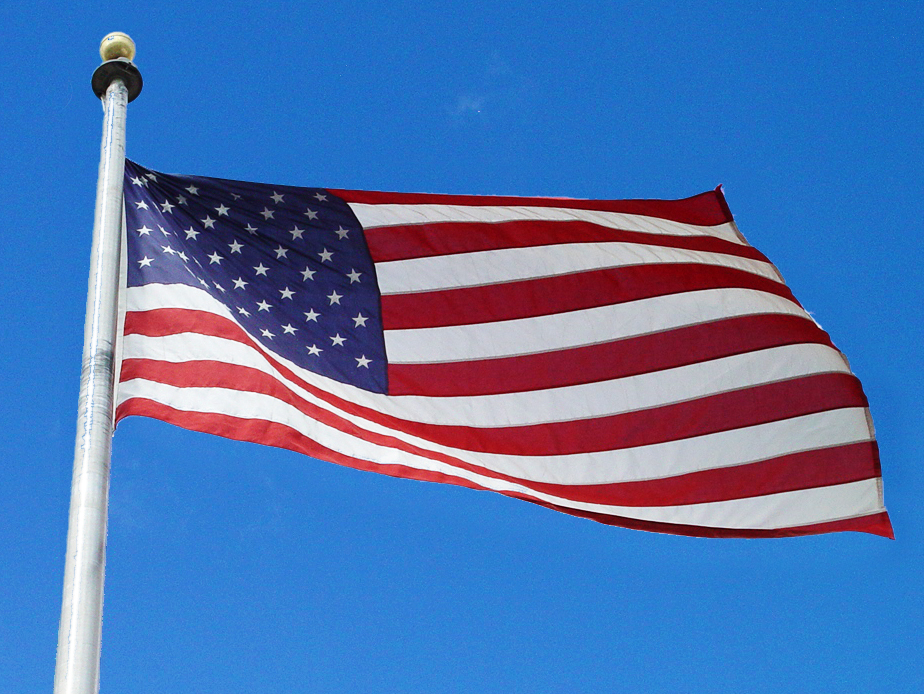
American Flag Photo by Lisa Setrini-Espinosa

Recent events have me concerned about the faith of many Americans.  It seems that many are worshiping Jesus AND America.  That is an idol.  I love my country, but my allegiance is to the King of Kings and Lord of Lords, Jesus Christ.  It is not in part to a country, a political party, or a political leader. My allegiance is to Jesus Christ alone! What he says goes.

God is very clear about it.  The first and foremost commandment is “You shall have no other gods before me” (Exodus 20:3).   This means that the Triune God (God the Father, Jesus Christ, and the Holy Spirit) is number one in your entire life.  You are to serve and worship him.  It is not the other way around. And there is no sharing of that allegiance. That is spiritual adultery.  God wants all of you. Unfortunately we all fall short of that, time and time again, but God’s grace and mercy is there to lift us up, and restore us to him. But that is not an excuse. God is serious about sin! When we fail, we need to recognize that is wrong and turn again from that wrong.

My allegiance to America is predicated on the fact that Jesus tells me to obey the government.   My allegiance to America is based only on and is under my allegiance to Jesus Christ.  I can be involved in politics and support candidates and political parties, but my actions must come under the rule and authority of Jesus Christ.  Recent events show that some Christians are ignoring God and what he says, and instead they are promoting people, political parties, and themselves to the detriment of the common good in America. In many cases it is all about power, or about using any means possible to promote their issue.  That is wrong!  It is not what Jesus desires.

Now people may have different ideas on how to achieve the common good, and that is okay.  I believe one should go through the political process promoting their ideas in a way that Christ would approve. Ask the question, how can we come to an understanding that benefits us all? And please remember this, the end does not justify the means.

Up until now, I have named no names.  I can find people in both parties who at times have been guilty of this idolatry, but what really raised my awareness was this rally called the “Jericho March” in Washington, D.C.  It mixed Christianity and nationalism and even other faiths. I found reading about it scary.  And now because of the rioters that attacked the Capital, I am writing this post. I believe many of the rioters have the dual worship of God and America, or of God and Donald Trump.  That is idolatry, plain and simple.

So what does our allegiance to Jesus Christ look like?  I am going to point you to a post by Ann Voskamp.  Please read this post for she says it much better than I can. (Note she likes lots of pictures, so keep scrolling to find more text until you reach the bottom.)

And if 2020 was too much, remember as followers of Jesus we have hope.  My pastor gave a short interview on the year 2020 in our local newspaper.  He speaks to the hope we have in Jesus. It is all about Jesus.

Facing a Changing World

Photo by Pongsak Kitirojpan

Right now, the pandemic is raging with new COVID-19 cases rapidly increasing.  Things are in flux.  This holiday season will look different from past holidays.

Back at the end of July, I talked about how the pandemic is speeding up the rate of adoption of new ideas and new technology.  This means some jobs are not coming back when this pandemic is over.  That is what Fed Chairman Powell is worried about.

Powell cautioned that displaced workers are going to need extended support as the U.S. economy recovers in ways that will be different from its former self.

“We’re not going back to the same economy,” Powell said. “We’re recovering, but to a different economy and it will be one that is more leveraged to technology, and I worry that it’s going to make it even more difficult than it was for many workers.”

The central bank leader said he was referring specifically to “relatively low-paid public-facing workers who are bearing this brunt,” many of whom are women and minorities. (From CNBC)

How many of you are going to do most or all your shopping online this Christmas? I expect many more will and there will not be very many going to the stores.  In some places the stores may not even be open. The store clerks are some of  the “public-facing workers” he is talking about.  Will they have jobs when this is over?  The big box stores have been struggling for some time now, but I am more worried about the small Mom-and-Pop stores surviving and the survival of other small businesses such as restaurants.

So as jobs disappear for many employees and small business owners, what will their replacement jobs look like? Will they be able to use the skills they have from the past?  Will there be unskilled jobs available?  Or will they need to be retrained? If retrained, will there be enough jobs available for them in their new field?  Lots of unknowns, but unfortunately l believe this economic transition will be messy. Everyone will need to be resilient.

This pandemic is lasting much longer than I thought it would.  I should have realized that it would last a while.  The 1918 “Spanish” flu pandemic actually lasted over 2 years (February 1918 to April 1920). I don’t think this pandemic will last that long because there is a vaccine coming, but the pandemic will be around for over a year.

There is also concern about this generation of children.  Because of the sudden shutdown of schools last spring with some attempts at remote learning, these children missed significant classroom experiences.  My wife came out of retirement, to meet a desperate need for a first grade teacher at Immanuel Lutheran School.  She confirms that her students have some challenging gaps in learning–socially, academically, and behaviorally.  Today’s students need to catch up.  Because of the large number of new COVID-19 cases, many schools are going back to remote learning.  Is remote learning currently up to the task?  Right now I would say remote learning is not up to the task for many, if not most, children, especially in the lower grades. Right now, I think, remote learning works well for students who are motivated, but the rest of the students need more than just remote learning. In the future, I believe remote learning will be part of a child’s education, but right now it is not quite ready.  Teachers will have to be flexible, creative, and resilient.

This pandemic is having a major effect on our economy and society.  The pandemic is changing our world.  Welcome to the emerging new 21st century normal, where we all will need to be resilient.

The New 21st Century Normal

Photo by Pongsak Kitirojpan

The only thing constant is change or so they say.  Big events like a major war, a depression, or a pandemic causes the change to new ways to accelerate, and the old ways to die off more quickly.  The question I have been pondering is “What will the new normal look like after the pandemic is over?” Or will it ever be over?  COVID19 might just be a part of the “new normal”.  There are a lot of unknowns and many choices that will be made, but we can look at what is happening and be prepared for various possible scenarios that may occur.  We need to prepare to be resilient and robust.  We need to be flexible and adaptable to the changes around us.  Being not willing to adjust to the new normal will lead to failure.

Some would say that the 21st century really started in 2020 with the pandemic.  All those new 21st century ways of doing things are firmly taking root now.  It happened before.  World War I was the catalyst for the 20th century to “really start”.  A lot of aristocratic ways were discarded after the war and the 20th century truly began.

How has the pandemic changed our lives? Are these changes part of the new normal? Or are they temporary?  Looking at what has happened, we see a lot of changes.  People are wearing masks.  People are not shaking hands.  People are working from home.  People are buying online.  Students are learning online, instead of in a classroom.  Meetings are being conducted via video chat.  Concerts are performed online.  People are streaming videos to entertain themselves instead of visiting a movie theater.  People are isolating with no large gatherings allowed.  How much of this is temporary?  How much will become part of the new normal?

Looking at Tourism and the Travel Industries, you can see they have been hit very hard by the pandemic. Tourism provides 1 out of every 10 jobs worldwide.  How does the future look for them?  One possible outcome is that the pandemic will end and people will begin to travel again.  This will likely happen with assurances from the airlines, cruise ships, hotels, and other event centers that they have and will continually disinfect and clean everything to close to hospital standards.  They would also monitor people for fevers and employ other disease monitoring equipment.  They would be motivated because an outbreak would be very bad for business. Likely business would not return to the numbers they saw before.  The worst case scenario would be if the pandemic continues and they are unable to fully open.  They would go bankrupt, or would have to charge enormous rates for the very rich to travel and see the sites.  The rest of us would view the sites from our home in virtual reality or by video.  Travel would be very limited.  That would be a disaster for the travel and tourism industries.  The travel and tourism industries make their money by packing lots of people into close quarters.  Unfortunately that is also the way disease spreads.

Already we see companies saying they will allow employees to continue to work from home after the pandemic is over.  How many offices will be vacant because of this change?  How many companies who rent out office space will be struggling financially due to too many empty offices? There are some adjustments that will need to be made.

Big box stores were in financial trouble before the pandemic.  How many of them will be able to survive with the increased online purchasing?  Many of them got their start with catalogs.  Online shopping is nothing more than using an online catalog, and yet they are struggling to make that change.  It seems to me that they are no longer flexible, and they can not change.  I like to think I see there will be a return to catalog stores, where you can get advice and place an order, and also where you can return those things that were the wrong size, color, or whatever that was not right for you.  I hope that will happen, if they are willing to make the change.

These big box stores remind me of Kodak.  Kodak was the company that invented the digital camera.  Yet Kodak was destroyed because it refused to adopt the digital camera until it was too late.  Its film business was too valuable for them to make the change to digital.  Today Kodak is only a shell of the original company.  

So how flexible are you?  How flexible is your favorite company or organization?  Can they quickly adjust to the changing environment?  I am amazed at the stories of how breweries and distilleries started producing bottles of disinfectant, and companies who changed their production line to produce face shields and even ventilators in a matter of weeks.  These are the companies that are resilient and robust. They saw the opportunity and made the change.  

Likely you have already adjusted a little to the 21st century.  Do you own a smartphone?  That is a 21st century device that is changing society.  I admit I don’t use it to its full potential.  It is more than just a phone and a camera that you carry around.  Some 21st century thinking is needed to make better use of it.  What adjustments will you need to make?

This post was inspired by a very interesting article by Tim O’Reilly, “Welcome to the 21st Century”.

PS For different reasons many local churches have been in distress for years.  They have lost the younger generations.  I feel they have been living in the past, and have not been willing to change and reach out to the younger generations.  Can they be resilient and still live out their calling?  I think for some churches, if they are willing, they can make the change and survive. Unfortunately for many of them with only senior citizens attending it is likely too late.

Authoritarian China

China Flag by Raphael Pto

I have known several people who have done mission work to the Chinese people, and because of that I have developed an interest in China.  Over the years, I have seen China open up and Chinese Christians worship without concern.  Unfortunately that began to change about 5 plus years ago.  The Chinese government has become more and more authoritarian.  The Chinese ruling elite have become, in my opinion, increasingly concerned with potential rivals and threats to their power.

July 1, 2020 was the 23rd anniversary of the treaty of the British returning Hong Kong to China which set up the “one country, two systems” arrangement between Hong Kong and China.  Unfortunately July 1, 2020 will also be remembered as the day China in the name of national security forced Hong Kong to enact a new law that greatly restricts freedom of expression. Secession, subversion of state power, terrorism, and collusion with foreign entities are now broadly defined illegal activities with up to life in prison if convicted.  Due to “national security”, the trials can now be moved to mainland China where the trials may be done in secrecy. Hong Kong’s judiciary can now be superseded by China.  A man with a flag calling for Hong Kong independence was one of the first to be arrested.  The “one country, two systems” seems to now be “one country, one dominating system”.  

Also the law empowers China to set up a national security agency in Hong Kong to oversee the investigation and prosecution of any violations.  This law allows China to act outside the law of Hong Kong.  The law also extends past Hong Kong, so that this blog post could be a reason for me to be arrested if I ever visited Hong Kong.  I believe this law is designed to suppress dissent in Hong Kong.  I believe it is already working with two political opposition parties disbanding and several activists resigning from organizations that might be considered subversive.  At least one activist has left Hong Kong out of fear of being arrested.

As you can tell this new law bothers me.  More information about the Hong Kong law can be found here.  But this is nothing new.  In China, you are tracked by many different means.  You are not trusted. You show your ID card everywhere.  For a couple of examples, you show your ID card when you mail something, when you enter or leave a university campus, and when you ride the subway.  Also cameras are everywhere observing you and facial recognition is being used.

I believe that China is now the leader in surveillance technology, and may already be exporting the technology to other authoritarian regimes.  China has the perfect test bed for surveillance technology.  Right now in NW China over 1 million Uighur Muslims are in re-education camps.  There they are monitored 24/7.  With these camps China is implementing social and behavioral controls. They are using surveillance to try to predict behaviors.  If you are in NW China and not in a camp, you are still very closely monitored.  You could be arrested for a ‘pre-crime’ if your behavior and identity suggest a possible crime in the future.  I believe their goal is to create a society where everyone is obedient to the authorities and there is no dissent.  I am afraid that the rest of China could be next. I am especially concerned for the Christians there.  They are viewed with suspicion because their allegiance is not totally for the State.  The legal Christian churches have been given the task to change Christianity to be more Chinese, which I take to mean more beholding to the State.  I am concerned!  More information on Chinese surveillance can be found here.

If you think that is bad, there is talk of ranking people in China, so that if you are in good standing with the government you can go where you want but if you are in bad standing you might not even be able to ride a bus or the subway.

Four Acts of Love

Heartshaped Hands by johan van den berg

With all that has happened in the last week from the tragic death of George Floyd to the protests and to the riots, I debated whether to postpone or rewrite this post.  But I believe that all that has happened has only confirmed the message of this post.  It is not only a toxic online environment (discussed in the following paragraph) but the toxicity flows through everyday life.  Though I am leaving the post as is, consider how in your life, in your conversations, and even in your thoughts to put into action the 4 acts of love listed below.  As the Apostle Paul wrote to the messed up church at Corinth, “Do everything in love” (1 Corinthians 16:14), so we should strive to do that.  Then the healing can begin.

There is a toxic environment online. It seems to me, many people want to demonize the opposing view and those people with it.  This usually seems to happen in political social media posts.  Conversation, dialogue, and civility are missing.  It is very much a “us versus them” environment with the “I am right and you are so very wrong” as the prevailing attitude. It is not a friendly environment.  How do we change that? 

I believe we change it with love.  Christians know that God loves us and wants each one of us. Our job is to love others. Our lives are a witness of his love, and we need to share that love.  Note true love comes from God. If love is self sourced it ends up being about one’s self, and that is not really love. I believe to change this toxic environment, we need to practice the 4 acts of love in the table below. 

When people say … Imagine Jesus saying … Christians practice …
“I feel judged.”“You’re welcome just as you are.”Radical Hospitality
“I don’t want to be lectured. You don’t care what I think.”“Your thoughts are welcome; your doubts are welcome.”Fearless Conversation
“Church people are a bunch of hypocrites.”“We’re all in this together.” Genuine Humility
“Your God is irrelevant to my life.”“God is here, ready to connect with you a fresh way.” Divine Anticipation 

Radical hospitality is about being welcoming to even your enemies.  You do not have to agree with their ideas, lifestyle, or talk, but welcoming acceptance and respect of them as a person is one way to show them God’s love.  There is no need to judge, rather there is an opportunity to dialogue and build a relationship.

Fearless conversation is about sharing and conversing without fear.  There needs to be a lot of listening with questions asked to understand each other.  The welcoming respect of the person  allows one to not worry about the conversation.  Be natural, authentic, and humble because God has this.  There is nothing for you to prove.

Genuine humility means you can be yourself.  You can be vulnerable, because we are all in this together.  Humility is not defined as one’s shortcomings or by self depreciation. It does not involve comparing yourself to others. There is no judging. Rather “True humility is not thinking less of yourself, but it is thinking of yourself less” (C. S. Lewis). Genuine humility is relational: meeting people where they are at; being open to learn from others; and being willing to admit mistakes. 

Divine anticipation is recognizing that God is at work in our daily lives, and anticipating the work that God is doing around us and through us.  Don’t be afraid.  Tell your story in an authentic and natural way.  Just love them and let God work.  And remember to pray.  God is ready to connect with you and with them.

Toxic environments can be overcome with love.  Most of this information is from the book “Why Nobody Wants to be Around Christians Anymore” by Thom and Joani Schultz (2014).

Oh My!

Coronavirus (Fusion Medical)

Worry! Fear! Panic!  The coronavirus has produced a lot of worry, fear, and panic.  The quick spread of the coronavirus is concerning, but as Christian I need not worry or  be afraid. I still worry a little because the unknown is scary, but I need to remind myself that God has this and he is ultimately in control.  We trust him because he desires the best for each of us, and we can rest in the peace that he gives. There is no need for fear and worry.   

Most who get sick with the coronavirus will have mild symptoms.  That is the case for 80% of those who get it. About 20% get it bad and only about 1-2% of the cases will result in death. That 1-2% is about 10 times of what it is for the flu.  Those who are old or with fragile health are the ones at greater risk of serious complications.

As a child of God,  I should respond to the situation with love and concern for others.  It is those of old age or with fragile health that we need to be concerned about.  That is why taking the warnings and recommendations seriously is important. I don’t want to infect a vulnerable person.  I am doing a better job of washing my hands and doing it more often. I will do more disinfecting. I will go to less events, and I will be more careful at the events I do attend. The goal is to reduce the spread of the coronavirus.  I will be especially careful around those of fragile health or old age. The last thing I want to do is to infect them. That will mean more phone calls and less visits. I don’t want to isolate them either. And there may come a time when I could be of service delivering meals to those quarantined.  Those are my plans. What are yours? How calm are you? Don’t worry. Don’t panic. God is there for you with his love and peace.