One Year of Blogging

2020

Starting A Blog – heinsite 

What is love?  (Christian)

Who am I?  (Christian)

Oh My!  (Current Events)

My View, Your View, Worldviews  (Worldview)

Christian Worldview  (Christian, Worldview)

Moralistic Therapeutic Deism  (Spiritual, Worldview)

Worldview: Critical Theory  (Worldview)

Four Acts of Love  (Christian, Current Events)

Four Acts of Love in Action  (Christian)

Technology Changing Society  (Technology)

Authoritarian China  (Current Events, Technology)

You Disclosed!  (Technology)

The New 21st Century Normal  (Current Events, Technology)

Happy 21st Wedding Anniversary  (Gail, Paul)

The Communion Divide  (Christian)

Be Kind!  (Christian)

Where is the Unbiased News?  (News)

Cancellation  (Worldview)

Racism Today  (Christian)

Facing a Changing World  (Current Events)

Thankful Resilience  (Christian, Thankfulness)

Individualism  (Worldview)

Merry Christmas  (Christian)

2021

Nationalism  (Christian, Current Events, Worldview)

Cultural Christianity  (Christian)

Cultural Christianity

Are most American Christians Christian in name only? Cultural Christians say they are Christian only because it is the cultural thing to do.  I recently read a modern paraphrase of a 224 year old book by William Wilberforce called “Real Christianity” (paraphrased by Bob Beltz).  Being Christian in name only was William Wilberforce’s concern for his fellow English Christians back then in 1797, and it is my concern today.  65% of American adults will say they are Christian but I believe that most of them say it because it is the cultural thing to do.  I believe many of them believe in some variation of Moralistic Therapeutic Deism, not Christianity.  Reading this book showed me that these concerns are nothing new.  The problems back then are the same problems still here today. 

(Note a paraphrase conveys the meaning of each sentence or paragraph and it is not a word by word “translation” but it still carefully follows the flow of ideas in the book.  It was easy for me to compare passages in the original and the paraphrase. The flow of ideas tracked, and the ideas explained were the same.)

William Wilberforce was a British politician that supported many causes, but he is best known for his long campaign in Parliament to abolish of slavery in the British Empire.  He was motivated by a desire to put his Christian principles into action and to serve God in public life. (A good movie on his life is Amazing Grace.) He wrote this book because he was concerned that many people in his day were not Christian, even though they said they were.  They did not believe the Christian doctrines and/or understand what it was supposed to mean to call oneself Christian.

Cultural Christianity then and today has the state of humanity wrong.  Cultural Christians would consider the average human to be relatively good, and not evil.  The Bible says something different.  We are not good.  Because of our fallen nature, we are instead proud and selfish. 

Real authentic Christianity recognizes our depravity and our inability to save ourselves from our own sinful nature.  The good news is that God saw our plight, and Jesus came to save us from our sin.  He did it by living a perfect sinless life, and he then died on a cross in payment for all our sins.  After that he rose from the dead.  And by the Holy Spirit we can have a life in him. That humbles us.  We recognize that the grace we received was not cheap. It cost Jesus his life.  That is real authentic Christianity.   And as real authentic Christians, we believe those historic teachings of the Bible.

Cultural Christianity today seems to be either moralistic or therapeutic or both.  A moralistic cultural Christian will say “I am a good person and I will do good deeds so that I will be good enough to make it into heaven”.  They do not realize that only one sin is all it takes to keep them out.  God demands perfection. They also miss out on the fact that God has already done it all for them.  A therapeutic cultural Christian will hang onto the fact that they are loved by God.  They will say “I need God to make me feel better”. They don’t realize that God desires to grow them and that may mean uncomfortable discipline.  They miss out on the fact that God wants to be in a relationship with them and he is not a big lovable guy in the sky that is supposed to always make them feel good.  In both cases those cultural Christians are centered on themselves and not on God. And that means their relationship with God is transactional and is not relational.  Their Christianity is not true Christianity.

Real authentic Christians put their beliefs into practice, because what they believe is central to their life. To quote Wilberforce (via the paraphrase), they are “looking unto Jesus Christ!”  And 

“But to the men and women that possess authentic faith in Jesus Christ, these truths are the center of gravity toward which all life is in motion. They are the sun of their solar system! They are the origin of all that is excellent and lovely and the source of light and life.” [Italics are in the original and the paraphrase.]

As real authentic Christians, we commit to living life in the service to God and for his glory.  It is important that we live out our faith, because the roles we play are crucial for the well being of society, and for the witness of our faith to others.

That is what Wilberforce in his book had to say to me.  It is interesting, but not surprising, that a 224 year old book can speak to today’s situation.

PS I wonder if cultural Christians are becoming less common because today only 65% of Americans say they are Christian but in 2007 it was 78%.  In 14 years the percentage of adult Christians in America has dropped 13%. That is a huge drop.   Is that because some people no longer call themselves Christian? Or is it because the old, who are more likely to say they are Christian, are dying off and the new adults, the Millennials (and Gen Z), are less likely to say they are Christian? (Only 49% of Millennials say they are Christian.)

Nationalism

American Flag Photo by Lisa Setrini-Espinosa

Recent events have me concerned about the faith of many Americans.  It seems that many are worshiping Jesus AND America.  That is an idol.  I love my country, but my allegiance is to the King of Kings and Lord of Lords, Jesus Christ.  It is not in part to a country, a political party, or a political leader. My allegiance is to Jesus Christ alone! What he says goes.

God is very clear about it.  The first and foremost commandment is “You shall have no other gods before me” (Exodus 20:3).   This means that the Triune God (God the Father, Jesus Christ, and the Holy Spirit) is number one in your entire life.  You are to serve and worship him.  It is not the other way around. And there is no sharing of that allegiance. That is spiritual adultery.  God wants all of you. Unfortunately we all fall short of that, time and time again, but God’s grace and mercy is there to lift us up, and restore us to him. But that is not an excuse. God is serious about sin! When we fail, we need to recognize that is wrong and turn again from that wrong.

My allegiance to America is predicated on the fact that Jesus tells me to obey the government.   My allegiance to America is based only on and is under my allegiance to Jesus Christ.  I can be involved in politics and support candidates and political parties, but my actions must come under the rule and authority of Jesus Christ.  Recent events show that some Christians are ignoring God and what he says, and instead they are promoting people, political parties, and themselves to the detriment of the common good in America. In many cases it is all about power, or about using any means possible to promote their issue.  That is wrong!  It is not what Jesus desires.

Now people may have different ideas on how to achieve the common good, and that is okay.  I believe one should go through the political process promoting their ideas in a way that Christ would approve. Ask the question, how can we come to an understanding that benefits us all? And please remember this, the end does not justify the means.

Up until now, I have named no names.  I can find people in both parties who at times have been guilty of this idolatry, but what really raised my awareness was this rally called the “Jericho March” in Washington, D.C.  It mixed Christianity and nationalism and even other faiths. I found reading about it scary.  And now because of the rioters that attacked the Capital, I am writing this post. I believe many of the rioters have the dual worship of God and America, or of God and Donald Trump.  That is idolatry, plain and simple.

So what does our allegiance to Jesus Christ look like?  I am going to point you to a post by Ann Voskamp.  Please read this post for she says it much better than I can. (Note she likes lots of pictures, so keep scrolling to find more text until you reach the bottom.)

And if 2020 was too much, remember as followers of Jesus we have hope.  My pastor gave a short interview on the year 2020 in our local newspaper.  He speaks to the hope we have in Jesus. It is all about Jesus.

Merry Christmas

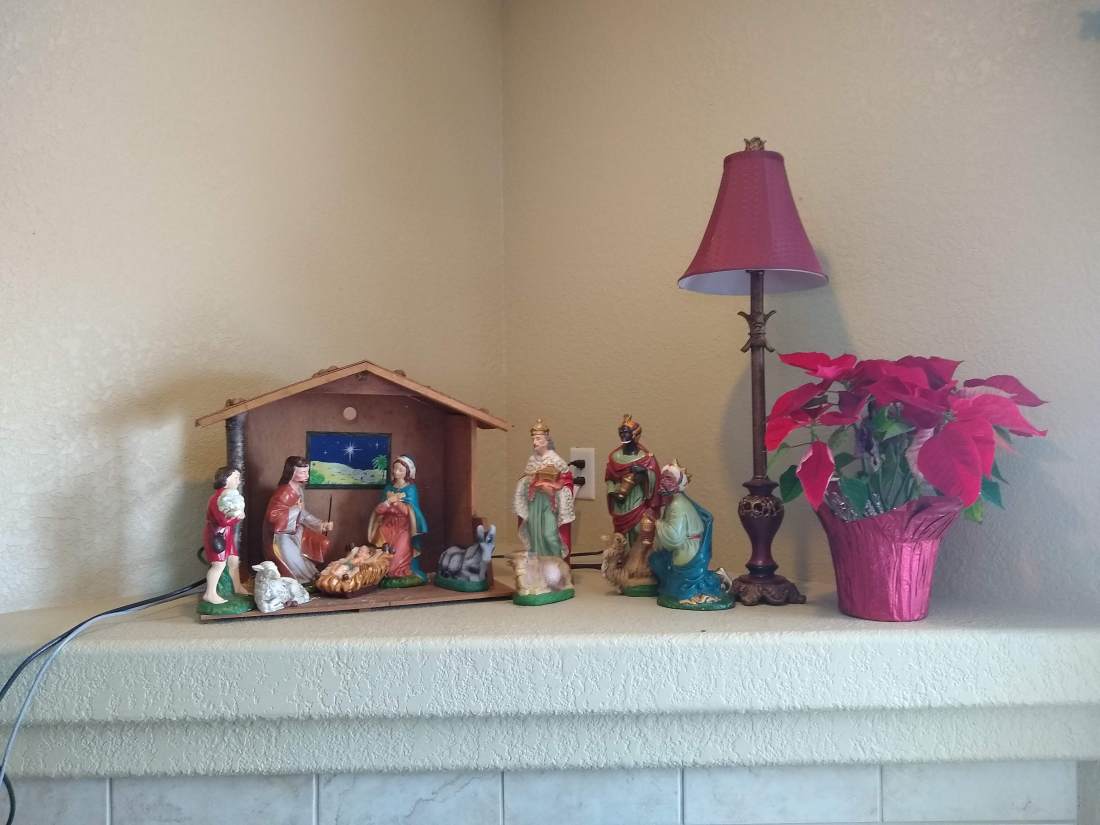
Christmas Nativity

2020 means Christmas will look a little different from past Christmases.  We will not be able to celebrate as we have done in the past with all our traditions.  We each have our own traditions and stories, but many of the traditions have developed over the centuries.  How would a personal celebration of Christmas today compare with one a 100 years ago or 500 years ago, or a 1000 years ago?  So many traditions have developed over the centuries that the original story of Christmas has become hidden for many people.  It seems today most everybody worldwide now celebrates Christmas.

Today, Christmas is truly a secular holiday.  Even atheist Richard Dawkins observes Christmas. (You can get an atheist Christmas card with a Dawkins quote wishing you a merry Christmas.)   Christmas has become a holiday of giving gifts.  Today there are sentiments of love, compassion, and peace connected with Christmas, but most of the time the original story of Christmas is missing.  Here is a short FAQ, answering some questions you may have and revealing some of the traditions connected with the original Christmas story but are not really part of the story.

What was the original celebration of Christmas all about?  The original celebration of Christmas was about the birth of Jesus Christ, Son of God, born to the Virgin Mary. 

Where is the story of the birth of Jesus recorded? It is found in the Bible, in the Book of Luke, Luke 2:1-20.  (Read Luke 1 for some of the back story.). And also in Matthew (Matthew 1:18 – 2:12) there is another account of Jesus’ birth.

Was Jesus born in a stable?  We don’t know.  The passage from Luke only says that Mary laid him in a manger.  The traditional spot of Jesus’ birth is in a cave.  It could also have been in a room for animals in a house, an attached “stable”. 

Was Jesus born in 0 AD? No, there was no zero at the time the Anno Domini system was set up in 525 AD.  So there is no 0 AD.  1 AD was when Jesus was supposed to have been born, but scholars today place Jesus’ birth at 6 BC to 4 BC. This is based on Luke 2:2.

Was Jesus born on December 25?  There is no date given for the birth.  Some scholars think some time during Spring would be likely.  Eastern Orthodox Christians celebrate the birth of Jesus on January 6.

What about the Magi, the Three Kings, or the Three Wise Men?  The Magi were members of a priestly caste of ancient Persia.  They are in Matthew’s account of the birth of Jesus (Matthew 1:18 – 2:12).   They are not necessarily kings or wise men.  

Were there three Magi?  The word Magi is plural suggesting more than one but the exact number is unknown. There were three gifts so tradition says three Magi.  Note the Syriac Church tradition (and some other Eastern churches) has the number of Magi at 12.

Did the Magi and the shepherds appear together at the manager?  Unknown. The shepherds hunted for a manger with a baby.  The Magi followed the star to a house. To me it is likely that the Magi came later.  King Herod would kill all the boys in Bethlehem, who were 2 years of age and under after the Magi failed to report back to him (Matthew 2:13-18).  My guess is that Jesus was under 2 years of age when Herod slaughtered the boys of Bethlehem.  He could have been about a year old, but again his age then is unknown.  (Mary and Joseph may have decided that it was a good idea to stay in Bethlehem with the locals treating them well because they were the parents of the Messiah.)

Why was Jesus born?  Jesus came to save us from our sins (Matthew 1:21). We are broken selfish people.  Because of Jesus, we can have a restored relationship with God.  Jesus paid the price on the cross for our wrongdoing and wrong thinking.  He is our Savior.  I believe my life is much better because of Jesus.  If you recognize that you are a broken selfish person in need of God, turn to Jesus, receive his love, and place your trust in him.  He will deliver you from your brokenness and set you on a path of life found only in him.

Many more entries can be added to this FAQ, but this is a good start.  Read the two accounts of the birth of Jesus.  See what is there and what traditions have been added to the accounts.

Individualism

America has a very individualistic culture.  It has a culture where the emphasis or priority is placed on the individual instead of the group.  We, Americans, are oriented around the self.  Individualism sees the individual as its main focus, and values independence and self reliance.  With Individualism, we don’t want society to get in the way of our goals, desires, and self expression. Individualism can be seen as another worldview.

There are several popular slogans that emphasize Individualism in society.  Here are a few

  • Be true to yourself.
  • Follow your heart.
  • You do you.
  • You be you.
  • You need to find yourself.

Notice the ‘you’ in all of these slogans.  They are saying what is most important is yourself.  That means your freedom, your happiness, and how you define and express yourself is the highest good.  Everything else is secondary.  It is all about you.  Advertisers know this.  Their ads promote sayings like “you deserve it”, “you need it”, and “we will take good care of you”.

What are the beliefs of Individualism? You decide what is right for you. You are the ultimate authority.  External authorities are to be considered, questioned, and/or rejected. There should be nothing that restricts your freedom or your self-expression, so you can be truly authentic.  You are effectively an autonomous person.  Tolerance of others is defined around accepting the identities and expressions of others.  An individualist believes that if everyone did this, the world would be a better place, because humans are inherently good.

There are some good things about our individualistic society.  We tend to put value on each and every person.  Our Declaration of Independence says “all men are created equal”. That comes from our Christian heritage, because Christianity says each and every one of us are of very high value in the sight of God for God fully and completely loves each and every one of us.

Unfortunately, we all have this tendency to be self-centered. The worldview of Individualism promotes this self-centeredness. Many times we are willing to do whatever in order to fulfill our goals and desires.  And many times our goals, our desires, and our self-expressions are not good for society as a whole or for our neighbor next door.  The problem is we are not inherently good.  We need boundaries. We need to have restrictions on our desires, our goals, and our self-expression, so to protect others.

Technology has made us less dependent upon each other.  In general, technology supports Individualism. Many times, we do not need to interact with others.  We type our own letters and emails.  We purchase stuff from the comfort of our own home.  We research ideas and concepts without attending a lecture or debate.  Technology has made this possible, and it can be very isolating. 

I think Individualism has created some of society’s problems.  We are very divided as a country.  We have done our own thinking and will not listen to the opposing side because we are the authority for ourselves.  We do not want to be ordinary, so we find unique ways to express ourselves and define ourselves (think gender fluidity).  We hide our real selves, so to craft a self we think people will like.  We leave relationships because at the moment we are not feeling the “love”.  We do not worry about the long term consequences of our decisions and our actions on ourselves and others, but we rather expect society to welcome our authentic self.

I think many of today’s problems boil down to the “Me First” mentality of Individualism.  Because of the “Me First” mentality, Americans have lost sight of the needs of others.  They will only deal with the needs of others only when it does not negatively impact themselves.  God is not on the throne of their heart.  They are.  I believe American culture has taken the individual too far.  We need to be less selfish and more concerned with being good members of society.

Thankful Resilience

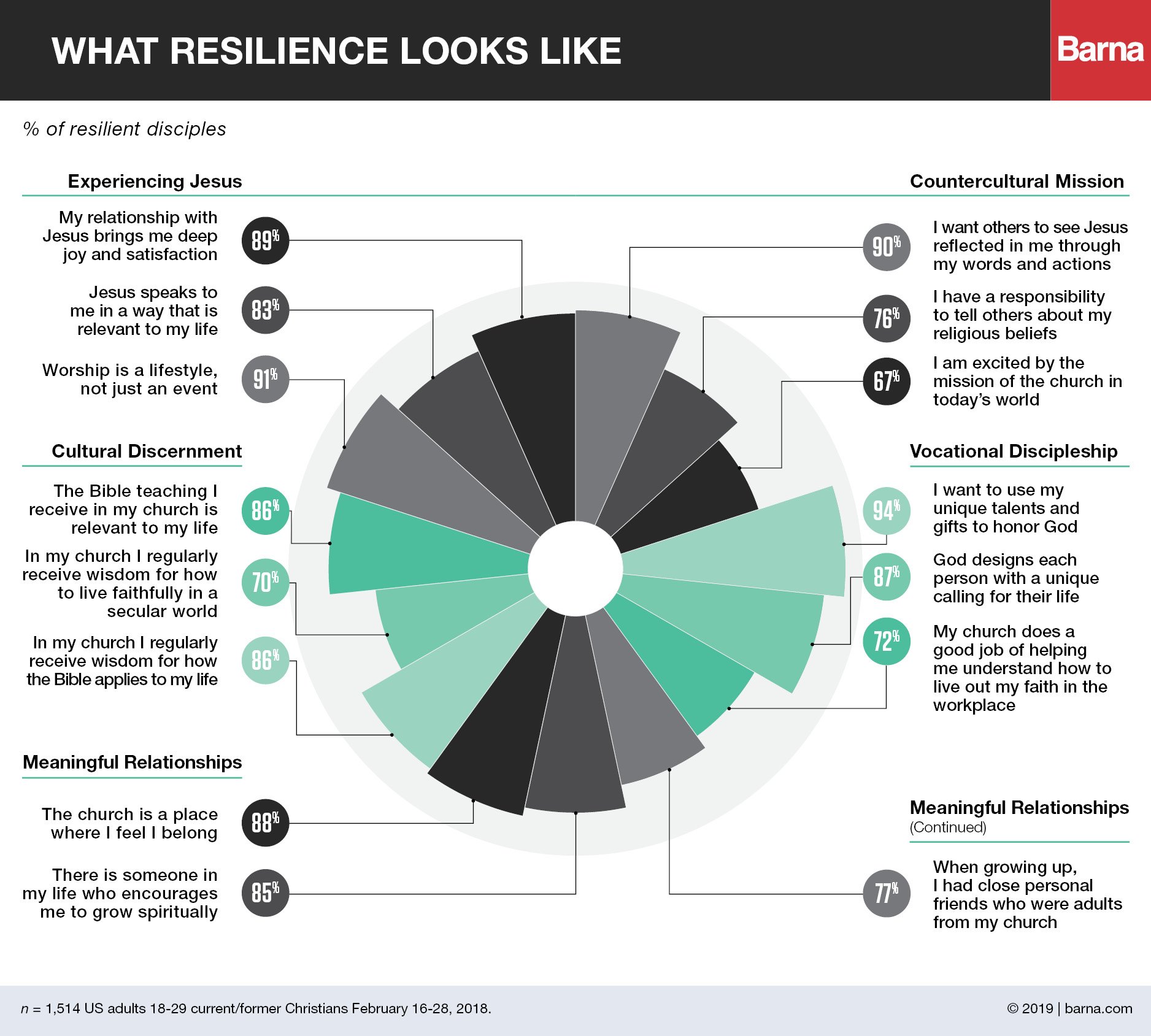
In my last post I talked about being resilient in a changing world.  I believe one of the best ways we have to be resilient is to be thankful to God for all of what he has given us (i.e. everything).  1 Thessalonians 5:18 says to give thanks in all circumstances, and Ephesians 5:20 says to give thanks for everything.  It is not always easy to do, but I believe it is good for you, spiritually, emotionally, and physically. That thankfulness is supported by the confidence we have in God.  It is the sure hope that we have.

The foundation of that hope and thankfulness starts with the fact that God loves you. He desires the best for you.  He is on your side even through those tough times.  He is using the circumstances of life to help shape and form you.    Recognizing that, means that you can thank God for everything in all circumstances.  He can take the wrong things in life and bring good out of them.  In the end, he will make all things right. Note this is not optimism or positive thinking.  This video talks about the word hope in the Bible.  There are two Hebrew words for hope, which infer “waiting” (yakhal) and “tense expectations” (qavah). Biblical hope looks back and sees how God has faithfully acted and then looks forward and waits for God to act. It is in that looking back we can be thankful, and because of that thankful remembrance we can look forward in hope and be resilient.

It is fairly easy to be thankful for the good things that happen to you, but when you are in a tough situation it is harder to be thankful.  You need to trust God and see his hand in directing you through the tough situation.  Just making the effort to be thankful will help you to connect with God.  Over twenty one years ago I came down with Gillian Barre.  I missed 6 months of work.  I was in the ICU for two weeks.  It was a tough situation.  Yet because of the illness, today I have a greater awareness of God’s goodness and grace.  It also helped Gail and I to bond.  I am thankful for that illness.

I find that I am in a better mood if I give thanks several times during the day. It reduces my stress and worry.  Giving God thanks reminds me of God’s goodness and love.  That allows me to trust him and to be flexible and resilient in that hope.  It is a healthy attitude to have.

Facing a Changing World

Photo by Pongsak Kitirojpan

Right now, the pandemic is raging with new COVID-19 cases rapidly increasing.  Things are in flux.  This holiday season will look different from past holidays.

Back at the end of July, I talked about how the pandemic is speeding up the rate of adoption of new ideas and new technology.  This means some jobs are not coming back when this pandemic is over.  That is what Fed Chairman Powell is worried about.

Powell cautioned that displaced workers are going to need extended support as the U.S. economy recovers in ways that will be different from its former self.

“We’re not going back to the same economy,” Powell said. “We’re recovering, but to a different economy and it will be one that is more leveraged to technology, and I worry that it’s going to make it even more difficult than it was for many workers.”

The central bank leader said he was referring specifically to “relatively low-paid public-facing workers who are bearing this brunt,” many of whom are women and minorities. (From CNBC)

How many of you are going to do most or all your shopping online this Christmas? I expect many more will and there will not be very many going to the stores.  In some places the stores may not even be open. The store clerks are some of  the “public-facing workers” he is talking about.  Will they have jobs when this is over?  The big box stores have been struggling for some time now, but I am more worried about the small Mom-and-Pop stores surviving and the survival of other small businesses such as restaurants.

So as jobs disappear for many employees and small business owners, what will their replacement jobs look like? Will they be able to use the skills they have from the past?  Will there be unskilled jobs available?  Or will they need to be retrained? If retrained, will there be enough jobs available for them in their new field?  Lots of unknowns, but unfortunately l believe this economic transition will be messy. Everyone will need to be resilient.

This pandemic is lasting much longer than I thought it would.  I should have realized that it would last a while.  The 1918 “Spanish” flu pandemic actually lasted over 2 years (February 1918 to April 1920). I don’t think this pandemic will last that long because there is a vaccine coming, but the pandemic will be around for over a year.

There is also concern about this generation of children.  Because of the sudden shutdown of schools last spring with some attempts at remote learning, these children missed significant classroom experiences.  My wife came out of retirement, to meet a desperate need for a first grade teacher at Immanuel Lutheran School.  She confirms that her students have some challenging gaps in learning–socially, academically, and behaviorally.  Today’s students need to catch up.  Because of the large number of new COVID-19 cases, many schools are going back to remote learning.  Is remote learning currently up to the task?  Right now I would say remote learning is not up to the task for many, if not most, children, especially in the lower grades. Right now, I think, remote learning works well for students who are motivated, but the rest of the students need more than just remote learning. In the future, I believe remote learning will be part of a child’s education, but right now it is not quite ready.  Teachers will have to be flexible, creative, and resilient.

This pandemic is having a major effect on our economy and society.  The pandemic is changing our world.  Welcome to the emerging new 21st century normal, where we all will need to be resilient.

Racism Today

The last several years have shown that racism is alive and well in America. It is not just that some people are racist, though that is true, but that there is an underlying current of racism in American society, called systemic or structural racism.  Here are two videos by Phil Vischer (of VeggieTales fame) from which I learned a lot about racism in America. 

Much of what Phil talks about is the history of systemic or structural racism in the last 60+ years, that is racism that is built into society and our laws.  It does not make for a level playing field with people of color not being treated equally.  Phil lays out a good argument why this is the case. It is worth watching both videos.  Part 2 answers the common questions and objections to the first video.  

To bring up one point that really struck me is the typical white household ($171,000) has 10 times more wealth than the typical black household ($17,150). (6.7 times if you include the atypical households.)  Much of the wealth is usually found in home ownership, and it is also one of the best ways to grow your wealth. The lack of wealth limits your options.  This is in part due to the policies of the past and present, such as redlining, which is the systematic denial of services (e.g. house loans) by the government and the private sector.  

Racism is a complex problem with no simple solutions.   Many people of color have been kept in poverty, intentionally and unintentionally, by white Americans and by American laws.   Because this has gone on for generation after generation, many black people, especially men, have lost all hope. They see no way out of their poverty. Many have stopped trying.

The Bible speaks quite clearly about racism being wrong and that all are equal in the sight of God.  Here are a few phrases from the Bible:

  • Here there is not Greek and Jew, circumcised and uncircumcised, barbarian, Scythian, slave, free; but Christ is all, and in all. (Colossians 3:11)
  • For God shows no partiality. (Romans 2:11)
  • But if you show partiality, you are committing sin (James 2:9)

The result of racism is oppression. What does the Bible have to say about oppression?

  • The Lord is a stronghold for the oppressed, a stronghold in times of trouble. (Psalm 9:9)
  • Whoever oppresses a poor man insults his Maker, but he who is generous to the needy honors him. (Proverbs 14:31)
  • Learn to do good; seek justice, correct oppression (Isaiah 1:17)

What can we do? First, we need to care, and listen, and learn. If God is for the oppressed, then we should be to.  We need to act.  We should seek justice and correct oppression. We should be generous to the needy.  We should not continue to sit on the sidelines and do nothing. (Consider some of the ideas at the end of the second video to put into action.)

Paul was concerned about the racial divide between Jews and Gentiles in the Ephesian church so he wrote:

13 But now in Christ Jesus you who once were far off have been brought near by the blood of Christ. 14 For he himself is our peace, who has made us both one and has broken down in his flesh the dividing wall of hostility 15 by abolishing the law of commandments expressed in ordinances, that he might create in himself one new man in place of the two, so making peace, 16 and might reconcile us both to God in one body through the cross, thereby killing the hostility. 17 And he came and preached peace to you who were far off and peace to those who were near. (Ephesians 2:13-17)

It is Jesus Christ who brings peace to our racial divide and makes us one.

Cancellation

Living Network 2 (Peter Farkas Photo)

Mary is a sweet old grandmother who just cashed her Social Security check at the local bank.  It had been a busy day but she got her check cashed just as the bank was closing.  John looks around the corner and sees Mary walking home.  He really wants to grab her purse and get that money, but he is debating with himself on whether to do it or not.  What is going through John’s head?  What is holding him back?  Is it that someone might see him and he would be arrested?  Or is he thinking how Mary needs that money to live on and stealing the money would be really hard on her?  The former reason is where our human nature takes us.  We don’t want to be caught and suffer the shame and consequences.  The later reason is more common in cultures where Christianity has influenced the culture.  Concern for others is a trait emphasized in Christianity.

The former reason is part of an honor-shame culture, which is common in much of the world because of human nature.  Today it is showing up more and more in the West because of our post-Christian society.  The “Cancel Culture” is one manifestation of it.  Cancellation is to bring shame upon the person for actions or words that a group considers disgraceful and objectionable.  The purpose of canceling is more than just a group expressing displeasure.  The purpose is to make the person so undesirable that it destroys the person’s reputation and causes people to avoid them.  Many times that includes demands that the person lose their job.  In fact maintaining a relationship with a shamed or canceled person could cause you yourself to be canceled.

Cancellation is a tool used by critical theorists to fight against unjust societal structures, especially with regard to race. Two recent cancellation examples are the removal of statues of slave owners and the canceling of people who had years before blackfaced themselves.  From these examples, you can see cancellation has no time limit, and there is no forgiveness or restoration for canceled people.  You can be canceled for something you did or said in the past that you now regret.

An interesting side point is that in our postmodern society, moral truth is supposed to be relative.  However for these people who cancel, the current moral truth is fixed and rigid, but for many of those being canceled the moral goalposts have been moved and what was okay back then has now become an objectionable offense.  The moral standard has changed.  I do believe in a fixed moral standard as determined by Christian scripture.  That standard has not changed.  It has been set for thousands of years.  We all fail to live up to that standard, but there is forgiveness and restoration found in Jesus Christ.

As Christians, how do we approach someone who believes in canceling?  First start with prayer. Ask God for guidance and for him work through you.  Second, be humble and listen. Try to understand and learn where they are coming from.  Many times they are trying to right actual wrongs in society.  If they are critical theorists, they will believe that removing the oppressive norms of society will solve the problem.  As Christians, we know that the root problem is our sinful nature, and that liberation from societal norms will not solve the problem. Remember the restoration and forgiveness found in Jesus is the solution. Third, realize that there will be differences of opinion.  You don’t have to convince the person.  Just plant a seed and let God do the rest in his time.

Where is the Unbiased News?

Newspaper Boxes (photo by David Resseguie)

There is no such thing as completely unbiased news, however, some sources are much more biased than others.  Ideally we want news sources where the reporters and editors are trying to deliver unbiased news.  The reporters and editors can not be completely unbiased because they have to make decisions on what to write about or print.  An unimportant detail to them may be important to you.  Yet even with a bias the facts are usually there in the article or video to inform you.

So how do we determine biased and unbiased news?  First is the video or article written to provoke emotion?  If so, it is biased.  If you become angry or fearful because of what you watched or read then it is likely it is biased.  It appears to me that the newer the news medium the more likely there is an emphasis on the sensational.  That is a very broad generalization, but I believe in general it is true.  That means that newspapers are more likely to be reliable than cable news or social media posts.  You need to remember that the news industry wants to get and keep your attention so they can sell more advertisements, so there is pressure on them to make the news sensational.

Where are the reliable sources?  I would go with the traditional news organizations like broadcast TV (ABC, CBS, NBC) and the news services (AP News, Reuters) that supply the newspapers.  Here is a site that tries to rank the bias.  I don’t completely agree with their rankings but I believe it provides a good starting point.  You need a baseline so that you can check out the accuracy of the article/video. And remember even the most reliable news sources are not always right. Note talk shows that discuss the news usually add a bias.  They are not meant to be news sources.

So when we read an article or watch a video from a reliable source we should ask ourselves if we can see a bias.  One way is to read/watch more than one article/video on the topic from reliable sources.  You can then see what has been left out or what was differently emphasized between the reliable sources.  This will help you be accurately informed.

Also be careful to note your own bias.  What you read may be totally factual but not something you want to hear.  You need to be willing to accept unwanted news.  Or you may read/watch something totally false yet it fits with what you want to believe.  You need to question your bias.  To give an extreme example, remember Pizzagate.  Here is a guy back in 2016 who travels from North Carolina to a pizza parlor in Washington D.C., armed and ready, to rescue children who were sex slaves.  They were supposed to be held in that pizza parlor for the Democratic elite. He walked into the place and found out that he was totally wrong. He believed the fake news from an unreliable alt-right source.  The sad thing is a modified version of that conspiracy theory still lives on with QAnon.

Nowadays what you share on social media makes you a news source.  Be careful in what you post or repost.  I remember reading about a guy who tweeted something he saw that had national importance.  The tweet spread like wildfire. A few hours later he realized that he had been wrong.  He posted a retraction that went nowhere.  Unfortunately, social media promotes sensational stories and not retractions.  Make certain what you post or repost is accurate news and not fake news, so that you do not have a part in spreading a lie.