Inductive/Deductive Bible Study

Bible with heart shadow

How do we read the Bible?  We can read it with an inductive reasoning mindset or a deductive reasoning mindset.  When you read inductively, you read a passage and from the details you derive some general life principles.  It is a bottom up approach.  When you read deductively, you start with a premise or a theory and you look at a passage to verify (or not) the premise.  It is a top down approach.  There are valid reasons to use both approaches, and there are potential problems with each approach.

When you read the Bible, context is everything.  You can avoid a lot of problems if you put the passage in context.  The Bible is a library of 66 books, written about 2000 to 3500 years ago by about 40 human authors.  Though the Bible was written for us to read, it was written to the people of that time and place.  How did the original hearers understand it?  So there are several questions to ask.  What is the historical context of the passage?  What is the cultural context?  Is it a historical document, a letter, poetry or something else?  What is the context in regard to the surrounding passages?  What is the context to other passages (and books) of the same time period?  And what is the context in relation to the overarching story of Jesus and his work here?  Context is very important!

To understand how those who originally understood it, we also need to know how life was different between then and modern day.  What things are important today that were not important back then, and what are the things important back then that are not important today?  This applies to the cultural context.  One example is today we are very individualistic and back then they were much more family and community oriented.

This sounds overwhelming.   Do not worry.  There are resources available to help you read and study the Bible.  Study Bibles, study guides, and many Christian books are good resources to help you interpret the Bible.  I do make use of them.  They are helpful.  That is why it is good to also learn how Christians in the past have interpreted the Bible for the Holy Spirit has enlightened Christians in the past as he continues to do so today.  The Christian faith, though personal, is a faith that is found in community.  Therefore the biblical understanding  of Christians in the past and the present, under careful scrutiny of Holy Scripture, can be a guide to help you interpret the Bible.  Let us get back to inductive and deductive reasoning.

If you are using the inductive reasoning approach then you need to decide what general theological principles are found in the passage.  Once you have determined the potential theological principles then you need to find other passages to prove that it is a valid theological principle.  (There should also be one passage in the New Testament validating your principle.)   Once validated then you need to put it into practice.  One needs to be careful not to a priori determine the principle or principles.

If you are using the deductive reasoning approach then you need to determine whether the passage fits the premise or topic that you had a priori determined.  Again, are there other passages that fit your topic? (And again there should be one in the New Testament.)  Many times with a deductive Bible study, the topic has been determined by others and you are in a topical Bible study where you are reading a list of passages that should support the topic.  All the passages in context should support the topic.  You need to be careful of the context and your own biases.  

If you want to find something in the Bible to prove your point, there is a good chance that you can find it, but it will most likely not be in context of the surrounding verses or of the Bible in general.  For an extreme example. Charles Manson used the book of Revelation, in particular chapter 9, to promote his violent vision of the future and his use of the Beatles songs.  (The locusts were the Beatles.)  Charles Manson looked at the Bible to authenticate his violent vision.  He found what he was looking for, and by his reasoning deduced his proof.  The problem was that he set out to use the Bible to authenticate his beliefs, and not to discover what the Bible had to say.  His proof passages were out of context and his vision did not fit with the rest of the Bible.  We need to be careful to keep things in context and to be careful to let our reasoning, desires, and feelings not bias how we read the Bible.  There are many other examples of people using the Bible to authenticate their beliefs or viewpoints.  Avoid doing it.

Sometimes people allow tradition, a person’s writings, cultural beliefs, certain moral values, science, or even reason to have the same or higher authority than the Bible.  I believe the Bible is the true and only real authority. Do not discount or water down what the Bible says.  Again, so when studying the Bible, context is important and be aware of your biases.  And have other Christians confirm your interpretation. 

For more information on studying the Bible, check out “Read, Mark, Learn, and Inwardly Digest” and “Is the Bible Wicked?”.

Peace

Christmas Nativity

Peace is something everyone seems to want. Peace in the Bible is a rich concept.  It is more than just the absence of conflict.  Peace is a state of wholeness and completeness.   With peace what is broken is restored or made whole.  Peace brings a sense of calm and renewal, especially in our relationships. 

The Hebrew word for peace is shalom. The idea of wholeness and well-being comes from shalom.  Shalom can be used as a greeting. It asks about our welfare.  Much like our greeting, “How are you doing?”, but shalom gives that added sense that everything should be right and whole.  Shalom also implies a restoring of the relationship.

We rob ourselves of peace when we worry about things.  Much of our worry and anxiety is about things we have no or very little control over. There is no good reason to worry and yet we do.  We fear the future.  We fear the unknown and even the known.  We are troubled by the events in the world.  What we need to do is to recognize that we have a God who is good and loves us.  He is in control and he desires the best for us, so we need not worry but instead we need to let his peace wash over us.

God showed his love for us by coming in the person of Jesus.  That is what Christmas is all about.  On Christmas we celebrate the birth of Jesus.  Jesus came in love to save us from our brokenness and to restore the relationship  between us and God.  He brought us peace.  That is why the angels announcing the birth of Jesus said “… on earth peace among those with whom he is pleased!” (Luke 2:14).  Jesus offers his peace to us so we can no longer be troubled or afraid  (John 14:27).  It is a peace that “surpasses all understanding” (Philippians 4:7).

Do you want peace?  Jesus wants to come and give you his peace.  It is something I am thankful for and I rejoice in his peace.

You keep him in perfect peace whose mind is stayed on you, because he trusts in you. Trust in the Lord forever, for the Lord God is an everlasting rock. (Isaiah 26:3-4)

This blog post was inspired by the Bible Project video, “Shalom/Peace”.
P.S. Here is our 2024 Christmas letter.

Justice

Hammer for a Judge

Today there is a lot of talk about justice, especially social justice.  We care a lot about justice.  God actually has a lot to say in the Bible about justice and injustice.  The Bible Project has an excellent video (animation) giving a great overview of justice in the Bible.  Justice in the Biblical story is pretty radical, and is different from what we naturally do or expect.

We need to start at the beginning.  God created us in his image, and gave us dominion over the earth (Genesis 1:27-28).  Since we all were made in the image of God, we are all equal and deserve to be treated with dignity and fairness.  It doesn’t matter who you are.  You should be treated fairly and with respect.

Unfortunately, we take the good and selfishly take advantage of the situation at the expense of another and then injustice appears.  This injustice or evil also infects families, communities, and whole civilizations.  We create vulnerable people that we take advantage of.  We do not treat them with fairness and respect.  Out of self-centered selfish motives, we instead take advantage of them. Even if we are oppressed and we gain the advantage, we will take the advantage to become the oppressor. We do not learn, because we are broken and do not have the respect toward others to treat them fairly and with dignity.

All is not lost.  God had a plan and called Abraham.  Genesis 18:17-19 talks about Abraham. Through him “all the nations of the earth shall be blessed”, and that Abraham would teach his family “to keep the way of the Lord by doing righteousness and justice”.  Doing righteousness is about being a “good” person, but it is more about having right relationships with people.  We need to treat people with the dignity that comes from being made in the image of God. In the Bible, justice can refer to retributive justice (you pay the consequences), but most of the time in the Bible justice is about restorative justice (helping people, charity).  This means to do justice, we seek out vulnerable people and help them. So doing righteousness and justice is about having a radical, selfless way of life. 

And as the Bible story clearly shows, we fail at doing righteousness and justice.  We  may not be actively perpetuating injustice, but we all take part in injustice, whether actively, passively, or even being unintentionally.  Injustice is everywhere, and we are all guilty of it.

God’s plan comes to fruition with the coming of Jesus Christ.  Jesus lived a life doing righteousness and justice.  He paid our debt to God by dying on the cross and he rose again so that we might be declared righteous before God.  This is the gift God gives us, guilty people.  Empowered by the Holy Spirit, we respond to this gift of life by doing righteousness and justice.  It is not always easy or comfortable, but we reach out to those in need with love and compassion.  We love our neighbor as ourselves (Mark 12:31). 

He has told you, O man, what is good; and what does the Lord require of you but to do justice, and to love kindness, and to walk humbly with your God (Micah 6:8)

Thanksgiving

I have written a lot about being thankful, because it makes life better so for the fifth Thanksgiving I will write again about being thankful.  It is important and it puts life in proper perspective.  Everything we have comes from a loving gracious God.  It is all a gift that we often take for granted.

It is healthy and therapeutic to be thankful.  It is good for relationships, mental health, and even sleep.  So let us give thanks and express gratitude, because it is not only good for the person receiving the thanks but it is good for us as well.  You take the focus off yourself when you are thankful, and I believe it also makes you more resilient. 

Back in 1789, George Washington at the urging of Congress set aside a day for thanksgiving and prayer to acknowledge all God had done for them.  Our founding fathers recognized the need to give thanks to God and so started the holiday of Thanksgiving.  Today it seems to be more about food and family and less about thanking God.  This Thanksgiving find a church that has a Thanksgiving service and attend it. (My church, Immanuel, in Loveland, CO, has a Thanksgiving service on Thanksgiving at 9 AM.)  I find the service to be important, because it resets my mind on the love and goodness of God because of his provision for us.  Our Heavenly Father is gracious and merciful, and he provides for all our needs. That is worthy of thanks and praise.

We are called to give thanks for everything (Ephesians 5:20) and to give thanks in all circumstances (1 Thessalonians 5:18).  That seems like a hard thing to do, until you realize that God is working everything out for our good (Romans 8:28).  Tough situations can turn into blessings.  Let us have that attitude of thanksgiving, recognizing that our Heavenly Father has provided all that is needed in his love.

Heavenly Father, we give you thanks and praise for this beautiful world you created.  You provide for every need of ours, food, clothing, shelter, family and friends, and even the air we breathe.  It is all from you.  You are good, gracious, and merciful to us.  We especially thank you for sending your Son, Jesus Christ, to take our place and die on the cross for us.  Because of him we have a Spirit empowered life.  Thank you for everything!  Amen!

Law and Gospel

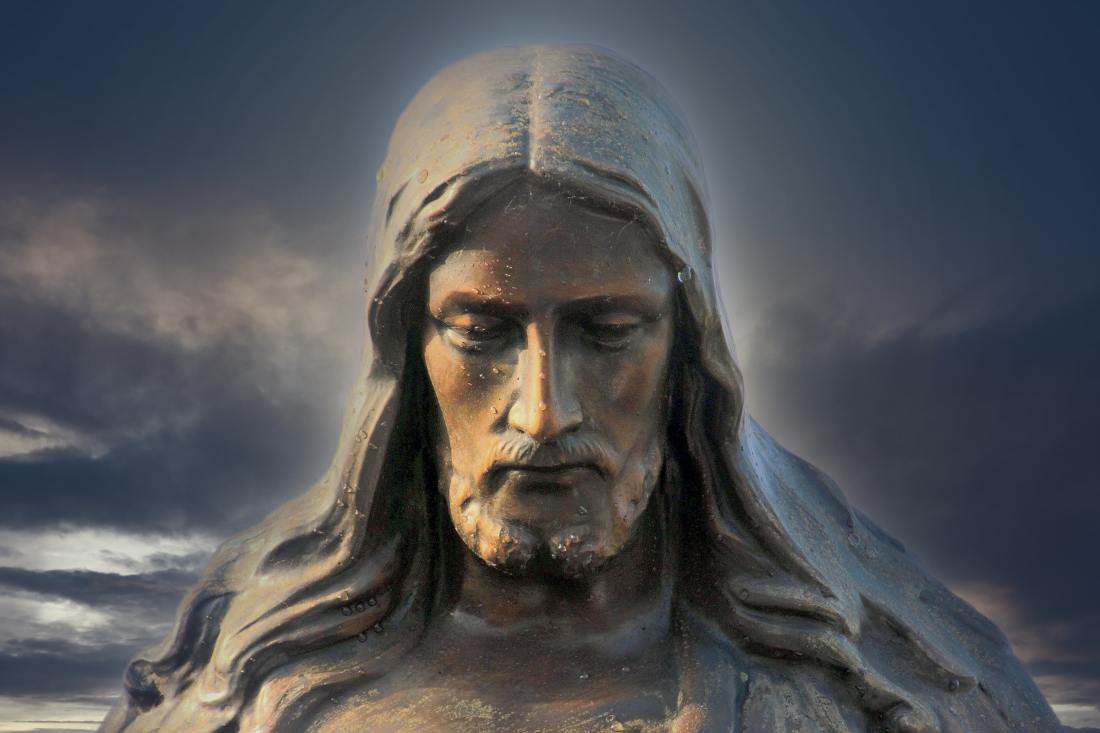
Jesus Christ Statue Photo - Myriam Zilles

Out of the Protestant Reformation, from Martin Luther, came the concept of Law and Gospel.  It is used to read and interpret  Bible passages. Confessional Lutherans especially make a big deal out of using it.  I find it to be a very helpful concept.  The Law tells us what to do.  The Gospel tells us what God has done and what he is doing in Christ Jesus.  Primarily, the Law shows us our sin, and the Gospel shows us our Savior.

There are three functions or uses of the Law.  The Curb function of the Law restrains people from doing wrong. You do not steal because it is wrong and there are consequences to stealing.  The Law as a Mirror shows us who we are, sinners.  It shows us our sin and how we have failed to keep the law.  The third use of the Law is the Guide function.  The Law shows us how to live, and how to respond to God’s saving love (the Gospel).

The Gospel shows us what God has done for us.  It is Good News.  It is usually focused on what Jesus has done, but any saving action by the Triune God can be considered Gospel.  The main focus is on Jesus since that is the entire Bible story points to him.  He came to Earth to save us and restore that broken relationship with us.

If we look at Exodus 20:1-17, we can easily find Law and Gospel.  The Ten Commandments are found there but in verse two before any commandment is given we find the Gospel.  God reminds them that he had saved them from Egyptian slavery. So the Gospel appears right before the giving of the Ten Commandments, the Law.  Therefore these commandments told them how to respond to God who had saved them (the third use of the Law).  The commandments were to restore a covenant relationship with God. The commandments unfortunately also show us how we fail to keep those commandments (the second use of the Law) and our need to be freed from the bondage of sin. And in the Ten Commandments you can also find the first use of the Law (civil laws), for example “You shall not steal”. So the uses of the Law are not mutually exclusive. These commandments are applied today telling us how to respond in gratitude to God’s saving love.

Law and Gospel can be applied to ourselves and our conversations.  When a person is suffering and feeling worthless, that is when we need to share the Gospel message of God’s love for them.  When a person is feeling that what they are doing is not that bad of a wrong or just not wrong, then we need to share the Law and remind them that sinning is serious and it causes harm.  For unbelievers, I would first let them know that we all are not perfect and are broken sinners (Law), and then share the good news that God still loves them, broken as they may be, and desires to be in relationship with them (Gospel).

New Life

You have been set apart and chosen. Photo by Gift Habeshaw.

Our church had a mini-retreat on new life in Christ, and it was led by Jim Found, a former missionary.  The content was so good I want to summarize it for you.  Jesus came that we might have this abundant full life (John 10:10). As Christians, we are given a new full life.  Our old life is still hanging around but we have this new life in Christ. What does it mean to have this new life?

The new life is also called the new self or new nature. We get to “walk in newness of life” (Romans 6:4).  We walk in love (Ephesians 5:1-2) as we “put on the new self, created after the likeness of God in true righteousness and holiness” (Ephesians 4:17-24). This is not our doing for God is at work in us to do his will (Philippians 2:13).  Unfortunately, the old self is still around and we do not fully realize the new self (Romans 7:7-25).  There is conflict between the old self and the new self.  We still sin.  The Holy Spirit will enable us to recognize our sin, reject it, and then ask for forgiveness (repentance).  This is an ongoing lifelong process (sanctification) to conform us to the image of Jesus (Romans 8:29).   Note though we sin, we still are saved.  Our salvation or justification is not based on anything we do.  It is a gift (Ephesians 2:8-10).  The good works come from us after being saved.  The new life with its good works is a result of being saved.  You strengthen your new life by trusting Christ and his promises, and the good works are the result. Walking in newness of life means living a Christ-like life (Colossians 2:6-7; Philippians 2:1-11).

Our old self is selfish. It will by nature disobey God’s will.  The mind set on the flesh (the old self) is hostile to God (Romans 8:7-8).  The new life is guided by the Holy Spirit and it desires to obey God’s will.  We need to daily put off the old self.  We put off our old self when we repent, and ask the Holy Spirit to strengthen our new life. The Holy Spirit aids us in our struggle against temptation and sin. The Holy Spirit awakens in us new thoughts and affections so we can begin to love God and refrain from evil actions.  Oh, Holy Spirit, control our thoughts and give us the power to reject sin.

By walking in newness of life, we have victory over temptation.  We need not be burdened by things like fear, anxiety, loneliness, hopelessness, lack of purpose, peer pressure, sinful addictions, guilt, low self worth, and the many other things that burden us.  In our new life we have a new identity in Christ as children of God (1 John 3:1), and with that comes many promises, that is scripture passages that tell of God’s love and support for us and how to respond to that love.

Walking in newness of life means we submit ourselves to God, and we resist the devil so he will then flee from us (James 4:7).  A great way to resist the devil and temptations is to follow the example of Jesus (Matthew 4:1-11) and quote scripture when facing temptation. Quote scripture and tell Satan to leave. Do not let Satan bother you, because you are God’s and he saved you.

God is at work in you even if you do not feel it and wonder if you are saved.  God is at work in you if you admit you are a sinner. If you repent of your sins and want to change your life, God is at work in you.  If you acknowledge that Jesus is God who became man, God is at work in you.  God is at work in you, if you recognize that Jesus came to die for you and then rose from the dead. If you trust in Jesus as Lord and Savior God is at work in you. That desire and power to live for Jesus comes from God working in you. You are saved.  You are his.

With the help of the Holy Spirit, we can show that Jesus is Lord in concrete ways.  You have been given a purpose of sharing God’s love through caring and serving others.  One big way to do that is to share the good news of how God has saved you and how he is at work in you.  Share the new life he has given you. 

Heavenly Father, You have given us everything we need for a full and abundant life. You have set us free from the sinful cravings of the world.  Your promises are sure and certain. You are there to deliver us when we call out to you, and yet we fail to live the good life you would want us to live.  Let your Holy Spirit strengthen our faith to help us to reject our sinful ways and live that full abundant life for you.  We ask this because of all Jesus has done. Amen! (2 Peter 1:3-4; Psalm 50:15; John 10:10)

But the fruit of the Spirit is love, joy, peace, patience, kindness, goodness, faithfulness, gentleness, self-control; against such things there is no law. And those who belong to Christ Jesus have crucified the flesh with its passions and desires.  If we live by the Spirit, let us also keep in step with the Spirit. Let us not become conceited, provoking one another, envying one another.  (Galatians 5:22-26)

PS This was just a taste of the mini-retreat.  For the complete text of the retreat,  go to Jim Found’s website https://foundbytes.com/new-life/

Critical Expressive Individualism

Das Bean Photo by Mark Publava

Culture has changed. In America, we think very differently as a society than we did 50+ years ago.  The popular way of thinking today combines Critical Theory and Expressive Individualism.  I am going to call it, “Critical Expressive Individualism” or CEI.  Critical Theory views the world in terms of oppressive social structures that support the reigning oppressors and allow for continued oppression of various people groups.  Expressive Individualism allows individuals to identify themselves in ways that express their inner “authentic self”.  We will take a look at Critical Expressive Individualism and compare it to Christianity by asking a few basic but big questions. (Note there is a spectrum of beliefs so this will be a broad overview of CEI and Christianity, and may not match individual beliefs.)

Where did we come from?

The Christian Faith believes that God created the world.  He created human beings in his own image.  We are valuable to God.  We were made to be in a relationship with him.  CEI believes that humankind evolved by random chance.  There was no intentional design. Humans just exist.

Who has the authority?

In the Christian Faith, God, the Creator, has the authority.  Out of love, he has set up good and healthy moral laws for us to live by.  We are to trust in him and live the good life by obeying his commands.  The CEI worldview has each and every one acting as their own authority.  They look inside themselves at their feelings and desires and decide who they are (usually sexually) and how they will behave.  They are then free to express their individual authentic selves.

What is our problem?

Just about everyone agrees that there is a problem with life.  Things are not as we expect them to be.  We seek a utopia where the problem is fixed.  The Christian Faith sees the problem existing in each one of us.  We are broken, selfish and self-centered.  We disobey the good and healthy standards that God has for us and in doing so we hurt ourselves and others.  CEI sees humankind as naturally good and the problem is that there are these societal structures that allow oppression to occur and restrict the expressive freedom of each individual.

What is the solution?

CEI believes that each person has total authority and the right to express themselves as they see fit.  Even though there is technically no right or wrong, CEI attempts to influence society in order to dismantle oppressive societal structures and bring about positive change. This is a reason for the Diversity, Equity, and Inclusion (DEI) officers in companies and organizations.  They are there to move people to help dismantle oppressive structures and to promote those considered to be oppressed.  They believe that the people of this world will solve the problem once they have been trained to think correctly.

Christians realize there is no human solution because everyone is corrupt and broken.  We are self-centered and selfish.  Because of our broken nature, everything we try will be corrupted.  Fortunately, God sent Jesus into the world to provide the solution.  He went to the cross to pay for the price we could not pay. By trusting in Jesus we are changed.  With the Holy Spirit, we can be enabled to overcome our broken nature.  The Holy Spirit transforms the inner self and works to change us from the inside out.  Christians, out of gratitude for what Jesus did, also work for the good of society and oppose oppression and wrong behaviors.

How will things end for us?

With CEI they believe they can create utopia on earth by training and guiding people. So through proper laws, training, destroying of oppressive structures, and the lifting up of the oppressed peoples, they believe utopia can come.  Christians believe that God will at the right time end this world and make everything right for all those who believe in him. Then our brokenness will be fixed, and we will be restored to a harmonious loving relationship with God and each other. 

These different ways to view the world have caused conflict in America.  Because of the different worldviews, very different solutions end up being promoted, causing conflict and misunderstanding.

Relativism

Das Bean Photo by Mark Publava

If I place my water glass on the table, and say “my water glass is on the table”. Is that statement true?  Everyone in the room would agree that it is true,  because you can see the glass there on the table.  But if you are not in the room and you can not see it, is the statement still true?  You may believe that the statement is true or you may believe that the statement is false, but the truth is, the water glass is on the table.  That is the fact and it is external and separate from what you think.  That is reality.  This is called objective truth.  Unfortunately, today we tend to look inside of ourselves to find the truth.  We decide what is true. It is a subjective truth and it is also known as relativism.  This is a big lie and it has been around since the Fall.

Adam and Eve listened to Satan and decided themselves to eat the forbidden fruit (Genesis 3:1-6).  They were deceived and ignored the external truth of God’s love and command and decided to follow their own desires.  They became focused on themselves instead of God.  Ever since then we have been dealing with this internal self-centered god complex in each one of us.

What does the Devil do?  He lies (John 8:44). He deceives (Revelation 12:9). He blinds people (2 Corinthians 4:4) and takes them captive (2 Timothy 2:26).  And thus, the world is in his power (1 John 5:19).

This is spiritual warfare, and not just a battle of opinions.  “We do not wrestle against flesh and blood but … against spiritual forces of evil” (Ephesians 6:12).  We need to put on the full armor of God (Ephesians 6:10-18). With the first piece is “the belt of truth” (Ephesians 6:14) along with the last piece “the word of God” (Ephesians 6:17) we can take on the lies of the Devil (2 Corinthians 10:3-5).  We do this with patience and gentleness, while praying for their salvation (2 Timothy 2:24-26).

When we are learning about what a person believes, look for a big spiritual lie that is obvious to you, but they are blind to.  We respond by countering the lies with the truth. And I believe a very good way to do that is by asking questions.  You first ask questions to discover what they believe. Then ask questions to learn why they believe what they believe.  And lastly ask questions that guide them to expose some areas where they have been blinded from the truth.

In this age of relativism, we find people have their own internal individual truth, their own subjective truth, and yet they tend to live with some external objective truth.  They may consider all moral truth to be relative, however they have their moral standard that they expect others to follow, especially when it affects them.  They tend to be blind to the inconsistencies of their beliefs.

I believe Satan is in the shadows deceiving the world.  Because of relativism, many historical stories are being rewritten (e.g. The 1619 Project), and many words are being redefined to fit the narrative of their beliefs.  This is being done to control the culture and individuals.  This does not lead to the freedom of expressive individualism that their narrative is supposed to create, but instead the truth is lost.  It reminds me of the newspaper Pravda of the Soviet Union.  In Russian, Pravda means truth, but the newspaper was full of lies.  I find that words of virtue like tolerance, diversity, equity, inclusion, justice, and love are being used to cover vices, and words describing evil (intolerance, bigotry, inequity, exclusion, injustice, and hate) are being used to subvert the good.  It bothers me to have these words and stories redefined.  “Woe to those who call evil good and good evil” (Isaiah 5:20).

Satan has blinded and deceived this world and has taken it captive.  Christians have the truth, the true story of reality.  We need to share the truth of God’s love and gently point out the spots of blindness that prevent them from having that good full life in Jesus Christ.

This post was inspired by chapter 6 of “Street Smarts” and lesson 3 of the video series “Street Smarts”. Both are by Gregory Koukl.

Dealing with DEI

Living Network 2 (Peter Farkas Photo)

Companies and government agencies have embraced the Diversity, Equity, and Inclusion (DEI) worldview.  In order to advance in the organization you need to show you are supporting DEI.  (The State Department recently said that you need to document that you are actively involved in DEI practices to be considered for a promotion.)  Coming from a Christian worldview, how do you deal with DEI?  How can you find some common ground when there is much you feel is wrong and harmful about DEI?

First, Christians are in favor of diversity.  The body of Christ is made up of a diverse group of people with different gifts (1 Corinthians 12:4-27).  Heaven will be filled with people from everywhere (Revelation 7:9-10).  God loves everyone (Psalm 117:1-2) and calls us to do the same (Matthew 5:43-48).  Note God loves us so very much that he is unwilling to leave us as we are but will change us for the better through the work of the Holy Spirit (Ephesians 3:16-17).  So Christians are in favor of diversity, but out of love we stand against broken and harmful lifestyles and beliefs. Unfortunately the secular DEI worldview demands acceptance of the harmful lifestyles of LGBTQ+ community.  As Christians we can not accept their wrong and harmful lifestyles, but we can accept and affirm the LGBTQ+ people as people loved by God.

Also, Christians are in favor of equity.  God is fair, just, and impartial. He will judge with righteousness and equity (Psalm 98:9; Isaiah 11:3-4).  All people have sinned and fall short of God’s standard (Romans 3:23). We stand equal before God, regardless of race, gender, or social status (Galatians 3:28).  Unfortunately the secular DEI worldview distorts equity when it requires equal outcomes or the redistribution of resources without considering individual talents, individual effort, personal responsibility, and the stewardship of resources. Christians show equal dignity and respect for all people regardless of one’s status (James 2:1-4).  It is only in Christ where we find true equity.

And Christians are in favor of inclusion.  Inclusion is the intentional welcoming and acceptance of people.  God loves all people and he desires that all would come to know him and be restored in relationship with him (1 Timothy 2:3-4).  As Christians, we welcome all who follow Jesus as brothers and sisters (Romans 15:5-7) and we desire all people to come to faith in Jesus.  Unfortunately the secular DEI worldview sees inclusion as the acceptance of all beliefs and of all practices, even beliefs and practices that are harmful.  (However many times they will exclude people whose beliefs they consider to be intolerant.)  God loved the world so very much that he gave Jesus as our substitute so that we could have life and a restored relationship with God (John 3:16; 1 Peter 2:24). God wants to include you. Do not reject him, but instead turn to him and follow him.

And yes, Christians also stand against inequality and oppression.  We too are against societal structures that oppress people and cause inequality.  We work for a better society through promoting love (1 Corinthians 16:14), forgiveness (Ephesians 4:32), and reconciliation (Matthew 5:24), first with God (2 Corinthians 5:18-21), but also with the people around us.  Unfortunately the secular DEI worldview broadly divides the people into groups of people that oppress and groups of people that are oppressed without considering the individual circumstances of each person. The secular DEI divides.  Christians seek to reconcile and unite.

So as Christians, we believe in the real biblical version of DEI, and not the distorted secular version. There is common ground with secular DEI in which we can start conversations, but it will not be easy in a secular DEI workplace. You can gently point out the problems with their version of DEI.  I would do it by asking questions about their beliefs to get them thinking about what they do believe and what are the problems that the secular DEI creates. You need to realize that you may be labeled as a person who hates or an oppressor for opposing certain aspects of their DEI standard, but you need to stand firm on the truth. It is good to do so for you, for them, and for society.

This post was inspired by “Understanding DEI (From a Biblical Perspective)” by Cam Arminio. 

Be Intentional and Disciplined

Another year is coming to an end.  People make resolutions this time of year.  Last year I set up a “rule of life” for me to live by, instead of having New Year’s resolutions.  I like the idea of creating a pattern of habits to live by, and I think it has worked out well for me this past year.  I did fail this last month in the habit of “Limit the eating of sweets and fats”.  I ate way too many cookies and now I have a couple pounds I need to lose.  I was not intentional and disciplined in my eating this last month.

I think in today’s culture of comfort and convenience we need to be intentional and disciplined in how we live.  The strong siren call of today’s culture is to live for oneself and to fulfill one’s desires. The goal  of many people is to live a life of ease, one of comfort and convenience, where they can always be happy by having all their desires met.  This last month I let my desire for sweet cookies rule my eating.  It was not healthy.  I was not intentional in my eating, and I was not at all disciplined. I gained a couple of pounds.  Now I have to deal with the consequences of that lack of discipline.

God calls us to a life centered around him and not centered around us.  That is very different from what today’s culture says.  Culture today pulls us toward a self-centered life based on our desires.  This is why we can not coast through life.  If we do, we will not be living for God and we will have to deal with the consequences of the short term thinking of our desires.  We need to be intentional and disciplined in life’s activities so that we can have that good and full life centered on God.

One good way of being intentional is to have a plan.  We can not try to fit God into our lives.  Instead we need to start with God and build our lives around him.  That is why I created a “rule of life” document for myself, so that I would be consistent in how I live my life for God.  I created the document by looking at what I was already doing and what I wanted to do.  I did not get very specific (e.g. Every morning at 6:00am I will read the Bible), instead I kept my habits more general (e.g. Daily read Scripture). I am not that structured, but you may be.  It does take some prayerful consideration to put together a plan or a “rule of life”.  It is not something you should write up in a few hours.  Spend some time praying about it while putting it together. Once it is done you will want to revisit it from time to time to see how well it still fits.  For me this is the time of year when I think of such things. (I first started thinking about the idea of a “rule of life” around New Years 2022 and I put it into practice around New Years 2023 and now I am evaluating it around New Years 2024.)

Having a plan and wanting to be intentional is not enough.  You need commitment and discipline to put your intentionality into action.  This is the hard part but this is something we need to strive for.  It is not easy and I have also many times failed to live up to the “habits” or “rules” that I have set (let alone God’s good standards), but fortunately, we have a God who is merciful and gracious.  He desires that intimate relationship between us and him.  I think my “rule of life” document helps me to pursue that relationship. Our focus should be centered on God, especially on Jesus. It is out of gratitude for God’s amazing love and for all Jesus has done for me that I want to live my life to his glory.  He inspires and enables me to have the discipline to live life for him.

PS To find out some of what Gail and I did in 2022 and 2023, read our Christmas letter.